


Small Scale Fertilizer Manufacturing Plant: What to Decide Before You Invest
A small scale fertilizer manufacturing plant is not a scaled-down copy of a large factory. It is a production system built around a defined market, usually producing roughly 1 to 5 tons per hour, and its profitability is largely decided before the first machine is ordered: which product to make, from which raw materials, for which customers, through which process, and under whose responsibility the plant is delivered.
This guide follows that sequence for fertilizer manufacturers, project investors, engineers, procurement managers, and EPC contractors, so the proposals you request will be comparable and realistic.
What “Small Scale” Really Means in Fertilizer Manufacturing
In equipment catalogs, “small” can describe a single mixer and bagging station or a complete granulation plant with composting or drying capacity. Separate capacity from scope.
Capacity is stated in tons per hour or tons per year. A 1 t/h line serving farms within a 100 km radius is a different business from a 5 t/h regional plant, although suppliers may call both small scale. Scope matters more: powder blending needs weighing, mixing, and bagging; granular NPK adds granulation, drying, cooling, screening, and recycle; organic production needs composting or fermentation capacity before the processing line starts. Write down target production, shift pattern, and product form before requesting pricing.
Define the Product and Market Before the Equipment
Every profitable small plant starts with a product brief, not a machine list. State the nutrient grade or organic specification, physical form, packaging, target moisture and storage behavior, and the market radius you can serve at a competitive delivered cost.
Answer four questions:
- Who will buy the product, and with what application equipment?
- Which grades are actually demanded in the region?
- Which raw materials are reliably available at an economical distance?
- What regulatory steps are required before the first bag is sold?
Regional producers earn margin on logistics, formulation flexibility, and service, not low-cost volume.
For a small-scale project, the main choice is organic production, NPK or compound granulation, or simpler dry blending. Each route has different raw materials, equipment, and working capital needs.
| Route | Core process | Fits when | Watch-outs |
|---|---|---|---|
| Organic | Composting/fermentation, then granulation, drying | Manure or crop residue is dependable and cheap | Feedstock consistency, odor, moisture, process time |
| NPK/compound | Batching, granulation, drying, cooling, screening | Farmers already buy NPK grades nearby | Raw material cost, batching accuracy, registration |
| Dry blending | Precision weighing, mixing, bagging | Fastest low-capital entry | Thin margin without logistics and service |
Choose by local supply and demand, not by which granulator a supplier manufactures. Most investors overestimate the technology needed and underestimate how much raw material quality varies.
When a Small Scale Organic Fertilizer Plant Makes Sense
A small scale organic fertilizer plant fits when feedstock supply is dependable, land for composting exists, and customers pay for a consistent product. The biological stage sets quality: blend feedstocks to a sensible carbon-to-nitrogen ratio, aerate, and hold thermophilic temperatures long enough to reduce pathogens and weed seeds. Only mature compost moves to crushing, granulation, and drying. Equipment must tolerate variable moisture and fiber, so maintenance access and wear parts matter as much as price.
When NPK or Compound Production Is the Better Route
An NPK or compound plant sells formulation capability: calibrated batching decides whether every bag matches its label, uniform mixing prevents segregation, and the drying and screening circuit sets granule quality. Regional plants can switch formulas as seasons and prices change. See LANE’s NPK fertilizer production line guide for the full process and granulation comparisons.
Building the Right Small Scale Fertilizer Production Line
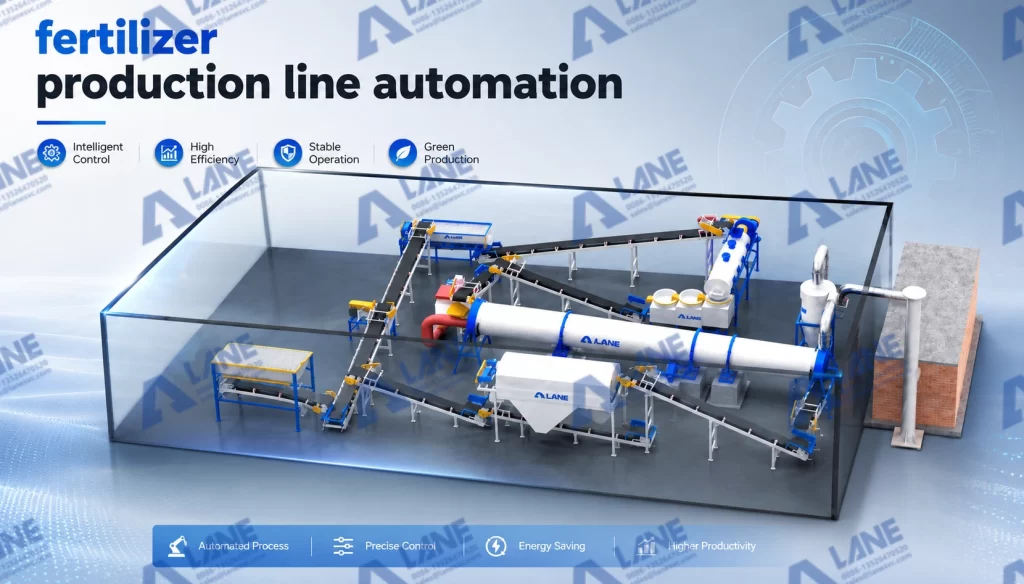
Once the route is chosen, a small scale fertilizer production line is the matched equipment train from raw material intake to bagged product. A granular line includes feeding, crushing, batching, mixing, granulation, drying, cooling, screening, recycle, packaging, and dust collection. The same specification logic applies whether you buy piece-by-piece or as one engineered small scale fertilizer production line.
Three process families dominate:
- Wet granulation (drum or disc) makes rounded granules but needs drying, cooling, and energy.
- Dry extrusion avoids conventional drying and lowers capital cost, but granules are more irregular.
- Powder blending is precise weighing, mixing, and bagging; it is the fastest route to revenue.
See LANE’s fertilizer granulation plant design guide for layout and granulator trade-offs.
Equipment That Determines Uptime and Product Quality
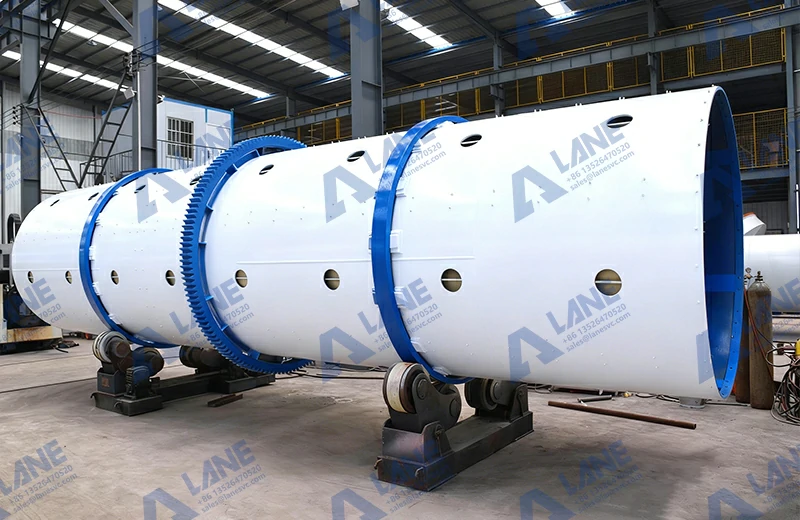
Every machine affects the ones around it, so compare systems, not individual prices. Ask each supplier for a written scope so proposals describe the same small scale fertilizer manufacturing plant.
| Station | Why it matters |
|---|---|
| Batching and feeding | Weighing accuracy decides nutrient uniformity; manual scooping causes off-grade product. |
| Crusher | Must handle oversize and recycle consistently or it becomes the bottleneck. |
| Mixer | Incomplete mixing cannot be corrected downstream. |
| Granulator | Must match feed moisture, particle behavior, and expected granule shape. |
| Dryer and cooler | Moisture control protects storage life; temperature control protects nutrients. |
| Screener and recycle | Determines on-size yield and operating cost per ton. |
| Packaging | Accurate weights and sealing protect margins and trust. |
| Dust collection | Protects operators, equipment, and product cleanliness. |
Resolve product-contact materials, wear parts, and cleaning access before ordering.
Investment Realities of a Small Scale Fertilizer Manufacturing Plant
Equipment price is only part of the investment decision for a small scale fertilizer manufacturing plant. Compare total installed cost: machinery, structures, electrical and controls, freight and duties, installation and commissioning, training, spares, and contingency. Then model raw materials, energy, labor, packaging, testing, and maintenance.
Route choice changes costs more than vendor price differences do: granular production costs several times more than powder blending, while dry extrusion can cut energy but change product appearance. Size capacity to realistic growth; an oversized line at low utilization costs more per ton than a smaller line at full load. For a configuration-by-configuration breakdown, see LANE’s small fertilizer plant cost guide.
Site, Utilities, and Regulatory Readiness
Site selection runs in parallel with process selection. Confirm zoning that permits fertilizer manufacturing, room for raw materials, finished product, the line and expansion, and a workable approach to dust, odor, wastewater, and stormwater. Confirm power quality and capacity, fuel, water, compressed air, and controls; where power is expensive, energy per ton decides competitiveness.
Expect two regulatory layers: facility approvals and product registration. In the United States, state plant food programs coordinated by the Association of American Plant Food Control Officials (AAPFCO) regulate fertilizer products. In the European Union, Regulation (EU) 2019/1009 sets harmonized rules for CE-marked fertilising products. Useful engineering references include the UNIDO/IFA Fertilizer Manual, ISO fertilizer vocabulary standards, and OSHA guidance for U.S. facilities handling dusty or nitrogen-based processes.
How to Evaluate Suppliers and Turnkey Proposals
The cheapest quotation is rarely the cheapest project. Ask suppliers to state what is included and excluded: process design, structures, electrical and automation, installation, commissioning, training, and documentation. Then compare scope line by line.
- Which feedstock samples were tested, and what product quality is guaranteed at rated capacity?
- What recycle ratio, yield, energy use, and labor are expected?
- Which materials contact corrosive or abrasive product, and what is the wear life?
- What performance test runs before shipment, and what are the acceptance criteria?
- What documents are delivered, and how is remote support handled?
- Can the supplier name reference projects with operating status?
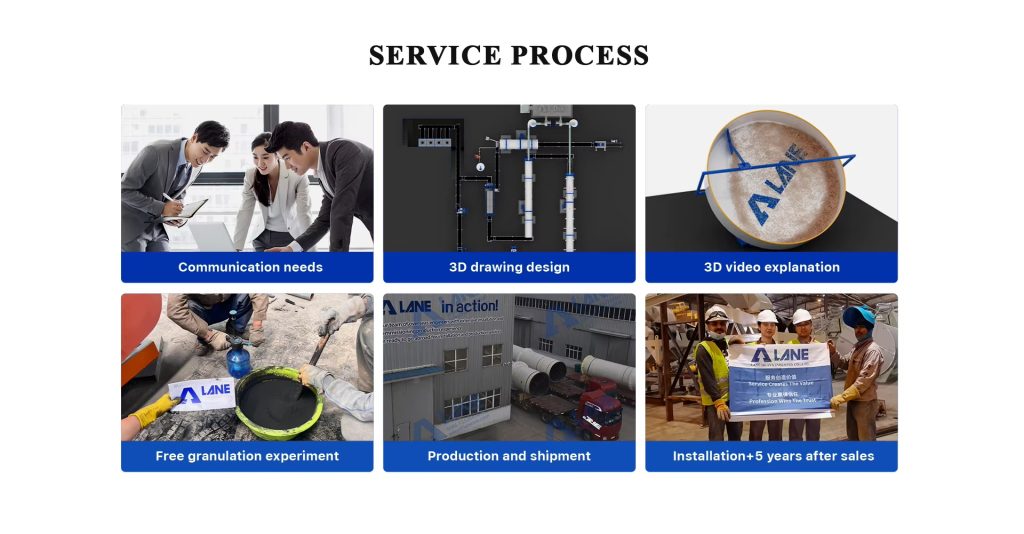
Check incoterms, payment milestones, warranty scope, and spare parts availability for the first two years. For one accountable contract, see LANE’s turnkey fertilizer plant page, or choose modular delivery: install blending or granulation first, prove the market, then expand.
Operating the Plant: Quality Control and Maintenance
The first year decides whether a small scale fertilizer manufacturing plant reaches its design margin. Test raw materials, check moisture, granule size, and batch weights in process, sample finished product, and keep records of energy, yield, and rework. Plan maintenance: daily checks of feeders, motors, and leaks; scheduled inspection of crusher hammers, granulator liners, screens, and dryer internals; and stock of long-lead wear parts.
Small Scale Fertilizer Manufacturing Plant FAQ
1. What is the minimum investment for a small scale fertilizer manufacturing plant?
Powder blending costs far less than a complete granular line with drying and finishing equipment. Compare total installed cost, not machine price; LANE’s small fertilizer plant cost guide explains how configuration drives the range.
2. What capacity is considered a small scale fertilizer manufacturing plant?
There is no fixed definition, but suppliers and project reports generally use small scale for roughly 1 to 5 tons per hour, which is several thousand to tens of thousands of tons per year depending on shifts and utilization.
3. Can a small scale organic fertilizer plant be profitable without owning a farm?
Yes, if feedstock supply and product off-take are secured in writing. A plant built on spot-market waste and spot-market sales carries the highest risk.
4. What is included in a small scale fertilizer production line?
A granular line includes feeding, crushing, batching, mixing, granulation, drying, cooling, screening, recycle, packaging, and dust collection. A dry blending line is shorter: weighing, mixing, and bagging.
5. Wet granulation or dry extrusion for a first project?
Wet granulation gives rounder granules but adds drying, cooling, and energy use. Dry extrusion avoids conventional drying and lowers capital cost, but granules are more irregular. Choose by what the market expects.
6. Do I need licenses and product registration to start production?
Almost always: zoning, environmental, and safety approvals for the facility, plus fertilizer product registration in each market. U.S. states coordinate through AAPFCO; the EU uses the CE framework under Regulation (EU) 2019/1009.
7. How long does it take to build and commission a small plant?
Permits and civil works usually set the timeline. A documented modular line can be installed and commissioned within weeks after arrival, but site approval, foundations, utilities, and training should be planned separately.
8. Can one plant later produce both organic and NPK products?
Partly. Batching, mixing, screening, and packaging can be shared, but feedstocks need separate storage and granulation chemistry differs. Design for one primary route with a defined expansion path.
Start With the Right Project Structure
Successful projects follow the same sequence: define market and product, choose the route from supply and demand, specify a complete system, plan installed cost and regulation, and evaluate suppliers on engineering capability. Whether the route is a small scale organic fertilizer plant or an NPK project, the planning sequence is the same. If you are at the feasibility stage, contact the LANE project team with your product plan and target capacity. A clear product brief turns a discussion about a small scale fertilizer manufacturing plant into a concrete proposal with comparable scope and realistic economics.

Send a message to us