


Fertilizer Plant Setup Cost in Pakistan: What Investors Actually Pay For
Most buyers searching for the fertilizer plant setup cost in Pakistan are not shopping for a price list. They need to know whether the project can be financed, and what a defensible budget looks like before they approach suppliers. Equipment quotations are the easy part. Raw material, site work, import charges, and the cash that keeps production running until the first invoices are paid decide whether the project survives.
As a reference point, suppliers in this segment usually quote a small manure-based granulation line at roughly USD 25,000 to 250,000 ex-works, while a gas-based urea complex runs into the hundreds of millions.
What the setup cost actually covers
Divide the budget into equipment, site and civil work, and working capital. First-time buyers often collect machine quotes, commit to a plot, and only then discover the other two.
Fixed capital covers process machines with motors and electrics, civil works such as foundations, the production shed, curing pad, warehouse, and weighbridge, utilities including transformer capacity and the hot air generator, plus mobile equipment. On granulation projects, the dryer and curing area drive civil cost more than the machines do.
Working capital is where feasibility studies and reality separate. Manure and press mud need collection contracts and haulage, blending lines need granular urea, DAP, and MOP, and SSP lines need imported rock phosphate and sulfuric acid. Plan on 60 to 90 days of production cost plus 30 to 60 days of receivables.
Post-commissioning costs sit outside every equipment quote: spare parts, wear items, product registration, bag design, operator training, and early downtime. A spare parts list with unit prices belongs in the quotation, because it separates offers that look identical on paper.
Which cost lines are specific to Pakistan
Raw material and feedstock access
Nitrogen production depends on natural gas at government-set prices with priority allocation, and the sector has faced curtailment before. That is why most new capacity here is planned around organic, blended, or phosphate routes.
Organic feedstocks are abundant: poultry litter across the Punjab poultry belt, manure from dairy colonies, press mud from sugar mills, and municipal green waste. Moisture and hauling distance decide whether a feedstock is cheap, because wet manure is mostly water and you pay to move that water by truck. Phosphate routes need imported rock phosphate and sulfuric acid, and both land at Karachi.
Energy, imports, and site
Industrial electricity is one of the heaviest operating costs a Pakistani fertilizer plant carries, so operators add solar for daytime loads and keep a generator for critical drives. The dryer is the largest thermal load, and the fuel choice changes both the monthly bill and the environmental approval path.
Import classification sets the duty and tax stack. Agricultural machinery sometimes qualifies for concessionary treatment, depending on the tariff heading and the Finance Act in force on the import date, so confirm the position with a customs agent before signing. An itemized FOB or CIF breakdown matters, because a lump-sum price cannot be classified properly at the port or compared with competing offers.
Land is the last local variable. Windrow composting takes three to six weeks, so the curing area can occupy more space than the production shed once storage, a weighbridge, and truck turning space are added. Industrial estate plots often come with utilities and land use approvals in place, which offsets a higher price compared with agricultural land that must be reclassified first.
Choose the production route before you collect prices
Machine prices mean little until the route is fixed. Two lines with the same hourly output can differ in cost by a factor of five.
What an organic fertilizer production line costs
The flow runs from composting and curing through crushing, mixing with additives such as humic acid, granulation, drying, cooling, screening, coating, and bagging. Composting parameters decide how much curing area the project needs: a carbon-to-nitrogen ratio near 25 to 30 to 1, moisture of 50 to 60 percent, and pile temperatures of 55 to 65 °C. Get these wrong and the machines still run, but the fertilizer will not sell twice.
Bulk blending and NPK compound fertilizer
Bulk blending weighs granular urea, DAP, MOP, and filler, mixes them in a rotary blender, and bags the result. Capital cost is low, but the product is a physical mixture, so accurate weighing and matched granule sizes prevent segregation. Chemical granulation costs more and needs scrubbing equipment.
Single super phosphate reacts rock phosphate with sulfuric acid, then cures and granulates the product. Acid storage, corrosion-resistant equipment, and gas scrubbing shift cost toward civil works and safety systems. Urea synthesis sits at the opposite end as a gas project with a fertilizer plant attached.
Equipment list and how each unit works
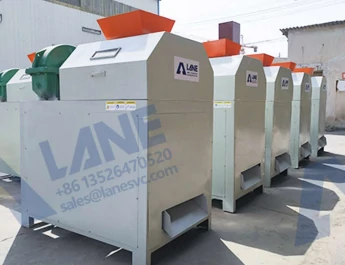
A disc or pan granulator rolls damp powder on an inclined pan while water sprays onto the bed, and pan angle, speed, and water rate set particle size. A rotary drum granulator tumbles material with moisture and sometimes steam, which suits higher throughput and pairs with a dryer. An extrusion granulator presses powder through a die into pellets with no drying step for many formulations, so die wear dominates maintenance.
Drying, cooling, and screening
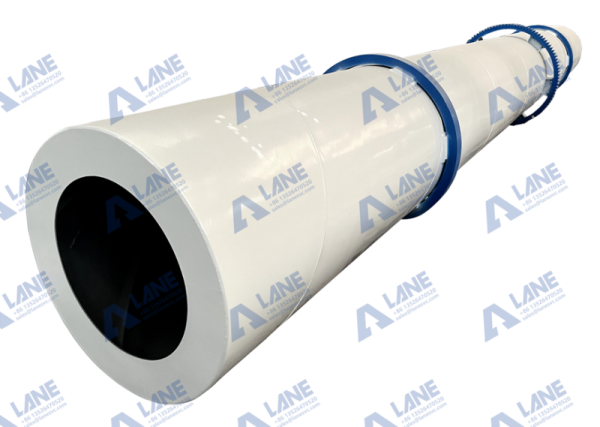
A rotary dryer with a hot air generator brings moisture into a safe bagging range, generally 12 to 14 percent, because wetter product cakes in storage. Outlet temperature and residence time are the control variables, and overheating damages the organic content. A rotary cooler brings granules near ambient temperature before screening, and screens return oversize material to a crusher.
Coating, bagging, and automation
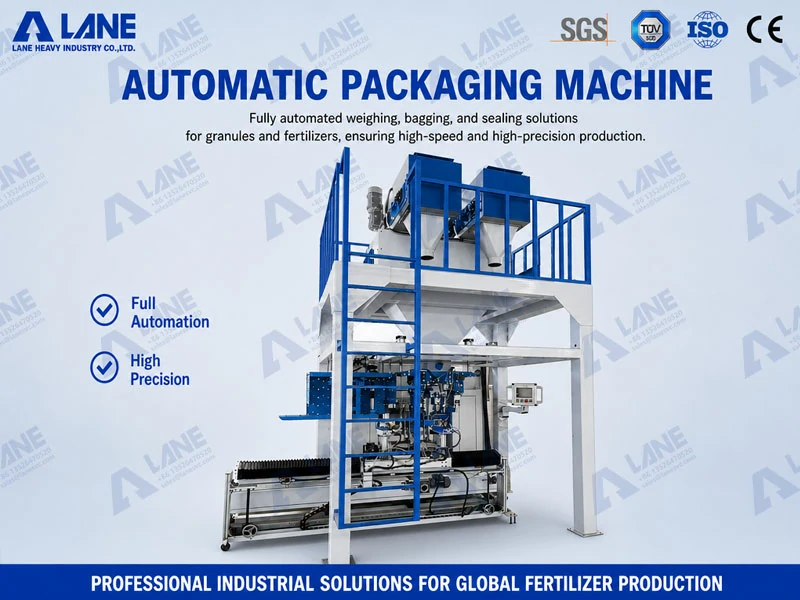
A coating drum applies talc, kaolin, or oil to reduce caking in storage and transit. Bagging handles 25 kg and 50 kg woven polypropylene bags, and the choice between a semi-automatic weigher and an automatic weigh-sew line sets daily dispatch capacity. PLC control cuts labor and rejects, but it needs trained staff.
How to build a cost estimate you can trust
- Fix capacity in tons per hour of finished product, not raw material.
- Test the moisture, bulk density, and stickiness of your own raw material before ordering a dryer.
- Request itemized quotes by machine, with motor ratings and materials of construction.
- Add site works, utilities, freight, duty, installation, spares, and working capital.
- Check that the project still services its debt if output runs 30 percent under plan.
The table below shows indicative equipment bands for common routes. They are planning figures, not quotations.
| Route | Typical capacity | Indicative equipment cost (ex-works or FOB) | Main cost drivers |
|---|---|---|---|
| Organic fertilizer granulation line | 1 to 5 t/h finished granules | USD 25,000 to 250,000 | Granulator type, dryer fuel, automation level |
| Bulk blending unit | 5 to 20 t/h | USD 30,000 to 200,000 | Number of hoppers, weighing accuracy, bagging speed |
| Extrusion granulation line | 1 to 5 t/h | USD 20,000 to 150,000 | Die wear, formulation, no dryer required |
| SSP plant | 30 to 100 t/day | USD 400,000 to 1,500,000 | Acid storage, scrubbing, curing capacity |
| Ammonia-urea complex | 1,000 t/day and above | Hundreds of millions of USD | Gas supply, ammonia loop, urea synthesis |
How to start a fertilizer business in Pakistan: licensing and compliance
Requirements vary by province and product, so treat this as a checklist to confirm with the relevant department.
Company incorporation goes through SECP, followed by tax registration with FBR. Fertilizer quality is regulated under fertilizer control rules enforced by provincial agriculture departments, and PSQCA publishes product standards, so confirm labeling and testing requirements before printing bags. Larger plants need an environmental NOC from the provincial EPA, with dust and emission control for crushers and dryers.
A bag label should state nutrient content, organic matter, moisture, and net weight, with batch testing behind those numbers. If you plan to export, fertilizing products entering the European Union must comply with Regulation (EU) 2019/1009, and Gulf and African markets run their own registration systems.
Operating cost and maintenance planning
Wear parts drive most unplanned downtime: hammers, screens, discs, extrusion dies, bearings, belts, and dryer liners. Holding three to six months of critical parts on site is cheaper than stopping a line for an airfreight shipment. Daily checks cover dryer outlet temperature, granule moisture, gearbox oil, screen condition, and bag weight accuracy, and those readings belong in a batch record so a complaint about caking can be traced.
Feeding discipline matters most among the operating habits, because pushing extra material through a dryer to chase output causes sticky product, blocked screens, and burned organic content. Then there is training: labor in Pakistan is affordable, but line performance is lost at the control panel in the first season.
Mistakes that inflate setup cost
Choosing the lowest machine price and paying for redesign during commissioning is the most expensive habit in this industry. Ordering equipment before testing raw material ranks second, because a dryer sized for the wrong material becomes a redesign with a shipping cost attached. Two more errors recur: ignoring the civil works quote until after the equipment order, and accepting a lump-sum price that cannot be classified at customs.
Illustrative project profile
The scenario below is illustrative and is not a quotation. A 2 t/h organic line near Faisalabad, fed by poultry litter and press mud within 40 km, would include a compost turner, crusher, mixer, disc granulator, rotary dryer, cooler, screening machine, coating drum, and a bagging line. Equipment is usually the smaller half of the investment, while curing space, a weighbridge, a transformer upgrade, and 90 days of working capital carry the rest. Feedstock price decides the return more than machine price does.
How to compare fertilizer equipment suppliers
Ask for an itemized quotation with motor ratings and materials of construction, FOB and CIF prices, packing dimensions for customs, a spare parts list with unit prices, and a commissioning scope that states supervision days and who covers travel. Insist on an output guarantee covering tons per hour, final moisture, and granule size distribution with the test conditions attached, because a capacity figure without test conditions means nothing. Then ask for reference plants running the same raw material.
FAQ
How much does it cost to set up a fertilizer plant in Pakistan?
It depends on the route. A small organic granulation line typically needs USD 25,000 to 250,000 for equipment, a blending unit sits in a similar band, and SSP or nitrogen plants cost far more. Add site works, freight, duty, and working capital, and a fertilizer plant setup cost in Pakistan usually lands well above the equipment quote.
How much does an organic fertilizer production line cost?
For 1 to 5 t/h of finished granules, equipment usually falls between USD 25,000 and 250,000 ex-works. Granulator type, dryer fuel, and automation level create most of the spread, and civil works, freight, and duty sit outside that figure.
How long does it take to set up a fertilizer plant in Pakistan?
Standard equipment is normally built and shipped in 30 to 75 days while civil work runs in parallel, and commissioning takes one to three weeks for a small line. Start the registration paperwork before the equipment arrives.
Do I need a license to manufacture fertilizer in Pakistan?
Yes. Company and tax registration, product registration with the provincial authority, PSQCA compliance, and environmental approval are normally required, and the list depends on the province and the product.
What raw materials work for an organic fertilizer plant in Pakistan?
Poultry litter, cattle and buffalo manure, press mud from sugar mills, and municipal green waste are the usual feedstocks. Moisture content and hauling distance decide the cost, and blending two materials gives better control over the carbon-to-nitrogen ratio.
Which is better, a complete line or individual machines?
A complete line gives one supplier responsibility for output, commissioning, and the interfaces between machines. Buying separately can look cheaper, but a mismatch between the dryer, cooler, and granulator is a common reason small plants never reach rated capacity.

Send a message to us