


How to Use Perlite for Organic Fertilizer Production Efficiently
There’s a reason experienced agronomists keep returning to perlite. It works. In organic fertilizer manufacturing, that’s not a small thing. I’ve spent years watching producers test different soil conditioners and bulking agents, and honestly, few materials deliver the consistent, measurable impact that perlite for organic fertilizer provides — when it’s used correctly.
This article walks through how to integrate perlite into your production workflow, which equipment handles it best, and what separates an efficient operation from a costly one.
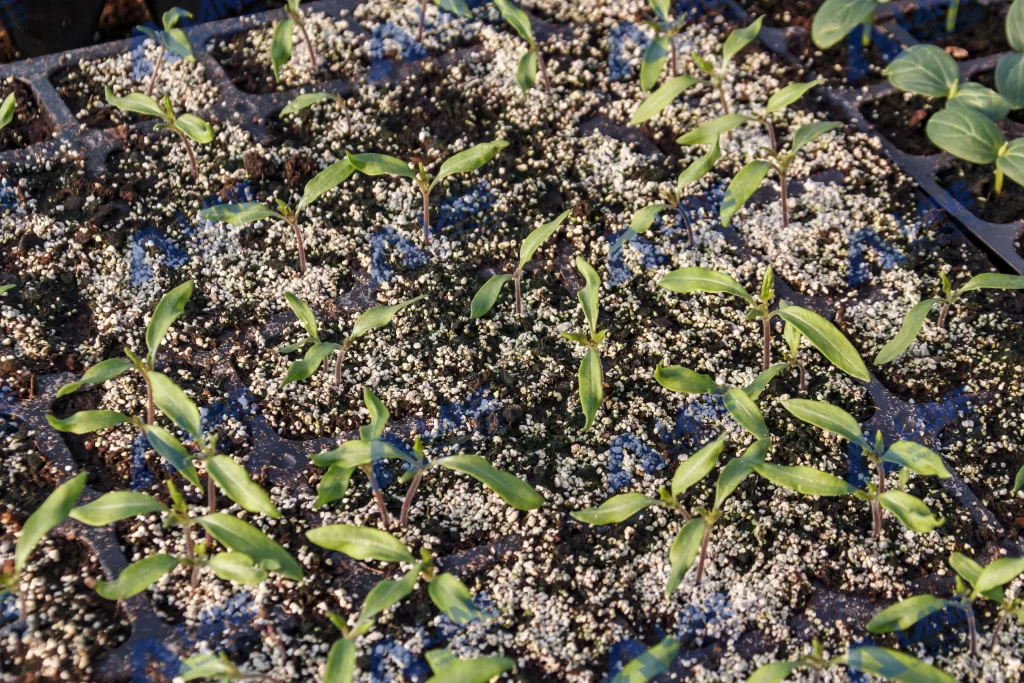
What Makes Perlite Worth the Investment?
Perlite is a natural volcanic glass that expands roughly 20-fold under high heat. The expanded material is lightweight and porous, boasting outstanding drainage and air permeability. Fertilizer producers add it to organic blends to optimize texture, speed up compost maturation, prevent caking, and boost granulation yields.
Horticultural perlite — the fine, white, processed grade used in growing media — is particularly well-suited for fertilizer production blends. Its consistent particle sizing and high porosity make it predictable at scale. From what I’ve seen in the field, producers who switch to horticultural perlite from coarser aggregates usually notice a difference within their first few batches.
Core Application Methods
As a Bulking and Aeration Agent
Raw organic inputs — manure, food waste, crop residues — compact during composting. That compaction restricts airflow, slows microbial activity, and drags out your entire processing timeline. Incorporating perlite for organic fertilizer production at 5–15% by volume opens up the pile, promotes aerobic decomposition, and reduces turning frequency meaningfully.
For high-moisture inputs like poultry manure or wet vegetable waste, this isn’t optional. You know how frustrating it is when a pile refuses to heat up properly? Horticultural perlite solves that reliably.
At the Granulation Stage
This is where the application gets more technical. Adding perlite for organic fertilizer during granulation directly affects particle density, granule strength, and post-production moisture retention. Getting mixing and granulation parameters right is everything here. Equipment matters enormously — underpowered mixers produce uneven distribution, and incorrect granulator settings result in brittle granules or excessive fines.
Key Production Equipment
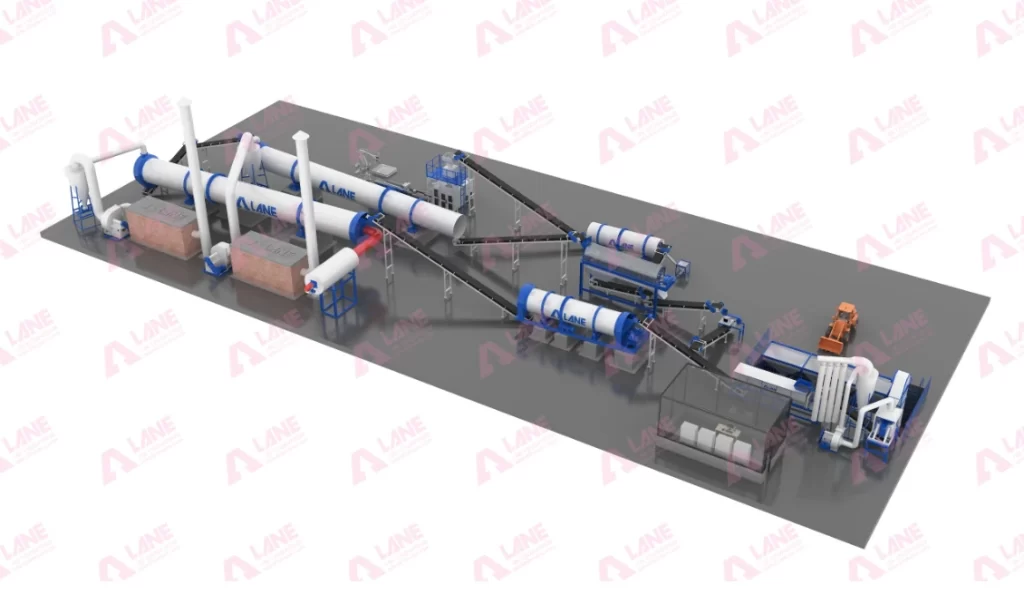
Efficient production requires matching the right single-unit machines to each process stage:
- Rotary drum granulator: The workhorse for mid-to-large-scale output. Its tumbling action produces consistent, round granules when perlite is pre-blended properly. Adjust spray moisture rates — perlite absorbs water and changes your baseline requirements.
- Disc granulator: A strong choice for variable feedstocks. The open pan allows real-time observation, which matters when dialing in a new material ratio.
- Double shaft mixer: Essential before granulation. Uneven distribution at this stage creates density variations no downstream equipment can correct.
- Rotary dryer: Removes excess moisture post-granulation. Run outlet temperatures below 85°C to avoid micro-fracturing the perlite’s internal structure.
- Rotary cooler: Reduces granule temperature before screening. Skipping this step causes caking — especially with horticultural perlitetrapping residual heat inside porous granules.
- Vibrating screen: Separates on-spec granules from fines and oversized particles. Screen aperture selection matters more with perlite blends given the density variation.
- Belt conveyor system: Perlite is friable — belt speed and transfer point design must minimize breakage between stages.
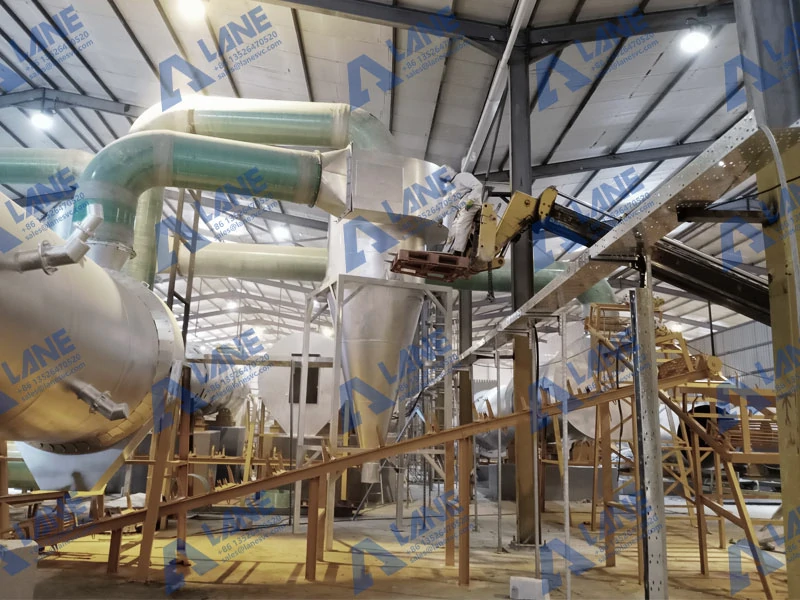
Equipment manufacturers like LANE have developed complete organic fertilizer production lines specifically configured for mineral-amended inputs. Their systems account for the density and flow characteristics unique to perlite for organic fertilizer blends — saving producers from retrofitting standard lines that were never designed for this application.
Getting Process Parameters Right
No single formulation works for all cases, yet several proven process benchmarks remain reliable.
For most compost-derived organic fertilizers, blending in 8–12% perlite on a dry-weight basis strikes the ideal balance between granule strength and pore ventilation. Raw material moisture prior to granulation should be kept at 28–35%, a lower range compared to perlite-free mixes; perlite’s porous structure retains far more free moisture than visible on inspection.
Maintain dryer exhaust air under 85°C. Excess heat causes internal particle cracking and compromises the end fertilizer’s in-field efficiency.
Common Mistakes That Cost Time and Money
In my experience working alongside fertilizer producers, the errors that hurt most are surprisingly consistent:
Adding perlite too late. It needs thorough blending before granulation — incorporating it into already-formed granules accomplishes almost nothing.
Ignoring moisture dynamics. Using horticultural perlite meaningfully changes water requirements at every stage. Producers who don’t adjust their process end up with inconsistent granulation or sticky product that clumps in storage.
Using the wrong grade. Coarse perlite creates granule voids. Fine perlite clogs equipment. Horticultural perlite sits in the right range for most fertilizer applications — match your grade to your process.
Is This the Right Choice for Your Operation?
Honestly — yes, for most organic fertilizer producers targeting granular output. Material cost is reasonable. The process benefits are real. And buyers in horticulture, greenhouse cultivation, and precision agriculture increasingly demand the substrate quality that perlite for organic fertilizer helps deliver.
The investment pays back through reduced processing time, lower product rejection rates, and the premium that well-structured organic granules command in export markets. If you’re scaling up or building a new line, this is a material worth centering your process around.
Frequently Asked Questions
Q1: What is the ideal mixing ratio for using perlite for organic fertilizer granulation?
Most producers find 8–12% by dry weight delivers the best balance of density, strength, and aeration. High-moisture feedstocks like poultry manure may benefit from up to 15% to manage excess water.
Q2: Does horticultural perlite affect NPK value in the final product?
Horticultural perlite is chemically inert — it contributes no nitrogen, phosphorus, or potassium. Its value is entirely physical: improving structure and porosity without altering nutrient content.
Q3: Which granulator works best for perlite-based organic fertilizer?
Both the rotary drum granulator and disc granulator are effective. The rotary drum granulator suits high-volume, consistent feedstocks. The disc granulator offers flexibility for variable inputs. Both require moisture rate adjustments when perlite is in the blend.
Q4: Is perlite compatible with all organic base materials?
Yes. Perlite works with animal manures, crop residues, food waste, and municipal compost. Its chemical inertness means no reactions with acidic or alkaline inputs. Always adjust moisture parameters by feedstock type.
Q5: How does perlite affect composting speed?
Properly incorporated perlite accelerates aerobic composting by maintaining consistent airflow. This supports microbial activity and can shorten composting cycles by 20–35% compared to unamended batches.
Q6: What dust controls are needed when handling horticultural perlite at scale?
Bag filters at mixer discharge points, conveyor transfer points, and screening stations are the minimum standard. Enclosed belt conveyor systems further reduce fugitive dust and protect both equipment and workers from fine particle accumulation.
For more details, please feel free to contact us.
Henan Lane Heavy Industry Machinery Technology Co., Ltd.
Email: sales@lanesvc.com
Contact number: +86 13526470520
Whatsapp: +86 13526470520

Send a message to us