


Zinc Sulfate Fertilizer Production Line: The Complete Industrial Guide
By the Engineering Team at LANE Machinery
LANE Machinery (Henan Lane Heavy Industry Machinery Technology Co., Ltd.) is a specialized fertilizer equipment manufacturer with 16+ years of experience delivering complete production lines and turnkey solutions to clients in 50+ countries. Our engineering team designs and commissions organic fertilizer, NPK compound fertilizer, and mineral micronutrient fertilizer production lines — including zinc sulfate, magnesium sulfate, SSP, TSP, MAP, DAP, and SOP lines. We hold ISO 9001 and CE certifications. Every recommendation in this guide is based on real project experience, not just theory.
Last Updated: July 2026 |
Why Invest in a Zinc Sulfate Fertilizer Production Line
If you are reading this, you are probably evaluating whether to set up or purchase a zinc sulfate fertilizer production line. You are in good company. The global zinc sulfate fertilizer market surpassed USD 1.2 billion in 2025, and independent research from multiple firms projects it will reach USD 1.8 to 2.1 billion by 2032, growing at a compound annual rate of approximately 7%. (Source: IMARC Group, “Zinc Sulfate Monohydrate Production Cost Analysis Report,” 2026; Research & Markets, “Zinc Sulphate Fertilizer Market — Global Forecast 2025-2030”) This is not speculative growth — it is being driven by a hard agronomic reality that half of the world’s agricultural soils are zinc-deficient.
For industrial buyers, the investment case is straightforward. Zinc deficiency causes 10 to 20% yield losses in staple crops like wheat, rice, and corn. Governments in India, Brazil, Ethiopia, and Vietnam are actively subsidizing zinc-fortified fertilizers. India alone introduced a INR 500 per metric ton subsidy for zincated fertilizers in January 2026, which immediately pulled demand from blending operations across the country. (Source: Government of India, Department of Fertilizers, notification dated January 2026) When governments pay farmers to buy your product, the demand side of the equation becomes remarkably predictable.
But demand is only half the story. The supply side is fragmented. Most zinc sulfate production remains tied to zinc smelter byproduct streams, meaning capacity is concentrated near mining and refining hubs rather than agricultural consumption zones. This creates a structural opportunity for strategically located zinc sulfate granulation plants to capture regional markets with lower logistics costs and faster delivery times than distant incumbents.
Before committing capital, however, you need to understand what a complete production line actually involves — from raw material handling through finished product packaging. This guide walks through every stage, so you can evaluate equipment, estimate costs, and choose the right supplier with confidence.
Understanding the Zinc Sulfate Fertilizer Manufacturing Process
The zinc sulfate fertilizer manufacturing process is fundamentally a chemical conversion followed by physical forming. At its core, you are taking a zinc-bearing raw material, reacting it with sulfuric acid to produce zinc sulfate solution, purifying that solution to agricultural-grade specifications, and then converting the purified material into a marketable physical form — typically granules or crystals.
Let’s walk through each stage in sequence.
2.1 Raw Material Preparation
The zinc source is the single most important variable in your entire operation. It determines your purification complexity, your heavy metal risk profile, and roughly 55 to 65% of your operating cost.
The three most common zinc sources used in a zinc sulfate fertilizer production line are:
Zinc Oxide (ZnO) — The preferred primary source for most producers. High purity, consistent chemistry, and predictable reaction behavior. Typically sourced from dedicated zinc chemical producers. Higher cost per ton of contained zinc, but lower purification burden and more predictable final product quality. Most suppliers targeting premium agricultural markets use zinc oxide as their base.
Zinc Ash / Zinc Dross — Byproducts from galvanizing and zinc smelting operations. Typically contain 60 to 72% zinc, with the balance being zinc oxide, metallic zinc particles, and trace contaminants. Significantly cheaper than primary zinc oxide on a contained-zinc basis, but the cost advantage must be weighed against the additional purification steps required. Zinc ash commonly carries elevated levels of cadmium, lead, and chloride — all of which must be rigorously removed to meet agricultural-grade specifications.
Zinc Metal / Zinc Scrap — Used primarily in plants co-located with zinc smelters or recycling operations. Requires dissolution in sulfuric acid, which generates hydrogen gas and requires appropriate ventilation and safety systems. Generally the highest-purity feedstock when using refined zinc, but procurement cost is tied to LME zinc pricing, introducing significant raw material cost volatility.
Regardless of which zinc source you choose, sulfuric acid is the second critical input. Technical-grade sulfuric acid at 98% concentration is standard. The reaction stoichiometry is straightforward:
ZnO + H₂SO₄ → ZnSO₄ + H₂O
This exothermic reaction generates significant heat and typically reaches 80 to 100°C in the reaction vessel. Proper temperature control and agitation are essential — too fast an addition rate can cause localized overheating and splashing; too slow hurts throughput.
2.2 Purification: Where Quality Is Won or Lost
If there is one stage in the zinc sulfate fertilizer manufacturing process that separates commodity producers from premium suppliers, it is purification. Agricultural-grade zinc sulfate is subject to strict heavy metal limits — particularly for cadmium, lead, and arsenic — because these elements accumulate in soils and enter the food chain. A production line that skimps on purification will produce material that fails regulatory specifications in most developed markets.
The purification sequence typically includes:
Filtration — The reaction slurry passes through a filter press to remove insoluble residues. This initial solid-liquid separation removes unreacted zinc oxide particles, silica, and other acid-insoluble materials. The resulting filtrate is a crude zinc sulfate solution containing dissolved impurities including iron, copper, cadmium, nickel, and manganese.
Oxidation — Hydrogen peroxide or another oxidizing agent converts ferrous iron (Fe²⁺) to ferric iron (Fe³⁺), which precipitates as iron hydroxide and can be filtered out. This step also begins oxidizing certain organic contaminants.
Cementation — Zinc powder is added to the solution. Because zinc is more electropositive than copper, cadmium, nickel, and lead, it displaces these metals from solution. The displaced metals precipitate as fine powders and are removed by a secondary filtration step. This is the critical heavy metal removal stage.
Polishing Filtration — A final filtration through fine media ensures no residual particulate matter remains before the solution proceeds to concentration and crystallization. Some plants add a chelating or complexing agent at this stage to bind any remaining trace metals.
The capital cost of a well-designed purification system is not trivial — reactors, filter presses, chemical dosing systems, and monitoring instrumentation — but it is the difference between producing a commodity that competes on price alone and a premium product that qualifies for regulated agricultural markets.
2.3 Concentration and Crystallization
After purification, the clear zinc sulfate solution typically contains 15 to 25% dissolved solids. This must be concentrated before crystallization or granulation.
Evaporation — Multi-effect evaporators are the standard choice for energy-efficient concentration. By using the vapor from one evaporation stage to heat the next, a triple-effect system can evaporate approximately three kilograms of water per kilogram of steam consumed. The solution is concentrated to near-saturation, at which point it can be directed to crystallizers or directly to a granulator, depending on the desired final product form.
Crystallization — For producers making zinc sulfate monohydrate (ZnSO₄·H₂O) or heptahydrate (ZnSO₄·7H₂O) crystals, the concentrated solution is cooled in jacketed crystallizers with chilled water circulation. As the solution cools, crystals form and grow. The crystal slurry is then dewatered in a centrifuge, yielding crystalline product with low surface moisture. Zinc sulfate monohydrate commands a premium over heptahydrate in most markets due to its higher zinc concentration (approximately 35% Zn vs. 22% Zn) and better storage stability.
For plants producing granular rather than crystalline product, the concentrated solution or damp crystals proceed directly to granulation.
2.4 Granulation: Converting Powder to Premium Product
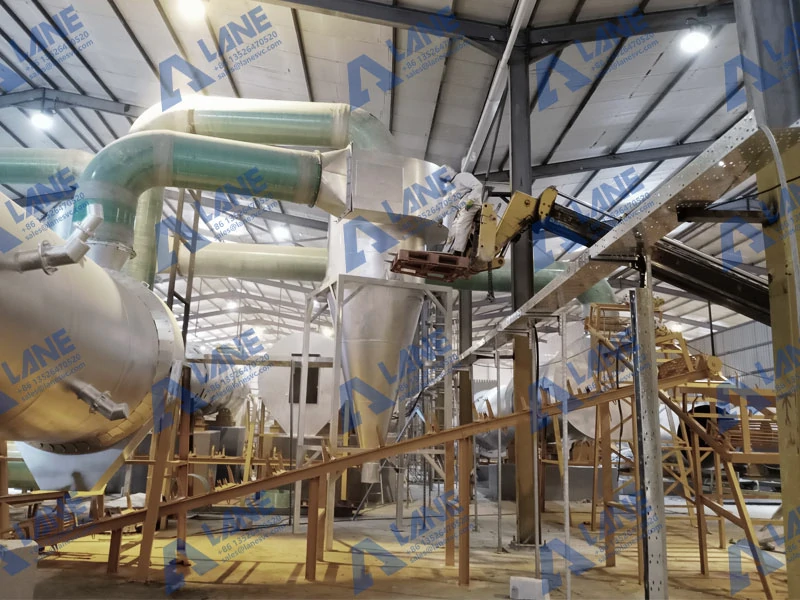
Granulation is the stage where a zinc sulfate granulation plant transforms fine powder or concentrated solution into uniform, dust-free, market-ready granules. The choice of granulation technology is one of the most consequential equipment decisions you will make.
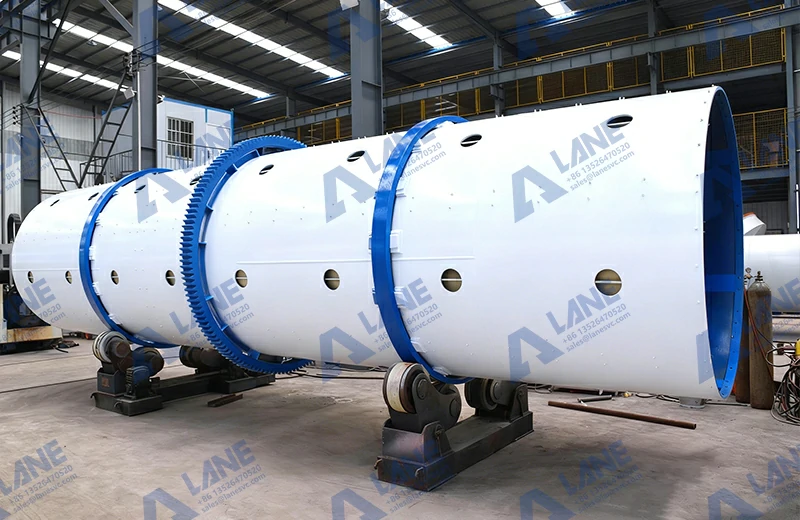
Rotary Drum Granulation is the workhorse for mid-to-large-scale plants producing 5 to 30 tons per hour. The process feeds zinc sulfate powder — or a slurry of concentrated solution and recycled fines — into a large rotating drum inclined at 2 to 5 degrees. As the drum rotates, material tumbles and rolls, building layers onto seed granules through a combination of capillary forces and mechanical interlocking. A spray system introduces water or binder solution to control granule growth. Rotary drum granulators achieve 90 to 95% granulation rates and produce roughly spherical granules with good mechanical strength. For a zinc sulfate fertilizer production line targeting 20,000 metric tons per year or more, rotary drum granulation is almost always the correct choice.
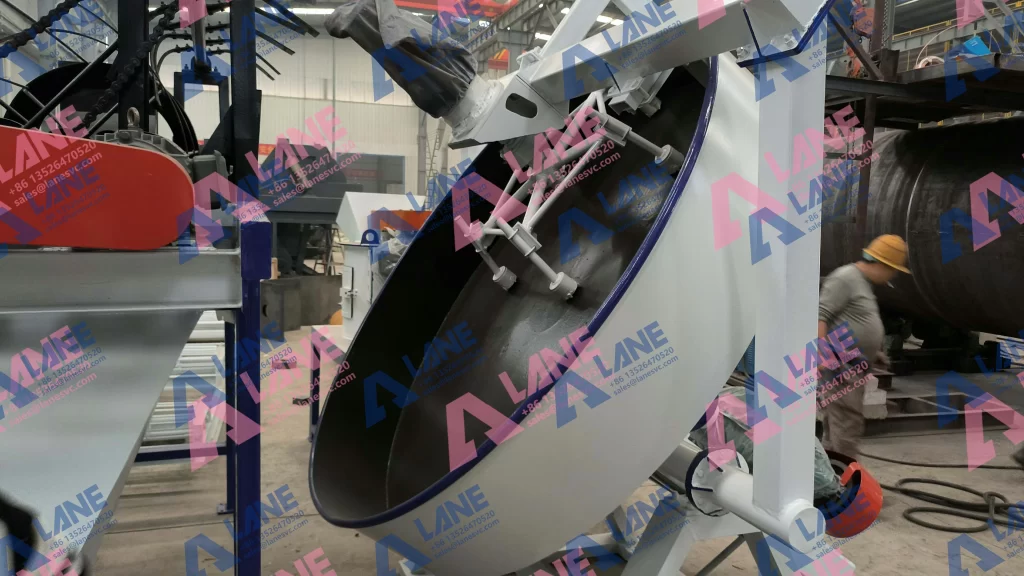
Disc Pan Granulation uses a rotating inclined disc rather than a drum. Material is fed onto the disc and forms granules as it rolls and tumbles. The operator can visually monitor granule formation and adjust disc angle, speed, and spray rate in real time. Disc granulators are simpler, less expensive, and easier to clean between product changeovers — advantages that matter for smaller plants or operations producing multiple product grades. Typical capacity range is 1 to 10 tons per hour.
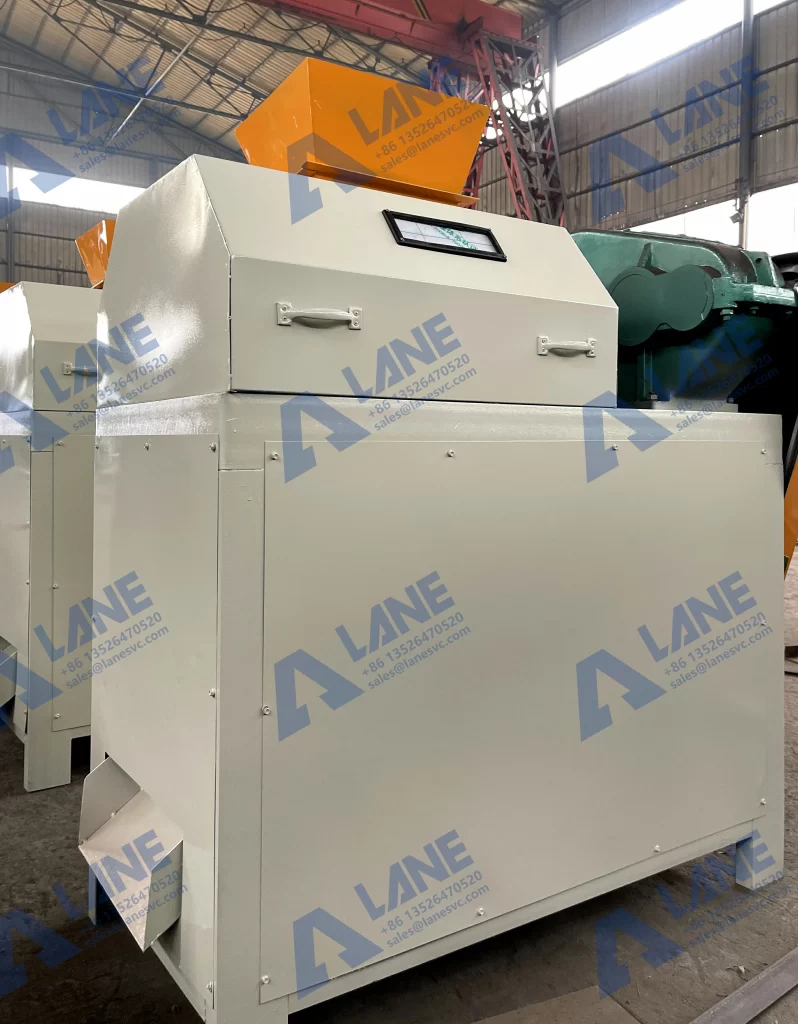
Double Roller Extrusion Granulation takes a fundamentally different approach. Rather than building granules through tumbling and layering, it compresses dry powder between two counter-rotating rollers under high pressure — typically 50 to 150 MPa. The compacted sheet is then crushed and screened to the desired granule size range. The key advantage: no drying step is required, eliminating one of the most energy-intensive unit operations. Granules produced by extrusion have very high crushing strength and angular shapes. The trade-off is lower throughput (1 to 8 tons per hour) and higher roller wear, particularly with abrasive materials. Dry extrusion is well-suited to smaller plants where energy cost or water availability favors a dry process route.
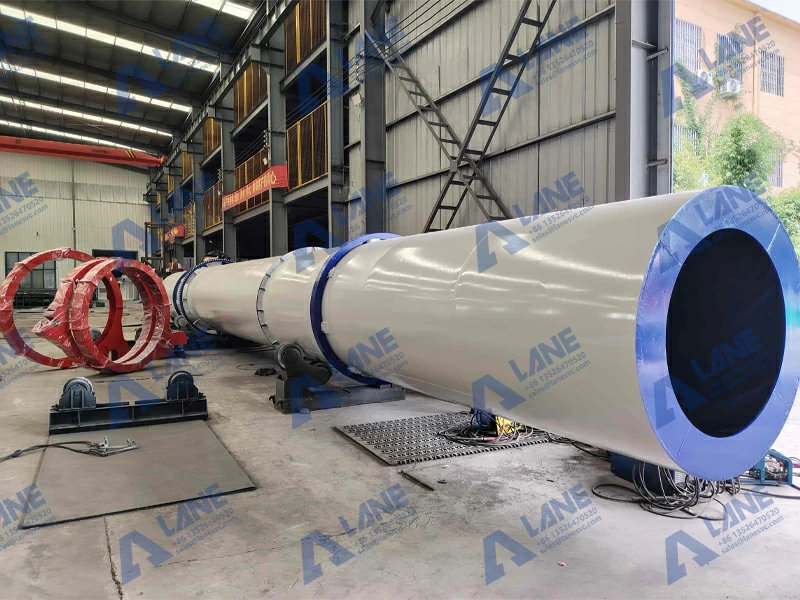
Post-Granulation Processing — Regardless of which granulation method is used, granules exit the granulator with elevated temperature and, in the case of wet granulation, significant moisture content. A rotary dryer reduces moisture to below 2%, followed by a rotary cooler that brings granule temperature down to near ambient to prevent caking during storage. A vibrating screen then classifies the product: on-spec granules (typically 2 to 4 mm for agricultural application) proceed to packaging; oversized granules are crushed and recycled; undersized fines return to the granulator as seed material.
Complete Equipment List for a Zinc Sulfate Fertilizer Production Line
For buyers evaluating suppliers, understanding the full equipment scope prevents costly surprises after contract signing. Here is what a complete production line should include:
3.1 Reaction Section
- Digester / Reactor — Rubber-lined or stainless steel vessel with mechanical agitation, designed for controlled zinc oxide addition to sulfuric acid. Should include temperature monitoring, fume extraction, and emergency quench capability. Rubber lining is cost-effective; stainless steel (316L) offers longer service life but higher upfront cost.
- Sulfuric Acid Storage and Dosing System — Acid-resistant storage tank with metering pump for precise acid-to-zinc ratio control.
- Fume Scrubber — Captures acid mist and hydrogen gas (when processing metallic zinc feedstock). Required for environmental compliance in most jurisdictions.
3.2 Purification Section
- Filter Press — Primary solid-liquid separation after reaction. Plate-and-frame design with polypropylene plates is standard. Size is determined by batch volume and desired cycle time.
- Purification Reactors — Agitated vessels for sequential oxidation and cementation treatment. Typically two to three reactors in series with chemical dosing pumps for hydrogen peroxide and zinc powder.
- Polishing Filter — Final fine filtration before concentration. Bag filters or cartridge filters are common.
3.3 Concentration and Crystallization Section
- Multi-Effect Evaporator — For solution concentration. Triple-effect configuration recommended for energy efficiency at capacities above 10,000 MT/year.
- Crystallizer — Jacketed vessel with cooling system. Required for crystalline product; optional for plants feeding concentrated solution directly to granulator.
- Centrifuge — For dewatering crystalline product. Batch or continuous design depending on throughput.
3.4 Granulation Section
- Granulator — Rotary drum, disc pan, or double roller as discussed in Section 2.4. The granulator is the heart of the zinc sulfate granulation plant and should be sized for at least 120% of nameplate capacity to accommodate recycle loads.
- Rotary Dryer — Direct-heated rotary drum with burner. Operating temperature 100 to 150°C. Should include temperature control and product discharge moisture monitoring.
- Rotary Cooler — Ambient air or chilled water cooled. Reduces product temperature to within 10°C of ambient before screening.
- Vibrating Screen — Single or double deck. Typical mesh sizes: 2 mm and 4 mm for agricultural-grade zinc sulfate granules.
3.5 Auxiliary and Finishing Equipment
- Belt Conveyors and Bucket Elevators — Interconnecting all process stages. Should be covered to control dust.
- Dust Collection System — Baghouse or cyclone dust collectors at all transfer points, the dryer exhaust, and the screening station.
- Automatic Bagging Machine — For 25 kg or 50 kg bags. Should include weighing, filling, sealing, and optional palletizing.
- Process Control System — PLC-based central control with HMI touchscreen. Monitors and controls temperature, flow rates, motor loads, and safety interlocks across the entire line.
- Quality Control Laboratory — Basic lab for incoming raw material testing and finished product analysis. At minimum: pH meter, conductivity meter, analytical balance, drying oven, and titration apparatus. Larger plants typically add atomic absorption spectroscopy (AAS) for heavy metal quantification.
Investment and Operating Costs
4.1 Capital Investment
The capital required for a zinc sulfate fertilizer production line spans a wide range depending on capacity, automation level, and local construction costs. Based on project data from multiple equipment suppliers and industry project reports:
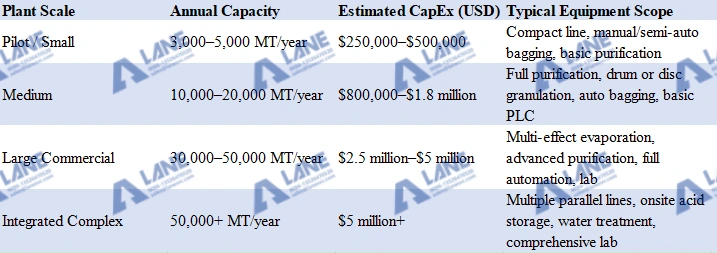
These figures include equipment, installation, and commissioning. They exclude land, civil works, and building construction, which are highly location-dependent. A greenfield plant in Southeast Asia or Africa will have significantly different site costs than one in North America or Europe.
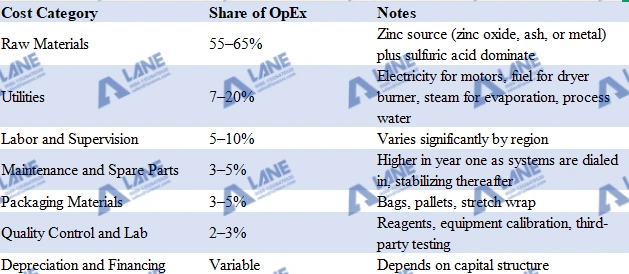
4.2 Operating Cost Structure
Understanding where your money goes on an ongoing basis is essential for financial planning:
4.3 Profitability Benchmarks
Industry data from IMARC Group and NIIR project consultancy indicates that a well-run zinc sulfate granulation plant typically achieves gross profit margins of 22 to 30% and net profit margins of 12 to 18%. Payback periods of 3 to 5 years are realistic for plants operating at 70%+ capacity utilization. (Sources: IMARC Group, “Zinc Sulfate Monohydrate Manufacturing Plant Project Report,” 2026; NIIR Project Consultancy Services, “Zinc Sulphate Manufacturing Plant” project report)
Choosing the Right Zinc Sulfate Production Line Supplier
Supplier selection is arguably the most important decision in your project. A production line is a 15 to 20-year asset, and the relationship with your equipment supplier extends well beyond delivery.
5.1 Evaluation Criteria
Industry Experience — How many zinc sulfate or comparable micronutrient fertilizer lines has the supplier built? Ask for a reference list with installed capacity and commissioning dates. A supplier with 15 lines in operation across multiple countries brings institutional knowledge that a supplier with 3 lines cannot match, regardless of how polished their sales presentation is.
Process Engineering Capability — Can the supplier design the entire zinc sulfate fertilizer manufacturing process flow, or do they only manufacture individual machines? A full-line supplier should be able to provide a process flow diagram with mass balance, equipment layout drawings, and utility consumption estimates before you sign a contract. If they cannot answer questions about zinc-to-acid ratios, purification chemistry, or granulation recycle loads, you are talking to a machine fabricator, not a process engineering company.
Quality Certifications — ISO 9001 is the baseline for quality management. CE certification is required for equipment sold into the European Economic Area. For plants producing food-chain fertilizers, additional certifications like ISO 22000 provide assurance that the equipment is designed with food safety principles in mind.
After-Sales Support — What happens after commissioning? Does the supplier offer on-site installation supervision? Do they stock critical spare parts, or will you wait 6 to 8 weeks for replacements from overseas? Can their engineers provide remote diagnostic support via video call? These operational questions matter far more than minor differences in upfront equipment pricing.
Geographic Track Record — A supplier who has commissioned lines in Nigeria, Vietnam, or Brazil understands the logistics, customs clearance, and local workforce realities of those markets. A supplier who has only ever delivered equipment domestically is likely to underestimate the complexity of an international project.
5.2 Questions to Ask Before Signing
- “Please provide the names and contact details of three customers in our target capacity range whose lines you commissioned more than two years ago.”
- “What is the guaranteed granulation rate, and what penalties apply if the commissioned line does not achieve it?”
- “Who supplies the critical components — motors, gearboxes, bearings, PLC — and are they globally serviceable brands?”
- “What is your standard warranty period, and what is covered?”
- “Do you include operator training in your scope of supply, and for how many days?”
Site Selection and Regulatory Considerations
A zinc sulfate fertilizer production line is classified as a chemical processing facility in most jurisdictions. Before ordering equipment, confirm that your proposed site meets the following:
Zoning — The site must be zoned for industrial chemical manufacturing. Agricultural or mixed-use zoning is generally not sufficient, even if your product is for agricultural application.
Environmental Permitting — Sulfuric acid handling, process water discharge, and dryer stack emissions will require environmental permits in essentially every country. Engage a local environmental consultant early — do not assume your equipment supplier will handle permitting. They generally will not.
Utility Availability — A medium-scale zinc sulfate granulation plant draws significant electrical load (typically 150 to 400 kW), consumes process water at 2 to 5 cubic meters per ton of product, and requires a fuel source for the dryer burner (natural gas, diesel, or biomass). Confirm utility capacity before breaking ground.
Proximity to Raw Materials and Markets — Every kilometer between your raw material source and your plant, and between your plant and your customers, adds to your delivered cost. In a commodity business where raw materials are 55 to 65% of operating cost, logistics optimization is not a nice-to-have; it is how you survive margin compression.
Workforce — Operators for a zinc sulfate fertilizer production line need basic chemical handling training and mechanical aptitude. Supervisors need process control experience. If your plant is in a region without existing chemical manufacturing, budget for 2 to 4 weeks of operator training during commissioning, plus ongoing supervision during the first 3 to 6 months of operation.
Operational and Maintenance Best Practices
A well-maintained zinc sulfate production line should operate for 15 to 20 years with periodic major overhauls. The most common causes of premature equipment failure are corrosion and abrasion, both of which are manageable with proper maintenance protocols.
Corrosion Management — Sulfuric acid and zinc sulfate solutions are corrosive to carbon steel. All wetted surfaces in the reaction and purification sections must be rubber-lined, stainless steel, or polypropylene. Inspect rubber linings quarterly for blisters, cracks, or detachment. A pinhole in a reactor lining that goes undetected can lead to a structural failure of the vessel within weeks.
Bearing and Seal Maintenance — Granulator and dryer bearings operate in a dusty, sometimes corrosive environment. Grease them on a weekly schedule — do not wait for them to run hot or noisy. Gearbox oil should be changed every 6 months or 2,000 operating hours, whichever comes first.
Filter Press Maintenance — Filter cloths are consumable items. Track the number of cycles per cloth set and replace proactively before cloth blinding reduces filtration rate and increases cycle time. A blinded filter press is one of the most common production bottlenecks we see in operating plants.
Screen Inspection — Vibrating screen meshes wear and can develop holes. Inspect screens at the start of every shift. A hole in a 4 mm screen allows oversize granules into the product stream, causing customer complaints and potential returns.
Calibration Schedule — Weighing systems for batching and bagging should be calibrated monthly. Temperature sensors on the dryer and cooler should be verified quarterly. pH meters in the purification section need weekly calibration.
Spare Parts Inventory — At minimum, maintain on-site stock of: one complete set of filter cloths, two sets of screen meshes, granulator paddle tips or roller shells (depending on granulator type), critical bearings and seals, PLC I/O modules, and VFD drives for critical motors.
Frequently Asked Questions
Q1: What is the minimum viable capacity for a zinc sulfate fertilizer production line?
A: Approximately 3,000 to 5,000 metric tons per year is the practical minimum for an economically viable operation. Below this threshold, fixed costs (labor, utilities infrastructure, quality control) consume too large a share of revenue. However, if you have captive raw material access — for example, zinc ash from an adjacent galvanizing plant — smaller capacities can be viable because raw material cost advantage offsets the scale disadvantage.
Q2: How long does it take from ordering equipment to producing saleable product?
A: Standard equipment manufacturing lead time is 30 to 60 days for a complete line, depending on supplier backlog and customization requirements. Ocean freight adds 2 to 6 weeks depending on destination. On-site installation and commissioning typically requires 6 to 12 weeks. Plan for 5 to 8 months from purchase order to first commercial production.
Q3: Which granulation method is best for zinc sulfate?
A: For capacities above 10,000 MT/year, rotary drum granulation is the standard recommendation — it offers the best combination of throughput, granule quality, and operating cost. For 3,000 to 10,000 MT/year, disc pan granulation provides a lower capital cost alternative with good process flexibility. Double roller extrusion is best suited to smaller operations where dryer fuel cost or availability is a constraint.
Q4: Can the same production line make both zinc sulfate monohydrate and heptahydrate?
A: Yes, with appropriate process control. Monohydrate requires higher drying temperatures (approximately 110 to 150°C) to drive off the additional water of crystallization. Heptahydrate is processed at lower temperatures to retain its seven water molecules. The granulation, drying, and cooling parameters must be adjusted, but the same equipment set can produce both products.
Q5: What are the most common quality problems in zinc sulfate granulation?
A: The three most frequent issues are: (1) low granule crushing strength, usually caused by insufficient binder or incorrect moisture content during granulation; (2) caking during storage, caused by inadequate drying or cooling before bagging; and (3) heavy metal specification failures, caused by insufficient purification — typically inadequate cementation time or expired zinc powder. All three are preventable with proper process control and operator training.
Q6: Is it better to buy a complete turnkey line or purchase individual machines from different suppliers?
A: For a first-time plant, a turnkey line from a single experienced supplier is strongly recommended. The integration risk — ensuring that the reactor discharge pump matches the filter press capacity, that the dryer is sized correctly for the granulator output, that the control system communicates with all components — is substantial. A single supplier takes responsibility for overall line performance. Once you have operating experience, you can consider sourcing individual replacement or expansion machines from alternative suppliers.
Q7: What are the key differences between producing zinc sulfate powder versus granules?
A: Powder production is simpler — essentially purification, crystallization, drying, and milling — with lower capital cost. However, granular product commands a 15 to 25% price premium in most markets because granules are dust-free, easier to handle and blend with NPK fertilizers, and preferred for mechanical spreading. If your target market includes bulk blending operations, granular form is essentially mandatory.
Q8: How much water does a zinc sulfate production line consume?
A: A medium-scale plant producing granular zinc sulfate typically consumes 2 to 5 cubic meters of process water per ton of finished product. Water is used in the reaction (as acid dilution and reaction medium), in scrubbing systems, and for equipment cleaning. Plants in water-scarce regions should evaluate water recycling from the evaporation condensate stream, which can recover 60 to 70% of process water for reuse.
Q9: What laboratory equipment is essential for quality control?
A: At minimum: analytical balance (±0.1 mg), pH meter, drying oven, muffle furnace, titration setup for zinc content determination, and sieve shaker with test sieves. For plants supplying regulated markets, add atomic absorption spectroscopy (AAS) or inductively coupled plasma (ICP) for heavy metal quantification. Budget approximately $15,000 to $50,000 for a basic QC lab setup, depending on analytical scope.
Q10: Can zinc sulfate be co-granulated with NPK fertilizers in the same production line?
A: Yes, and this is an increasingly common configuration. Zinc sulfate is added to the NPK granulator feed at 1 to 5% by weight to produce zinc-fortified compound fertilizer. However, the line must be designed for this dual purpose from the start — the granulator, dryer, and screening system need to handle the different material characteristics of NPK versus straight zinc sulfate. Retrofitting an existing NPK line for zinc sulfate co-granulation requires engineering evaluation of equipment compatibility.


Send a message to us