


Potassium Sulfate Production Line: The Complete Industrial Buyer’s Guide
A potassium sulfate production line is not a single machine you order from a catalog. It is an integrated industrial system: a series of interconnected process units — furnaces, reactors, absorption towers, crystallizers, dryers, screening stations, and packaging lines — that convert raw potassium chloride and sulfuric acid into high-purity SOP (Sulfate of Potash) fertilizer. For a fertilizer manufacturer planning to enter the SOP market, or an investor evaluating a new chemical processing venture, understanding how these components fit together is the difference between a plant that prints money and one that bleeds it.
This guide walks through every layer of that decision: the chemistry, the machinery, the capital requirements, the operating economics, and the practical realities of buying and running a potassium sulfate production line in 2026.
What Is a Potassium Sulfate Production Line?
A potassium sulfate production line is a complete manufacturing facility designed to produce potassium sulfate (K₂SO₄), the world’s primary source of chloride-free potassium fertilizer. Unlike MOP (Muriate of Potash, KCl), SOP contains virtually no chloride, making it the potassium source of choice for chloride-sensitive crops: fruits, vegetables, tobacco, potatoes, nuts, and high-value greenhouse crops.
The production line takes two main feedstocks — potassium chloride and sulfuric acid — and processes them through a high-temperature reaction system to yield SOP powder or granules with a typical K₂O content of 50-52%. A well-designed line running the Mannheim process also produces hydrochloric acid as a co-product, which can be captured, purified, and sold — turning what was once an environmental liability into a meaningful second revenue stream.
For industrial buyers, the term “production line” typically encompasses everything from raw material receiving through finished product packaging, including utilities, environmental controls, and automation systems. Most suppliers in the global market — predominantly based in China’s Hebei and Henan provinces — offer these as turnkey EPC (Engineering, Procurement, Construction) packages.
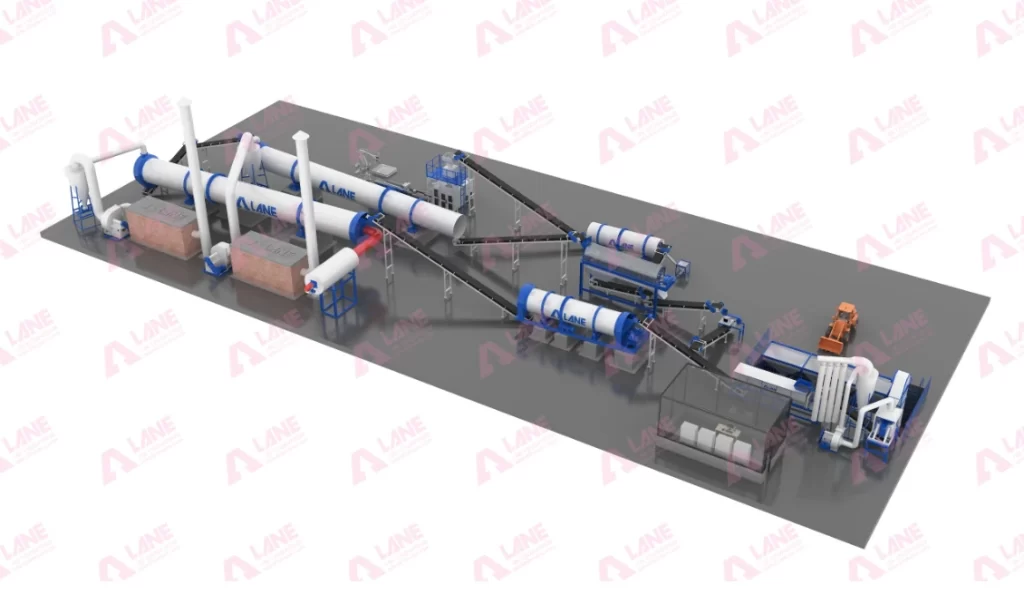
The SOP Fertilizer Manufacturing Process: How It Works
Understanding the SOP fertilizer manufacturing process is essential before evaluating any equipment proposal. The dominant industrial route — accounting for roughly 50-60% of global SOP supply — is the Mannheim process. Here is how it works, step by step.
Step 1: Raw Material Preparation
Potassium chloride (KCl, typically 60% K₂O) arrives in bulk and is stored in sealed silos equipped with screw conveyors and bucket elevators. Sulfuric acid (H₂SO₄, 98% concentration) is held in carbon steel storage tanks with corrosion-resistant linings. Both feedstocks are metered into the system through automated weighing and batching stations. Accuracy at this stage directly affects reaction efficiency downstream.
Step 2: The Mannheim Furnace Reaction
This is the heart of the entire plant. The Mannheim furnace is a refractory-lined, mechanically stirred reactor operating at approximately 540-560°C. Inside the furnace, potassium chloride reacts with sulfuric acid in a two-stage reaction:
- Stage 1: KCl + H₂SO₄ → KHSO₄ + HCl (exothermic, at the feed entry)
- Stage 2: KHSO₄ + KCl → K₂SO₄ + HCl (endothermic, at the heated reaction bed)
Mechanical rake arms continuously stir the reaction mass, pushing partially reacted material through the furnace while ensuring even heat distribution. The furnace is heated by a burner system — natural gas, diesel, or coal-fired — and the combustion chamber design separates hot flue gases from the reaction mass to prevent contamination.
Step 3: HCl Gas Recovery
Hydrogen chloride gas released during the reaction is drawn off through a dedicated gas handling system. This is not simply vented. Modern potassium sulfate production lines route HCl through a multi-stage absorption train: graphite coolers, packed absorption towers, mist eliminators, and circulation pumps. The result is commercial-grade hydrochloric acid (typically 31% concentration), recovered at approximately 1,200 kg per ton of K₂SO₄ produced. In a 50,000-ton-per-year plant, that represents roughly 60,000 tons of saleable HCl annually — a by-product revenue stream that can add 10-20% to the plant’s bottom line.
Step 4: Cooling, Crushing, and Conditioning
Hot SOP exits the Mannheim furnace at several hundred degrees Celsius. It passes through a cooling screw conveyor that drops the temperature while simultaneously crushing large clinkers into manageable sizes. Air-seal conveyors prevent HCl gas leakage at the discharge point. The cooled material then enters a crusher or grinder for further size reduction.
If the target product is granular SOP, the material passes through a rotary dryer or fluidized bed dryer, followed by a rotary cooler. Vibrating screens classify the output: on-spec granules proceed to packaging, oversize particles are recycled to the crusher, and fine powder is either sold as SOP powder or sent to a granulation loop.
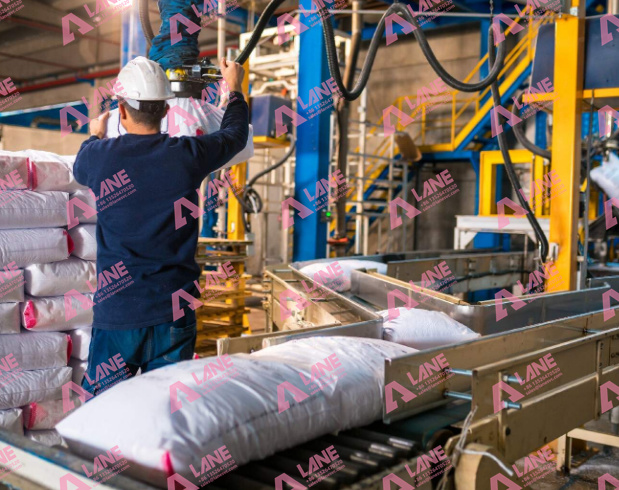
Finished product — whether powder or granular, typically K₂O ≥ 50% — is conveyed to product silos, then fed through automatic weighing and bagging machines into 25 kg or 50 kg bags, or loaded into bulk bags (1,000 kg FIBC) or tanker trucks. Modern lines include robotic palletizers and stretch-wrap stations for export-ready packaging.
Core Equipment Components of a Potassium Sulfate Production Line
When you buy a potassium sulfate production line, you are purchasing an engineered system comprising roughly 10-12 major equipment categories. Each one deserves scrutiny during supplier evaluation.
Reaction System (Mannheim Furnace)
The single most expensive and structurally critical component. Construction features acid-resistant refractory brick lining, a mechanical rake assembly with replaceable teeth, a burner system sized for the target capacity, and a double-walled furnace shell. A quality furnace should deliver a 10-15 year service life before major refractory rebuild. Typical energy consumption: 75-90 liters of fuel oil equivalent per ton of K₂SO₄ output.
HCl Absorption & Recovery System
FRP (fiber-reinforced plastic) absorption towers, graphite shell-and-tube heat exchangers, circulation pumps rated for acidic service, and FRP exhaust stacks — typically 25-30 meters in height. The system must be designed for the full HCl gas load at peak production, with redundancy on critical circulation pumps.
Material Handling Equipment
Screw conveyors, belt conveyors, bucket elevators, and pneumatic conveying systems sized for the plant’s throughput. Every contact surface in acidic or high-temperature zones must be corrosion-resistant — 316L stainless steel or specialty alloys are common.
Drying, Cooling, and Dust Collection
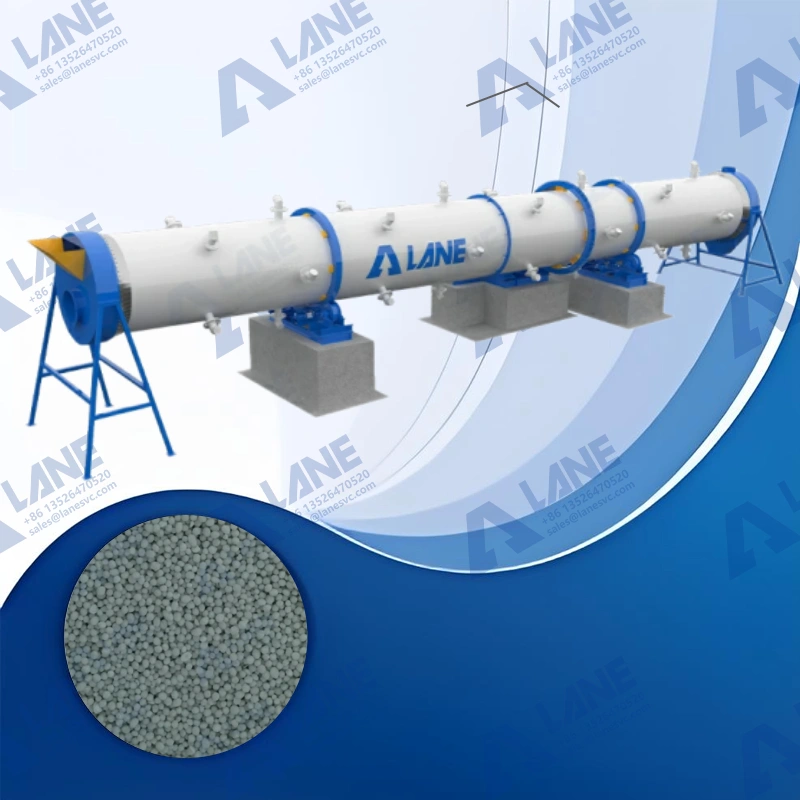
Rotary dryers with hot air generators, fluidized bed coolers, cyclone separators, and pulse-jet bag filters. Dust collection is both a safety requirement (SOP dust is an inhalation irritant) and a material recovery opportunity — closed-loop systems recycle captured fines back into production, improving overall yield.
Automation and Control
PLC-based control systems are standard on mid-scale plants; DCS (Distributed Control Systems) are used for large multi-furnace installations. The control system manages feedstock ratios, furnace temperature profiles, gas handling pressure loops, and packaging line sequencing. Look for suppliers who provide remote monitoring capability — this has become a practical necessity for overseas plant owners who cannot station senior engineers on site permanently.
Utilities
Cooling towers (typically 500 m³/h for a mid-scale plant), steam boilers for process heating, compressed air systems for pneumatic instruments and conveying, and electrical distribution with MCC (Motor Control Center) panels. Water treatment — both for the boiler feed and for cooling tower make-up — should be included in the scope.
Potassium Sulfate Plant Cost: What to Expect in 2026
For most buyers, the potassium sulfate plant cost is the question that determines whether a project moves forward. Here is a realistic breakdown based on current equipment pricing, construction costs, and project data from active plants.
Total Investment by Capacity
| Plant Scale | Annual SOP Capacity | Total Investment (USD) |
|---|---|---|
| Small / pilot | 5,000 – 10,000 TPY | $3M – $8M |
| Mid-scale (entry-level commercial) | 20,000 – 50,000 TPY | $8M – $18M |
| Mid-to-large | 50,000 – 100,000 TPY | $18M – $40M |
| Large multi-furnace | 100,000 – 300,000+ TPY | $40M – $110M+ |
A 50,000-ton-per-year plant — the most common entry point for serious commercial investors — typically requires $10-15 million in total capital, broken down as follows:
| Cost Category | Share of Total | Typical Range (50K TPY Plant) |
|---|---|---|
| Process equipment (furnace, reactors, dryers, etc.) | 40-50% | $4M – $7.5M |
| Civil construction, foundations, steel structures | 15-20% | $1.5M – $3M |
| Installation and commissioning | 10-15% | $1M – $2.25M |
| Utilities (boiler, cooling, power distribution) | 10-15% | $1M – $2.25M |
| Environmental systems (HCl recovery, effluent treatment) | 5-10% | $0.5M – $1.5M |
| Working capital and contingencies | 5-10% | $0.5M – $1.5M |
Operating Costs
On the OpEx side, raw materials dominate the cost structure. For every metric ton of SOP produced, a Mannheim furnace line consumes approximately:
- 840 kg potassium chloride (KCl)
- 560 kg sulfuric acid (H₂SO₄, 98%)
- 1.2 m³ process water
- 75-90 liters fuel oil equivalent for furnace heating
Raw material costs typically represent 55-70% of total production cost, making KCl and sulfuric acid pricing the single largest variable in plant profitability. Energy costs add another 10-20%. At current market prices, the cash production cost for SOP via the Mannheim process ranges from $250 to $400 per ton, depending on location, feedstock sourcing, and energy efficiency.
Revenue and Payback
With SOP selling at $450-700 per ton (FOB, depending on grade and region), a well-operated 50,000 TPY plant generates $22-35 million in annual revenue from SOP sales alone. Add in HCl by-product revenue at $80-150 per ton, and the total annual revenue can reach $25-38 million. Net profit margins of 15-25% are achievable for plants with stable feedstock supply and efficient furnace operation. Typical payback period: 2.5 to 4 years.
Mannheim vs. Alternative Production Technologies
While the Mannheim process dominates the industry, two alternative routes exist. Each carries distinct trade-offs that matter for investment decisions.
| Parameter | Mannheim Process | Double Decomposition | Langbeinite Route |
|---|---|---|---|
| Feedstock | KCl + H₂SO₄ | KCl + (NH₄)₂SO₄ or Na₂SO₄ | Natural langbeinite ore |
| Operating temperature | 540-560°C | 25-100°C (aqueous) | Ambient leaching |
| Product purity (K₂O) | 50-52% | 48-50% | 48-51% |
| HCl by-product | Yes (high value) | No | No |
| Energy intensity | High | Low | Very low |
| Technology maturity | Very mature (100+ years) | Moderate | Niche |
| Capital cost | Moderate-high | Lower | Location-dependent |
| Global market share | 50-60% | 25-35% | 10-15% |
| Best suited for | Large-scale commercial plants | Regions with cheap ammonium sulfate | Areas near langbeinite deposits |
For most new entrants, the Mannheim process remains the default choice — not because it is perfect, but because it is proven, scalable, and the by-product economics are compelling when HCl recovery is designed properly. The double decomposition route can make sense in regions where ammonium sulfate is available at low cost (e.g., as a caprolactam by-product), but product purity tends to be lower. The langbeinite route is geographically constrained to regions with natural deposits: the Carlsbad basin in New Mexico, parts of Germany, and select locations in China.
Plant Design and Engineering Considerations
A potassium sulfate production line cannot be bought off the shelf. It must be engineered for the specific site, feedstock quality, target product specification, and local regulatory environment. Here are the engineering factors that separate a profitable plant from a troubled one.
Site Selection
Proximity to KCl supply and sulfuric acid sources is the single largest logistics cost driver. A plant located 2,000 km from its KCl source will pay a heavy freight penalty on 840 kg of raw material for every ton of product. Similarly, access to natural gas infrastructure matters — the Mannheim furnace burns fuel continuously, and gas is almost always cheaper than diesel or coal on a per-BTU basis when pipeline access exists.
Capacity Planning and Modularity
Single Mannheim furnaces typically deliver 10,000 tons per year of SOP. For a 50,000 TPY plant, that means five furnaces operating in parallel. This modularity is actually an advantage: it allows phased investment (start with two furnaces, add three more as market demand grows) and reduces the risk of total plant shutdown during furnace maintenance. When evaluating a supplier, ask specifically about their multi-furnace integration experience and control system architecture for parallel furnace management.
Corrosion Management
High-temperature sulfuric acid and hydrogen chloride gas create an extraordinarily corrosive environment. Material selection — refractory grade for the furnace lining, FRP for gas handling, graphite for heat exchangers in HCl service, 316L or Hastelloy for critical wetted parts — is not an area to cut costs. A plant built with substandard materials will fail within 18-24 months. The furnace refractory lining, in particular, should be specified for a minimum 5-year continuous service life before partial rebuild.
Automation Level
Modern SOP plants are increasingly automated. PLC control with SCADA visualization is the minimum standard for mid-scale plants. The system should provide: real-time furnace temperature monitoring at multiple points, automated feedstock ratio control, HCl gas pressure management with safety interlocks, and production data logging for operational analysis. For overseas buyers who cannot maintain a large on-site technical team, a higher level of automation — including remote diagnostics and supplier-side monitoring — can dramatically reduce operational risk.
Industries and Applications for SOP Fertilizer
Understanding the end market matters because it determines product specification requirements and, ultimately, the configuration of your production line.
Agriculture (85-90% of SOP Demand)
SOP is the premium potassium fertilizer for chloride-sensitive crops. Key application segments include:
- Fruits and vegetables: Citrus, grapes, bananas, tomatoes, peppers, melons
- Tobacco: Chloride negatively affects leaf burn quality; SOP is the mandatory potassium source
- Tree nuts: Almonds, walnuts, pistachios
- Potatoes: SOP improves tuber quality and storage characteristics versus MOP
- Greenhouse and hydroponic systems: Water-soluble SOP grades are increasingly specified in precision fertigation
- Organic farming: SOP derived from natural langbeinite is permitted under most organic certification standards
Industrial Applications (10-15% of SOP Demand)
- Glass manufacturing: as a flux and refining agent
- Pharmaceuticals: as a processing aid
- Detergents: specialty formulations
- Potassium persulfate production: for electronics and polymer initiators
For a new plant, targeting the agricultural-grade granular SOP market (K₂O ≥ 50%, water-soluble, 2-5 mm granules) is the lowest-risk entry point. Water-soluble SOP powder for fertigation commands a premium but requires additional purification and finer particle size control.
How to Select a Potassium Sulfate Production Line Manufacturer
Choosing the right equipment supplier is the single most consequential decision in a SOP plant project. Here is a practical framework.
Evaluate Real Plant References
Ask every supplier for a list of operating plants they have delivered. Then visit at least one. A supplier who cannot provide a reference plant producing SOP at commercial scale — not a pilot unit, not a “similar” chemical plant — should be disqualified. During the visit, ask the plant owner: How long did commissioning actually take? What failed in the first year? Would you buy from this supplier again?
Assess In-House Manufacturing Capability
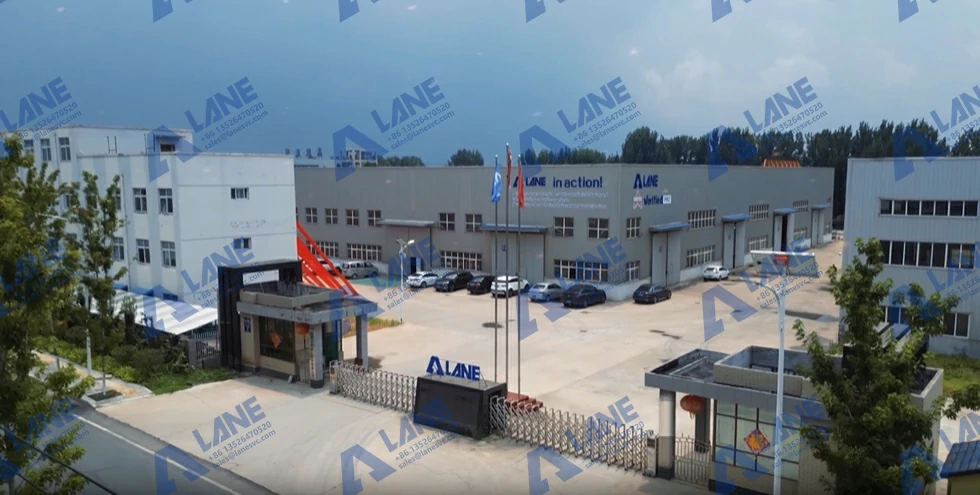
The best SOP equipment manufacturers fabricate their own Mannheim furnaces, absorption towers, and critical components rather than sourcing them from third-party workshops. In-house manufacturing means quality control traceability and accountability when something goes wrong. Ask to visit the fabrication facility.
Scrutinize the Furnace Design
The Mannheim furnace is the heart of the plant, and design differences between suppliers translate directly into operating costs. Key questions: What is the guaranteed conversion efficiency? What refractory material is used, and what is its rated service life? How is temperature uniformity maintained across the reaction bed? What is the specific fuel consumption per ton of SOP output? A supplier who cannot answer these questions quantitatively is not a manufacturer — they are a trading company.
Service and Support Infrastructure
An overseas plant buyer needs more than equipment delivery. Verify that the supplier can provide: on-site installation supervision, commissioning engineers who stay until the plant reaches nameplate capacity, operator training in the buyer’s language, a spare parts catalog with lead times, and an after-sales support mechanism (remote video diagnostics, annual service visits, parts availability guarantee). The cheapest equipment quote is often the most expensive over a 10-year operating horizon.
Maintenance and Operational Best Practices
A potassium sulfate production line operates in a punishing environment: high temperature, strong acids, abrasive solids, and continuous duty. Maintenance discipline determines whether the plant runs at 85% capacity or 60%.
Furnace Refractory Management
The refractory lining is a wear item. Plan for a partial refractory rebuild every 5-7 years under normal operation. Signs of refractory degradation include: declining furnace outlet temperature for the same fuel input, increased HCl slip into the product discharge, and visible hot spots on the furnace shell. Keep a thermographic inspection log — it costs nothing beyond an infrared camera and catches refractory issues months before failure.
HCl System Corrosion Monitoring
FRP absorption towers and graphite heat exchangers degrade gradually in HCl service. Ultrasonic thickness testing on FRP vessels and regular pressure-drop monitoring across absorption columns provide early warning. Circulation pump mechanical seals in HCl service typically last 12-18 months — keep spares on hand.
Feedstock Quality Control
Variations in KCl particle size or sulfuric acid concentration directly affect furnace reaction efficiency. Establish a simple inbound quality check: sieve analysis for KCl, density check for sulfuric acid. Rejecting one substandard feedstock shipment pays for the testing program several times over.
Preventive Maintenance Schedule
- Daily: Visual inspection of furnace burner flame pattern, HCl system pressure gauge readings, product discharge temperature
- Weekly: Conveyor belt tension and alignment, bag filter pulse-jet operation, cooling tower water quality check
- Monthly: Refractory thermographic survey, mechanical rake tooth wear measurement, calibration check of feedstock dosing systems
- Quarterly: HCl circulation pump bearing and seal inspection, absorption tower packing inspection, burner nozzle cleaning
- Annual: Full plant shutdown — furnace refractory inspection, heat exchanger tube cleaning, control system loop testing, safety interlock functional verification
Environmental Compliance and By-Product Recovery
Environmental regulation of SOP plants has tightened significantly in the past decade, and the trend is unidirectional. A plant designed without adequate environmental controls in 2026 will face retrofit costs within a few years of startup — or worse, operating restrictions.
HCl Emission Control
Hydrogen chloride gas is classified as a hazardous air pollutant in most jurisdictions. Modern plants achieve 99%+ HCl recovery through multi-stage absorption. The remaining trace emissions are scrubbed through a final alkaline wash tower before stack release. Continuous emission monitoring (CEMS) for HCl is increasingly required by environmental permits — budget for this in the initial plant design rather than adding it later.
Wastewater Management
The primary wastewater streams are cooling tower blowdown, boiler blowdown, and occasional process area wash-down water. None should contain hazardous levels of contaminants if the plant is operated properly. A simple neutralization and settling system, followed by discharge to a municipal treatment system or lined evaporation pond, is typically adequate. If the plant site has zero liquid discharge (ZLD) requirements, add thermal evaporation or crystallization to the scope early, as retrofitting ZLD is extremely expensive.
Solid Waste
Spent refractory brick from furnace rebuilds is the largest solid waste stream. It may be classified as hazardous depending on absorbed constituents — test before disposal. Dust collector fines are recycled into the process, so they should not constitute a waste stream in a well-designed plant.
By-Product Monetization
The hydrochloric acid by-product deserves serious commercial attention. At the scale of a 50,000 TPY SOP plant, HCl revenue of $4-9 million per year is realistic. Sell it locally if an industrial consumer exists nearby (steel pickling, chemical manufacturing, water treatment). Alternatively, react it with limestone to produce calcium chloride — a lower-value but stable commodity with de-icing and dust-control applications. Do not build a plant that flares or neutralizes HCl without recovering value; that is simply bad economics in 2026.
Project Case Example: A 50,000 TPY Greenfield SOP Plant
To ground these numbers in reality, consider the profile of a representative mid-scale project:
- Location: Southeast Asia, with proximity to KCl import terminal and domestic sulfuric acid supply
- Technology: Mannheim process, five 10,000 TPY furnaces with centralized HCl recovery and DCS automation
- Product mix: 70% granular SOP (2-5 mm), 30% water-soluble SOP powder
- Total investment: $12.8 million
- Construction period: 14 months from groundbreaking to mechanical completion; 3 months commissioning to nameplate capacity
- Annual revenue: ~$27 million (SOP at $500/ton FOB average, HCl at $110/ton)
- Operating cost: ~$19 million/year
- Payback period: ~3.2 years
- Key success factors: Long-term KCl supply contract with a major potash producer, pipeline natural gas connection, proximity to deep-water port for export logistics
This is not a hypothetical — it is a composite of actual projects delivered by Chinese EPC contractors in the past five years. Your specific project will differ, but the order of magnitude is useful as a planning reference.
Frequently Asked Questions
1. What is the difference between SOP and MOP fertilizer?
SOP (Sulfate of Potash, K₂SO₄) contains potassium and sulfur with virtually no chloride. MOP (Muriate of Potash, KCl) contains potassium and chloride. SOP is preferred for chloride-sensitive crops like fruits, vegetables, tobacco, and potatoes. SOP commands a significant price premium — typically $150-250 per ton over MOP on a K₂O-equivalent basis.
2. How long does it take to build a potassium sulfate production line?
From contract signing to commercial production, a typical mid-scale Mannheim process plant takes 12-18 months. This includes engineering design (2-3 months), equipment fabrication (4-6 months), civil construction and installation (4-6 months), and commissioning (2-3 months). Larger multi-furnace plants may extend to 24 months.
3. What is the minimum viable production capacity for a commercial SOP plant?
A single Mannheim furnace producing 10,000 tons per year of SOP is the practical minimum for commercial viability. Below this scale, fixed overhead costs — management, laboratory, environmental compliance, logistics infrastructure — consume too large a share of revenue. Plants below 5,000 TPY are generally not economically viable at current SOP prices.
4. How much does it cost to produce one ton of SOP?
Cash production cost typically ranges from $250 to $400 per ton of SOP, depending primarily on KCl and sulfuric acid acquisition costs, energy pricing, and plant capacity utilization. Raw materials account for 55-70% of this cost. Plants operating below 70% capacity utilization see significantly higher per-ton costs due to fixed overhead allocation.
5. Is the HCl by-product always recoverable at commercial quality?
Yes, with properly designed absorption and purification equipment, 31% commercial-grade hydrochloric acid meeting GB/T 320-2006 or ASTM E1146 standards is routinely achievable. The HCl product is typically clear to pale yellow, suitable for steel pickling, water treatment, and chemical manufacturing applications.
6. What are the main risks in operating a SOP production line?
The top operational risks are: (1) Mannheim furnace refractory failure leading to unplanned downtime, (2) corrosion in HCl handling equipment causing gas leaks, (3) feedstock quality variability reducing conversion efficiency, (4) energy cost spikes eroding margins, and (5) environmental non-compliance leading to regulatory action. Each of these can be managed through proper design, maintenance discipline, and supplier selection.
7. Can I produce both powder and granular SOP from the same line?
Yes. The base production process yields SOP in powder or cake form. Adding a granulation system downstream — either a dry granulation circuit (compaction granulator) or a wet granulation circuit (disc pelletizer or drum granulator with binder) — allows production of granular SOP. Many plants are configured to produce both grades, with the split depending on market demand.
8. What fuel options are available for the Mannheim furnace?
Natural gas is the preferred fuel, offering the cleanest combustion, easiest temperature control, and lowest maintenance. Diesel/light fuel oil is a common alternative where gas is unavailable. Coal-fired furnaces exist but are less common in new builds due to emissions control complexity. Some suppliers offer dual-fuel burners that can switch between gas and oil.
9. How do I verify a supplier’s technical capability before signing a contract?
Visit at least one operating reference plant. Request detailed process flow diagrams and equipment specifications for your specific project before the contract. Ask for furnace conversion efficiency guarantees and associated penalty clauses. Check whether the supplier fabricates critical equipment in-house or outsources it. A factory visit to the supplier’s fabrication facility is strongly recommended.
10. What certifications should a SOP production line supplier have?
ISO 9001:2015 (quality management) is the minimum. ISO 14001 (environmental management) and OHSAS 18001/ISO 45001 (occupational health and safety) indicate a professionally managed manufacturer. For pressure vessels and boilers in the scope, verify that the supplier holds the relevant national certifications (ASME, GB, PED depending on destination market). For electrical and control systems, IEC compliance should be confirmed for export projects.
Conclusion
Investing in a potassium sulfate production line is a serious capital commitment — but it is also a structurally attractive one. Global SOP demand is growing at 5-6% annually, driven by the expansion of high-value horticulture, the chloride sensitivity of premium crops, and the gradual shift away from chloride-based potassium sources in precision agriculture. Supply remains concentrated among a limited number of producers, creating space for well-executed new capacity.
Success in this business does not go to the buyer who finds the cheapest equipment quote. It goes to the buyer who understands the process chemistry, selects a manufacturer with demonstrated furnace engineering capability, designs for by-product revenue from day one, builds genuine operational discipline into the plant’s culture, and treats supplier selection as a long-term partnership rather than a one-time transaction.
If you are evaluating a SOP plant project — whether a 10,000 TPY single-furnace entry or a 100,000 TPY multi-furnace complex — start with the process, not the price list. The plant will run for 20 years. The decisions you make during equipment selection will compound over every one of those years.

Send a message to us