


Chemical Fertilizer Plant Automation Systems
If you are financing, building, or operating a fertilizer plant, automation is not an IT topic. Chemical fertilizer plant automation systems determine your cost per ton, bag-to-bag consistency, and how quickly you can switch NPK ratios. Buyers who scope automation late pay twice: once for re-engineering, again for lost production during startup. This guide covers what an automation package includes, where control pays off, how to budget it, and what to ask suppliers.
Why Plant Owners Are Rethinking Automation Now
Labor is often the largest controllable cost in granulation and bagging areas, and experienced operators are hard to find and keep. Off-spec batches caused by poor weighing or drying control become customer claims, rework, and wasted energy. Producers also run several recipes on one line, which works only when changeovers do not require a day of manual adjustment.
The shift is visible industry-wide. In June 2026, the International Fertilizer Association’s Innovation Hub reported wide gaps between top and bottom innovation performers among producers representing more than a quarter of global fertilizer output and trade. Producers that treat fertilizer production line automation as a core capability, rather than an optional extra, position themselves on the right side of that gap.
What a Chemical Fertilizer Plant Automation System Includes
The cleanest way to compare proposals is by layer.
At the field level sit the instruments: load cells on weigh hoppers, flow and level devices, temperature sensors in dryers and coolers, moisture and dust monitors, motor current feedback, and limit switches. At the control level, a programmable logic controller (PLC) or distributed control system (DCS) runs batching sequences, interlocks startups and shutdowns, and holds process variables in their operating window. Above that, a supervisory layer gives operators live graphics, alarms, trends, and reports. Production data then reaches quality, inventory, and maintenance systems so plant decisions rest on records rather than recollections.
Mature chemical fertilizer plant automation systems keep safety functions independent of normal process control. A safety instrumented system (SIS) should be engineered separately and follow IEC 61511 for functional safety, and industrial networks should be secured to IEC 62443. Ask every supplier one question: who owns the engineering from the instrument list to the operator screen? That answer reveals more about a fertilizer plant control system than the brand name on the cabinet, because most integration problems live in the gaps between vendors.
Where Fertilizer Production Line Automation Pays Off
Not every step deserves the same level of control. Spend where material value, operator judgment, and error cost are highest.
Batching and raw-material dosing
Weighing accuracy is the foundation of fertilizer quality. Automatic batching prevents wrong nutrient ratios, records every batch, and makes formula changes repeatable across NPK, DAP, MAP, SSP, SOP, and water-soluble grades.
Granulation, drying, and cooling
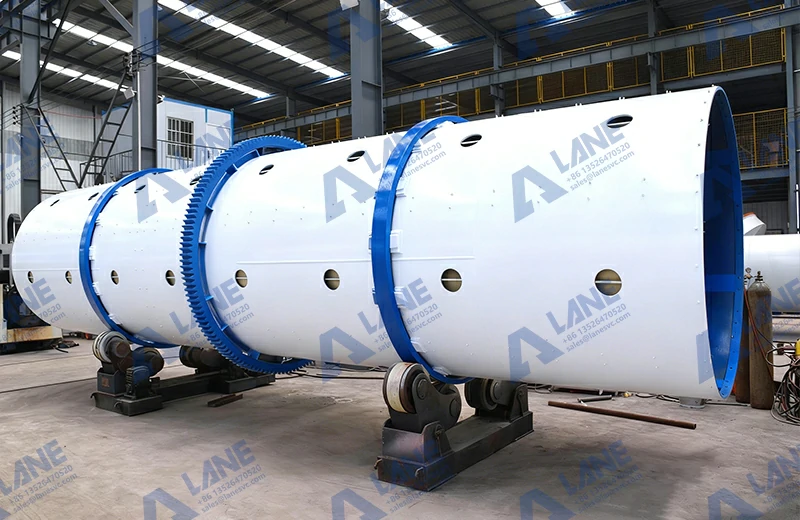
Granulation is where automation earns its keep. Drum granulation depends on feed moisture, temperature, recycle rate, and residence time, and operators who tune by feel produce different results on every shift. A control strategy that stabilizes the granulator load and holds dryer and cooler conditions cuts the energy and rework that drive cost per ton.
Screening, coating, and bagging
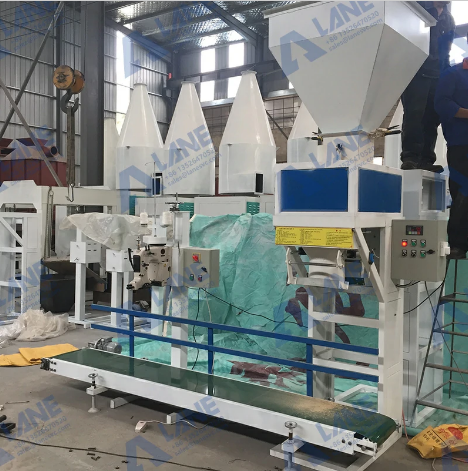
On-spec granules should keep moving forward while oversize and fines return to the process predictably. Coating dose must stay consistent to control caking, and bagging and palletizing stations remove the heaviest labor and the largest source of counting errors. These finishing stages are the part of fertilizer production line automation customers see first, and LANE designs its automatic packing machines and screening equipment to run inside this kind of integrated line. For the mechanical context, see the NPK fertilizer production line, chemical fertilizer production line, and fertilizer granulation plant design pages.
PLC, DCS, or SCADA: Choosing a Fertilizer Plant Control System
Platform names confuse buyers, and the architecture behind them matters more than the acronym. A PLC with SCADA visualization usually fits granulation, blending, and packaging lines, where discrete motors, conveyors, and batch sequences dominate. A DCS is more common in continuous plants with large reaction or acidulation sections, where many control loops run together.
The practical answer for fertilizer producers is often a hybrid: PLCs or a compact DCS at process level, SCADA or DCS graphics for operators, and an integration layer that passes data to planning and quality systems using the ISA-95 / IEC 62264 reference model. Judge any fertilizer plant control system on four things: process fit, how easily operators run it after training, how much engineering documentation comes with it, and how locked-in you will be to one vendor. Recipe management built on ISA-88 / IEC 61512 lets formulas change without reprogramming the line.
The Real Cost Question: What Drives Budget and Payback
There is no honest one-line answer to what automation costs. Price depends on the number of process areas, instrument and motor count, materials in corrosive zones, and whether you are building new or upgrading. Treat any supplier that quotes without a process conversation as a warning sign.
Capital cost normally includes instruments and load cells, motor control and drives, hardware and software, panels and field wiring, engineering and documentation, factory acceptance testing (FAT), installation and commissioning, and operator training. Input/output (I/O) count is the best single proxy for comparing proposals; two quotes for the “same” line can differ by hundreds of I/O points once one vendor includes what the other sells as an extra. New chemical fertilizer plant automation systems rarely fail for lack of technology; they fail when the quoted I/O list does not match the actual process.
On the operating side, build the payback model around measurable levers: labor hours per ton, energy per ton, first-pass quality rate, recipe changeover time, and unplanned downtime. A fertilizer plant control system that logs its own data will show where the losses sit before you invest another dollar. LANE’s fertilizer manufacturing plant cost guide and mineral fertilizer factory setup guide add the plant-level budgeting context.
Retrofitting Automation Into an Existing Fertilizer Plant
A greenfield project is not required to capture most of the benefit. Many older NPK, SSP, and compound lines have sound mechanical equipment but almost no instrumentation, interlocks, or recording.
Start with an automation audit that maps every motor, valve, weigh point, and measurement, then ranks each as safety-critical, quality-critical, or nice to have. Most plants can upgrade in stages: batching first, then granulator and dryer controls, then packaging integration, then plant reporting. This spreads capital cost, gives operators time to learn each system, and delivers the same visibility and repeatability that new chemical fertilizer plant automation systems provide.
The common retrofit mistake is buying controls that cannot talk to installed equipment, or selecting a platform with no local support in your region. Retrofits are a realistic entry point for fertilizer production line automation, but they demand more engineering discipline, not less, than a new line.
Running an Automated Line: Operations and Maintenance
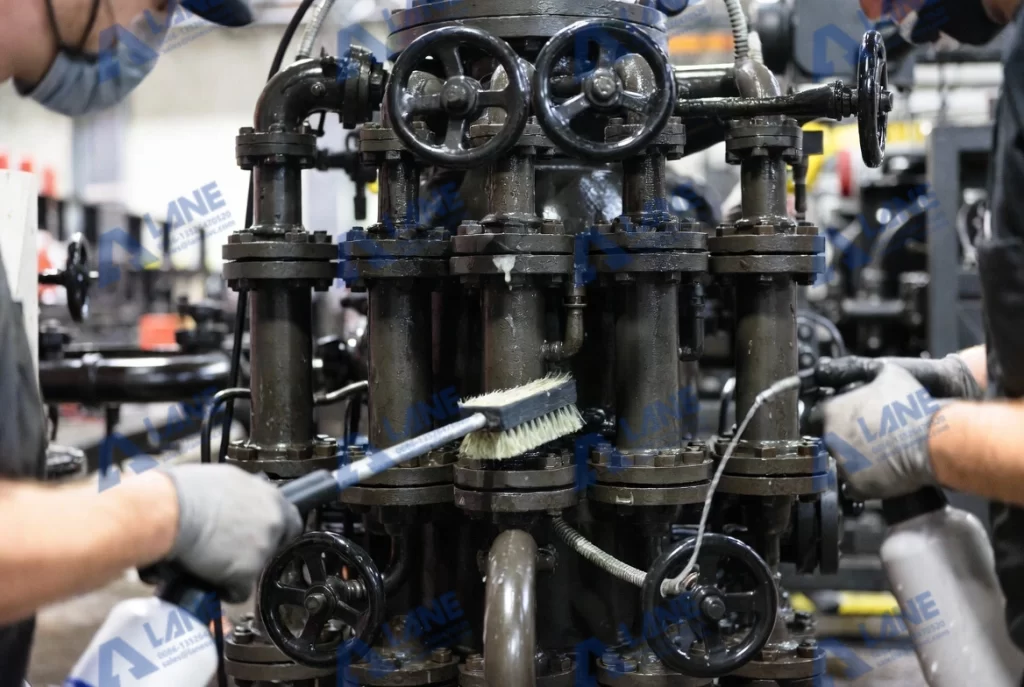
Automation changes where maintenance happens rather than removing it. A drifting scale still produces off-spec batches even when the screen says the recipe is correct, and a blocked impulse line is harder to notice than a jammed conveyor.
Schedule instrument calibration, stock spare load cells and sensors, and keep current P&IDs, control narratives, and loop documentation. Back up controller configurations, control who can change recipes and setpoints, and patch systems under change control rather than casually. Obsolete software also blocks future features and available technicians. Train operators on the logic behind the screens; people who understand an interlock report problems instead of bypassing it. A well-run fertilizer plant control system is a partnership between the process team and the control system.
Red Flags and Questions to Ask Before You Buy
Use this checklist when comparing suppliers for fertilizer production line automation:
- Ask for a process-specific scope listing every automated unit operation, the included instruments, and the total I/O count.
- Ask who writes the control philosophy, P&IDs, and operating manuals, and whether those documents are included in the price.
- Ask how recipes are changed, how batches are recorded, and how you will prove nutrient content to customers and regulators.
- Ask about FAT and site acceptance testing (SAT), commissioning support, and who is on site during startup.
- Ask about training, spare parts, warranty, and remote support response times in your region.
- Ask for references from plants of similar size and process, then call them.
- Confirm the safety system is separate from process control and follows IEC 61511.
Beware of proposals that call a control cabinet “full automation.” A cabinet becomes a fertilizer plant control system only when instruments, engineering documentation, and support come with it, and chemical fertilizer plant automation systems are only as strong as the people behind them. LANE treats controls as part of turnkey plant engineering rather than as an add-on; see the turnkey fertilizer plant overview and the compound fertilizer manufacturing equipment range for context.
Frequently Asked Questions About Fertilizer Plant Automation
What do chemical fertilizer plant automation systems actually do?
They measure, control, record, and protect production: weighing raw materials, running batching and granulation sequences, holding dryer and cooler conditions, interlocking equipment for safe startups and shutdowns, and logging data for quality and maintenance decisions.
Can fertilizer production line automation be added to an existing plant?
Yes, in most cases. An audit identifies which motors, valves, and weigh points need instruments, and upgrades can be staged by process area. Retrofits need careful planning around shutdown windows, compatibility with installed equipment, and operator training.
What is the difference between a PLC, DCS, and SCADA in a fertilizer plant?
A PLC executes discrete and batch logic for batching, conveyors, and interlocks. A DCS combines control and operator functions for larger continuous processes. SCADA is the software that displays plant data and lets operators supervise PLC-controlled equipment. Fertilizer lines often use more than one.
How does automation improve fertilizer quality?
It removes the largest source of variation, manual judgment. Accurate batching keeps nutrient ratios on target, controlled drying prevents moisture-related caking, and recorded batch data lets the quality team trace a problem to its cause instead of guessing.
Which processes benefit most from a fertilizer plant control system?
Batching, granulation, drying and cooling, and packaging usually show the fastest returns because they directly affect nutrient accuracy, energy use, and labor. Safety-related functions also deserve an independent instrumented system.
How much does it cost to automate a fertilizer plant?
Cost depends on process scope, instrument count, control platform, and whether the project is new or a retrofit, so no fixed number is meaningful. Compare proposals on I/O count, included instruments, documentation, commissioning, and training, then model payback on labor, energy, quality, and downtime.
How many operators are needed to run an automated line?
It depends on capacity, process complexity, and shift structure. Automation reduces staffing for repetitive batching and bagging tasks, but plants still need trained operators, technicians, and quality staff. Ask the supplier for a shift-manning proposal based on your actual line.
What safety and security standards apply to fertilizer plant automation?
Safety instrumented functions should follow IEC 61511, with batch design guided by ISA-88 / IEC 61512 where relevant. Industrial control networks should be secured using IEC 62443. Process safety management should also reflect recognized industry guidance such as the International Fertiliser Society’s FerTechInform resources.

Send a message to us