


SSP Fertilizer Manufacturing Business Plan Guide: Factory Setup, Equipment Selection, and Profit Margins Explained
Starting an SSP fertilizer plant isn’t just a capital decision — it’s a long-term industrial commitment. And honestly, the difference between a profitable facility and a money pit usually comes down to how well the business plan was constructed before a single piece of equipment was ordered. This guide walks through what a serious SSP fertilizer manufacturing business plan actually looks like in practice: the factory infrastructure, the core machinery, the cost realities, and where the margin lives.
Why a Detailed Business Plan Changes Everything
Let me tell you something I’ve seen repeated across dozens of projects in Sub-Saharan Africa and South Asia: operators who enter the SSP sector without a structured plan almost always underestimate two things — utility infrastructure costs and raw material logistics. Both will kill a margin faster than equipment downtime.
A solid SSP fertilizer manufacturing business plan isn’t a document you write for investors and then shelve. It’s a working operational framework. It should define your feedstock sourcing strategy, production capacity targets, energy consumption benchmarks, and a realistic break-even projection. Those four elements alone determine whether your facility operates at 60% capacity or 90%.
SSP Fertilizer Plant Setup Cost: Breaking Down the Real Numbers
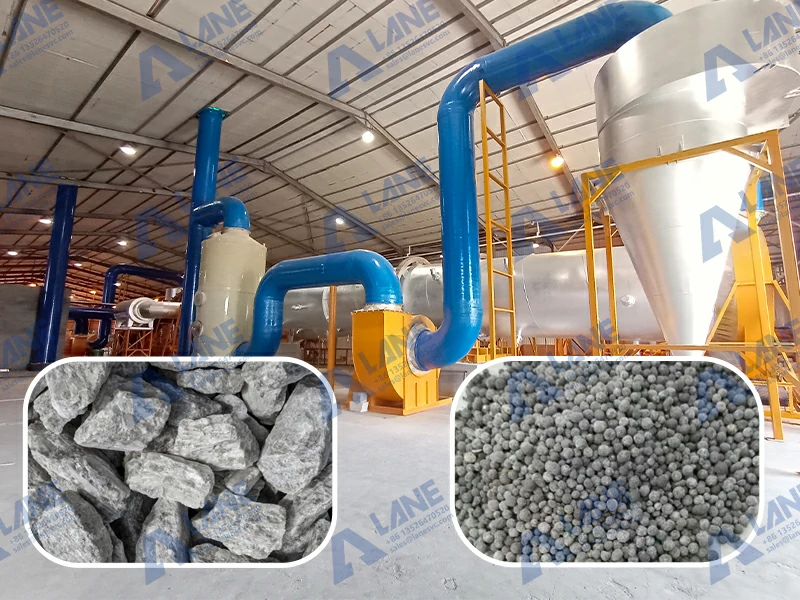
SSP fertilizer plant setup cost varies significantly based on location, throughput, and whether you’re building greenfield or retrofitting. For a modest facility producing 5–10 tons per hour, total investment typically ranges from USD 500,000 to USD 2.5 million — and that spread is wide for a reason.
What drives the high end? Automated process control systems, dust suppression infrastructure, and redundant equipment for continuous operation. What keeps costs manageable? Sourcing equipment from manufacturers with turnkey delivery capabilities and proven commissioning track records.
From what I’ve seen in the field, projects that budget separately for civil works (foundations, acid-resistant flooring, ventilation shafts) almost always come in closer to their projections. Operators who lump it into a “miscellaneous” category get surprised. Every time.
Core Equipment for an SSP Manufacturing Line
This is where your SSP fertilizer manufacturing business plan gets technical — and needs to be specific. Lenders, partners, and procurement teams all want to see exact equipment specifications. Vague descriptions don’t cut it.
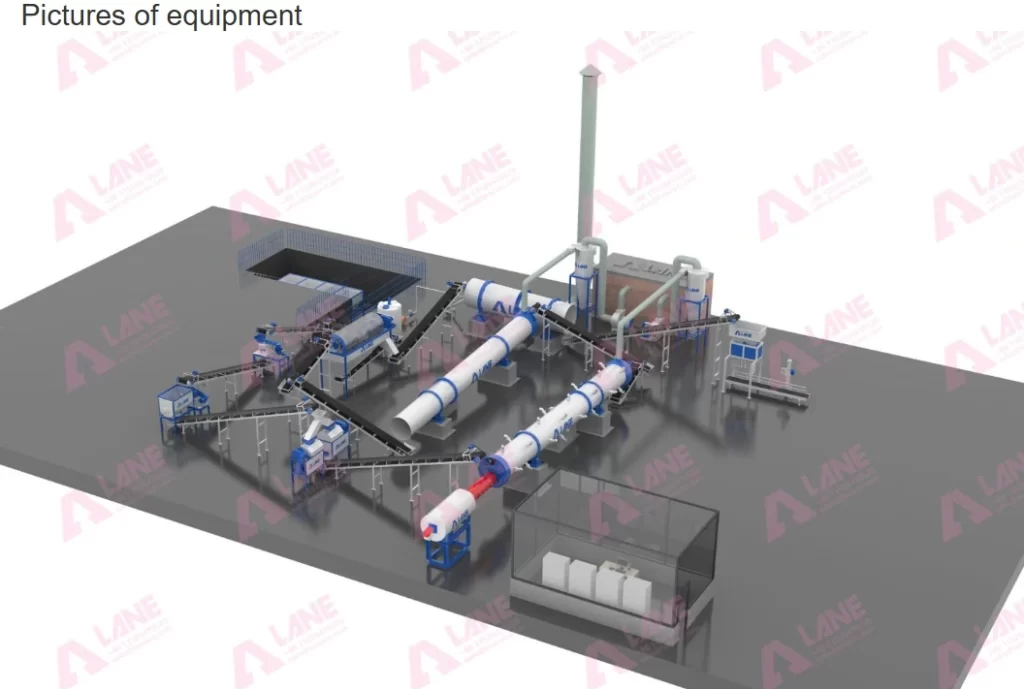
The primary single-unit equipment required in a standard SSP production line includes:
- Phosphate rock grinding mill— responsible for reducing rock size to the fineness needed for efficient acidulation, typically targeting 80–100 mesh
- Acidulation reactor— where sulfuric acid reacts with ground phosphate rock to form single super phosphate
- Belt conveyor system— continuous material transfer between process stages, critical for consistent throughput
- Double shaft mixer— ensures homogeneous blending of acidulated material before curing
- Rotary drum granulator— converts the cured SSP powder into uniform, free-flowing granules for bagging and transport
- Rotary Drum Dryer and Cooler— Reduces moisture and lowers granule temperature to ensure shelf life and prevent caking during storage.
- Vibrating screen— separates on-spec granules from oversized and undersized fractions for recycle
- Coating machine— applies anti-caking agents or micronutrient coatings depending on product spec
- Automatic packing machine— final stage, critical for commercial presentation and weight accuracy
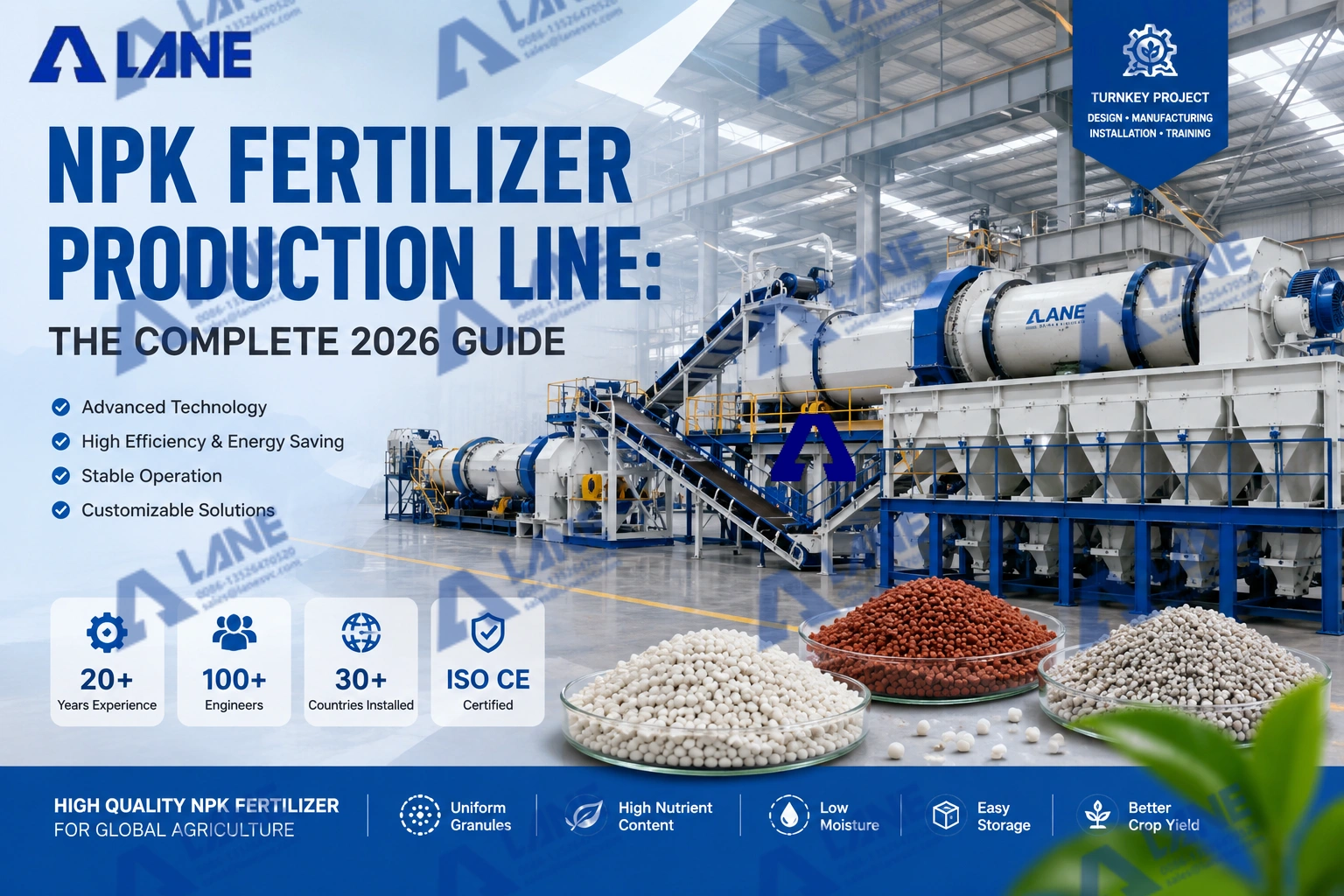
Equipment suppliers like LANE, a large-scale fertilizer production equipment manufacturer, typically offer these as integrated production line packages — which simplifies procurement, reduces compatibility risk, and tends to come with better after-sales technical support than buying piecemeal.
Where the Profit Margin Actually Comes From
The margin in SSP manufacturing isn’t complicated to understand — it’s just easy to miscalculate. You’re essentially buying phosphate rock and sulfuric acid, converting them through a chemical-mechanical process, and selling a P₂O₅-bearing product at a markup over input costs.
In practice, operators running well-optimized SSP plants in markets with moderate local phosphate access can achieve gross margins of 18–28%. The variables are feedstock cost, local fertilizer demand pricing, and production efficiency.
Actually, the most overlooked lever is product differentiation. Granular SSP commands a 12–20% price premium over powdered SSP in most markets, largely because of handling ease and reduced application waste. If your business plan doesn’t account for granulation as a premium revenue path, it’s leaving money on the table.
Summary and Final Recommendation
Building a viable SSP business requires more than securing land and buying equipment. The planning layer — feedstock contracts, utility hookups, logistics networks, and market positioning — is what separates projects that generate consistent returns from those that stall at 50% utilization.
If you’re serious about launching an SSP facility, the first investment is time spent on a proper SSP fertilizer manufacturing business plan, one that accounts for real SSP fertilizer plant setup cost projections, equipment integration, and a clear path to profitability.
Frequently Asked Questions
Q1: What is the minimum viable capacity for an SSP fertilizer manufacturing business plan to be economically feasible?
Most industry benchmarks suggest a minimum of 3–5 tons per hour to justify fixed capital and operational overhead. Below that threshold, per-unit production costs typically make market pricing difficult.
Q2: How much does SSP fertilizer plant setup cost for a small-scale operation?
For a 3–5 t/h facility, the typical SSP fertilizer plant setup cost falls between USD 400,000 and USD 900,000 depending on automation level, site location, and whether acid generation is in-scope or sulfuric acid is purchased externally.
Q3: What raw materials are required for SSP manufacturing?
The two primary inputs are phosphate rock (typically 28–32% P₂O₅ grade) and sulfuric acid (93–98% concentration). Water, anti-caking agents, and coating materials are secondary inputs depending on product specification.
Q4: How long does it take to commission an SSP production line?
From civil completion to first production output, a standard SSP line commissioning period runs 60–120 days, depending on equipment complexity and local contractor experience.
Q5: What are the key compliance requirements for an SSP fertilizer plant?
Requirements vary by country, but typically include environmental impact assessments (particularly for sulfuric acid handling and fluoride emissions), product quality certifications, and industrial safety licensing for chemical processing facilities.
Q6: Is granular SSP more profitable than powdered SSP?
Generally, yes. Granular SSP commands a market premium and faces fewer logistics and application challenges. The granulation equipment investment — primarily the rotary drum granulator and associated drying/cooling circuit — typically pays back within 18–30 months through improved pricing alone.
Q7: Where can I find a template for an SSP fertilizer manufacturing business plan?
Rather than relying on generic templates, the most effective approach is to build your SSP fertilizer manufacturing business plan around your specific feedstock source, target market, and production capacity. Generic templates rarely account for regional logistics costs or local regulatory requirements, which are two of the biggest budget variables in this industry.
For more details, please feel free to contact us.
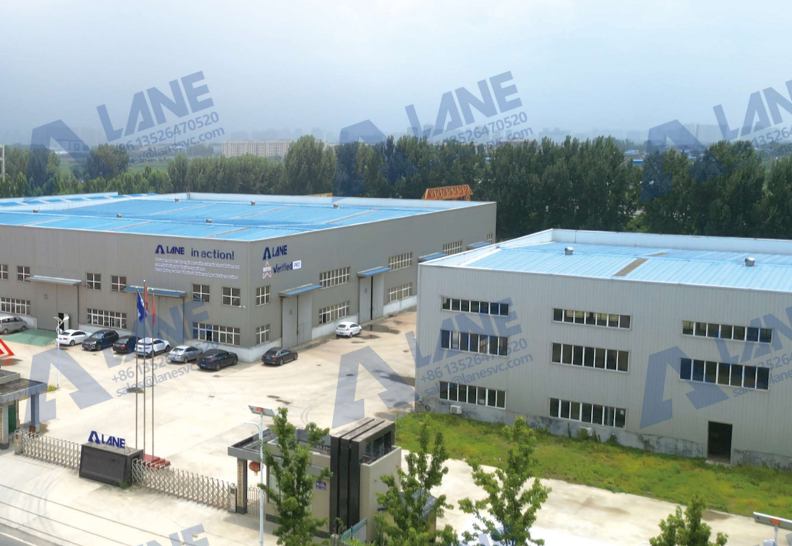
Henan Lane Heavy Industry Machinery Technology Co., Ltd.
Email: sales@lanesvc.com
Contact number: +86 13526470520
Whatsapp: +86 13526470520
Send a message to us