


Mineral Micronutrient Fertilizer Plant: Setup Cost & ROI Guide
If you’ve been watching crop yield data over the past decade, one pattern keeps showing up: fields that lack trace elements consistently underperform, even when macronutrient inputs are dialed in. That’s exactly why the demand for specialized production has been climbing so steadily. Setting up a mineral micronutrient fertilizer plant isn’t a small decision — it’s a capital commitment that, done right, can generate solid returns for years.
This guide breaks down what that investment actually looks like for a mineral micronutrient fertilizer plant, what equipment you’ll need, and how to think through ROI before you sign a single purchase order.
Why Micronutrient Fertilizers Are a Growing Market
Let me be direct: the micronutrient fertilizer segment is no longer a niche corner of agrochemicals. Global soil degradation, intensive monoculture farming, and tighter crop quality standards have pushed zinc, boron, manganese, and iron deficiencies into the mainstream. Having collaborated with fertilizer plants across Southeast Asia and Africa, I’ve seen how quickly a regional gap in zinc micronutrient fertilizer supply can become a real commercial opportunity.
Zinc deficiency alone affects an estimated 50% of global agricultural soils. That’s not a footnote — it’s a market signal.
What Does a Mineral Micronutrient Fertilizer Plant Actually Cost?
This is always the first question, and it deserves a real answer.
Small-scale operations — output in the range of 5,000 to 10,000 metric tons per year — typically run between $350,000 and $800,000 USD for equipment, civil construction, and commissioning. Mid-scale plants hitting 20,000 to 50,000 MT/year push toward $1.2 million to $3 million USD. Large integrated facilities can exceed $5 million.
Key cost drivers:
- Raw material complexity— sulfate-based zinc micronutrient fertilizer inputs require different handling than oxide-form materials
- Granulation method— drum granulation costs differently than dry compaction or spray-drying
- Automation level— a fully automated packaging line adds 20–35% to capex versus semi-manual alternatives
- Local construction costs— a greenfield plant in Nigeria is costed very differently from one in Vietnam or Morocco
Core Equipment for a Mineral Micronutrient Fertilizer Plant
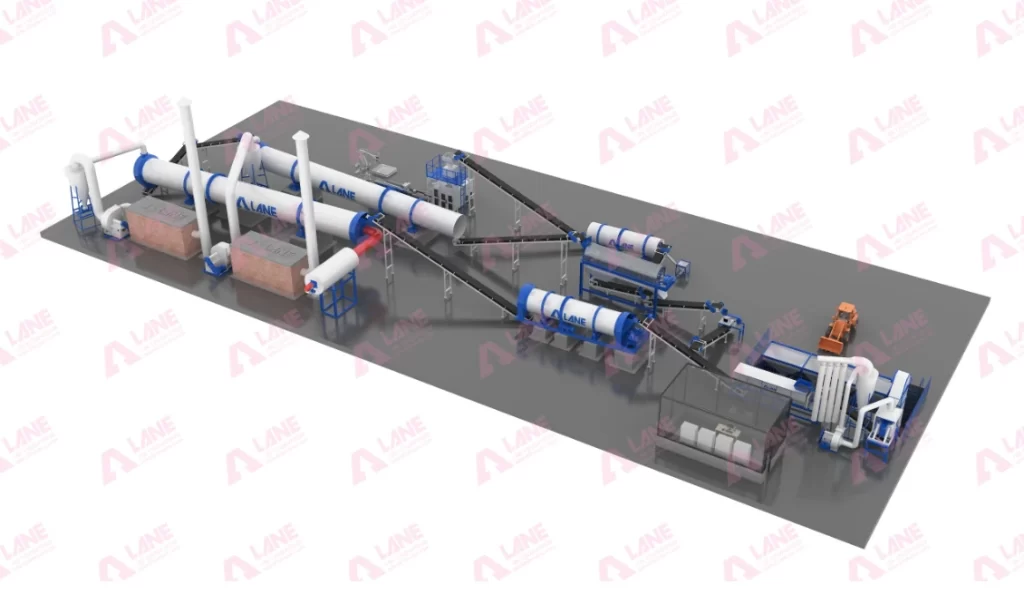
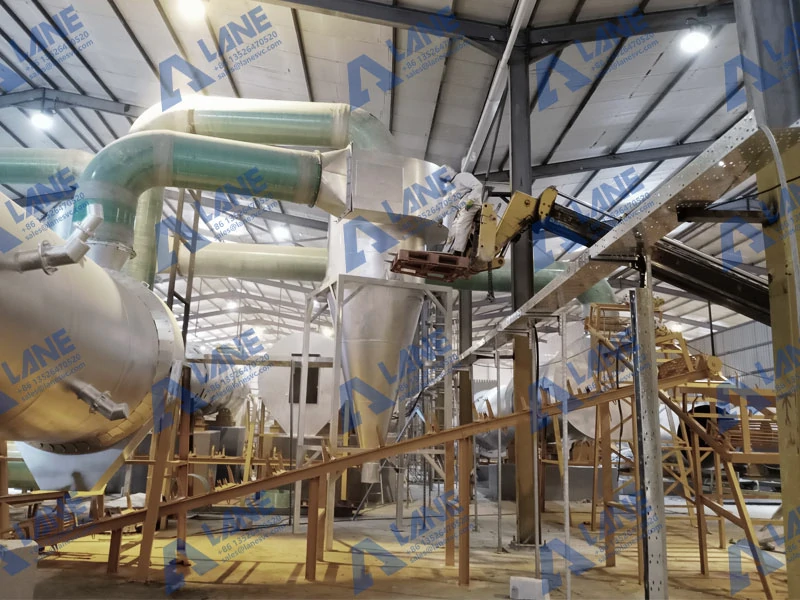
A lot of buyers underestimate how complex the equipment list gets once you move beyond simple blending. A purpose-built mineral micronutrient fertilizer plant, particularly one designed for granular output, requires a coordinated production line — each unit affecting the quality and economics of what comes out the other end.
Standard production line equipment includes:
- Raymond mill— reduces raw micronutrient materials to precise particle sizes needed for consistent nutrient distribution
- Mixing and batching system— blends active materials with carriers at exact ratios; critical for product uniformity and label compliance
- Rotary drum granulator— the workhorse of most mid-to-large scale operations; converts mixed powders into durable, free-flowing granules
- Disc granulator— preferred for smaller batches or facilities with frequent product grade changeovers
- Rotary drum dryer— removes post-granulation moisture to target levels, stabilizing granule structure
- Rotary drum cooler— brings granule temperature down before storage and packaging
- Vibrating screen— classifies granule size, separating on-spec product from oversized or fines returned for reprocessing
- Coating machine— applies anti-caking agents or slow-release coatings, increasingly demanded by export markets
- Belt conveyor system— connects all process stages; frequently underspecified, which creates downstream bottlenecks
- Automatic packaging machine— handles 25 kg and 50 kg bag formats at commercial throughput rates
The rotary drum granulator determines granule uniformity. If the particle size is not adjusted properly, the whole production line will require months of problem checking.
ROI Expectations: What the Real Numbers Look Like
A properly configured mineral micronutrient fertilizer plant can achieve payback in three to five years — sometimes faster in markets with strong local demand and limited competition. Margins on granular zinc micronutrient fertilizer products typically run between 18% and 30% at the production level, depending on raw material contracts and product positioning. That said, not all zinc micronutrient fertilizer grades carry the same margins, so product mix decisions matter enormously at the planning stage.
From field observations, companies that secure their own raw material supply chains recoup investment far quicker. Buying zinc sulfate on the spot market causes volatile earnings, with no easy way to manage the risks.
Key ROI variables worth modeling:
- Utilization rate— 70% is a reasonable year-one assumption; most facilities hit 85–90% by year three
- Product mix— blended granular products command premiums over straight single-nutrient lines
- Target market— export-oriented production to Africa carries different logistics costs and price points than domestic supply
Choosing the Right Equipment Supplier
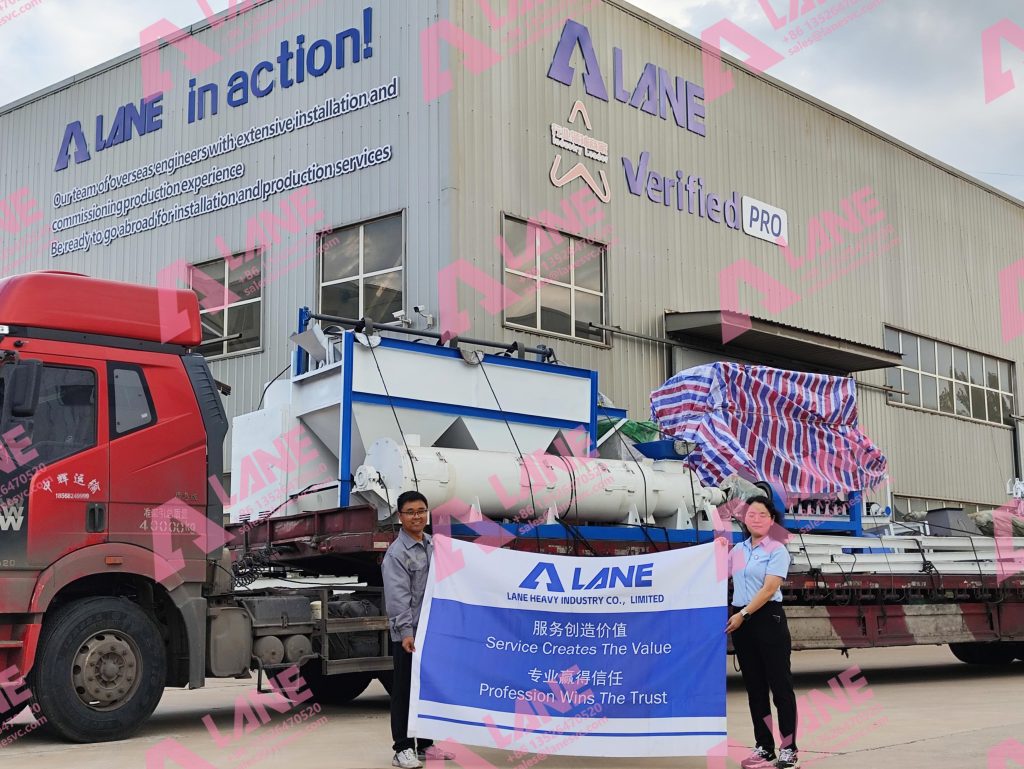
Equipment quality varies enormously across manufacturers. LANE, a Henan-based manufacturer with a track record across large-scale fertilizer plant projects, produces integrated production line equipment commonly specified in greenfield and expansion projects across Africa and the Middle East. When evaluating any supplier for your mineral micronutrient fertilizer plant, push for references from comparable-scale projects — not just generic fertilizer equipment deployments.
Discuss commissioning services, spare parts delivery time and raw material adaptability of the process. These are critical for smooth production startup.
Summary and Next Steps
Micronutrient fertilizers enjoy strong and growing market demand. Severe crop zinc deficiency in Sub-Saharan Africa and South Asia leads to a substantial supply shortage. Equipment and raw materials are fully accessible, with agricultural fertilizer demand rising steadily.
Few viable investment plans take into account real equipment costs, capacity utilization and local market prices.
At the project planning stage, obtain full equipment data and line layouts from reputable manufacturers. Beyond pricing, carefully assess their process design and after-sales services.
Frequently Asked Questions
Q1: What is the minimum viable scale for a mineral micronutrient fertilizer plant?
In most markets, 5,000 MT/year is the practical floor for granular production lines. Below that scale, per-unit production costs typically make it difficult to compete unless you’re serving a captive or highly specialized market.
Q2: Which micronutrient products generate the best margins?
Chelated blends and zinc micronutrient fertilizer products formulated for foliar application typically carry the highest margins. Granular single-nutrient products like zinc sulfate granules are higher volume but more commoditized. A tiered product portfolio targeting multiple crop segments is usually the strongest strategy.
Q3: How long does commissioning take?
For a small-to-mid-scale granular line, expect eight to fourteen months from equipment order to full commercial output. This covers fabrication, shipping, civil construction, installation, and trial production.
Q4: Is zinc micronutrient fertilizer technically complex to produce?
The chemistry isn’t especially complex compared to compound NPK manufacturing. However, particle size control, moisture management during granulation, and handling fine zinc-bearing dusts all require proper process engineering and safety protocols.
Q5: What raw materials are needed?
Zinc sulfate monohydrate or heptahydrate is the most common base for granular zinc micronutrient fertilizer production. Carriers such as bentonite or zeolite are often incorporated to improve granule integrity and release characteristics.
Q6: Can an existing NPK plant be expanded to include micronutrient production?
In many cases, yes — particularly if the facility already operates a rotary drum granulator, dryer, cooler, and screening system. A process audit is strongly recommended before committing to a conversion investment.
For more details, please feel free to contact us.
Henan Lane Heavy Industry Machinery Technology Co., Ltd.
Email: sales@lanesvc.com
Contact number: +86 13526470520
Whatsapp: +86 13526470520

Send a message to us