


The Most Efficient Poultry Manure Fertilizer System for Organic Fertilizer Producers in 2026
For anyone serious about organic fertilizer production, the poultry manure fertilizer system is not just a processing line — it is the backbone of the whole operation. The difference between a profitable facility and a struggling one often comes down to how well that system is designed from day one.
Poultry farming generates enormous volumes of manure every single day. Left unprocessed, that manure is a liability. Properly handled, it becomes a high-value organic soil amendment with genuine market demand. That tension is exactly what makes a well-engineered poultry manure fertilizer system so critical for producers looking to scale in 2026.
What “Efficient” Actually Means Here
Efficiency means more than throughput. It means consistent granule quality, minimal nutrient loss during processing, low energy consumption per ton of output, and a configuration that can adapt to varying moisture levels in raw input material. Poultry manure is notoriously inconsistent. Moisture content can swing from 30% to over 75% depending on housing type, feed composition, and collection method. A good poultry manure fertilizer system handles that range without constant manual adjustment.
I have seen operations where producers invested heavily in equipment that simply was not matched to their raw material profile. Costly mistakes that proper system planning could have prevented. The equipment lineup matters — every single piece of it.
Core Equipment in a Poultry Manure Fertilizer System
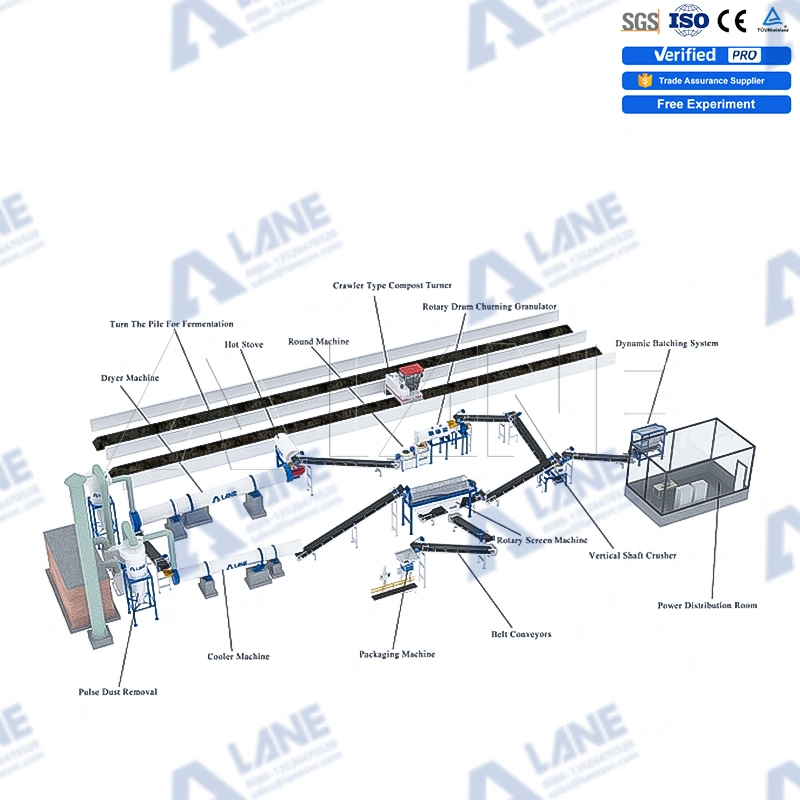
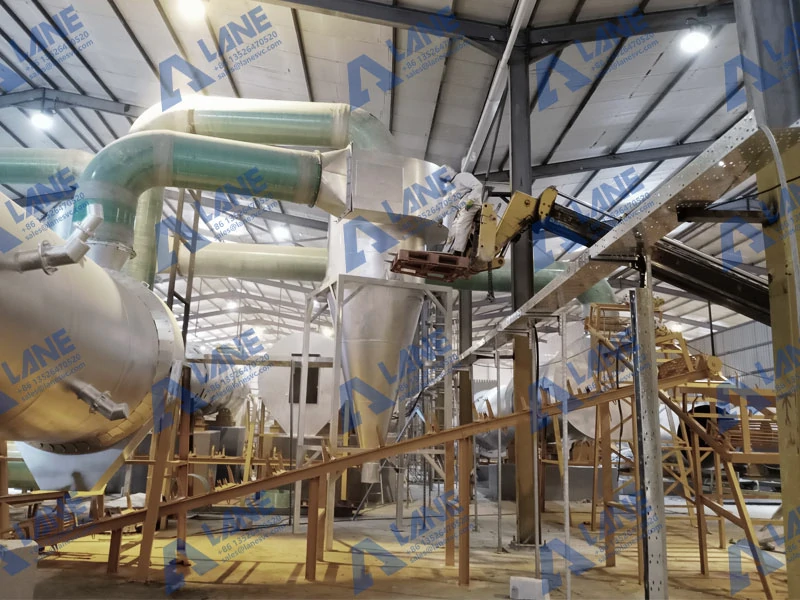
Any efficient poultry manure organic fertilizer production equipment setup starts with reducing raw material moisture to a workable range. Here is the typical equipment sequence that professional-grade systems follow:
Solid-Liquid Separator — First stage for high-moisture fresh manure. This machine mechanically removes excess water before thermal drying begins, cutting energy consumption significantly downstream.
Screw Press Dewatering Machine — Reduces moisture further to roughly 40–50%, which is the optimal entry range for the drying phase.
Rotary Drum Dryer — A core unit in any serious poultry manure organic fertilizer production equipment lineup. Controlled heat brings material down to 15–20% moisture, which is essential for stable granulation.
Compost Turner — For aerobic fermentation-based operations, the compost turner ensures even oxygen distribution and temperature management across windrows, accelerating decomposition and eliminating pathogens.
Chain Crusher — After drying or fermentation, the material needs to be broken into uniform particle sizes. The chain crusher handles this gently, which matters for organic material that can degrade under excessive mechanical stress.
Rotary Drum Granulator — Where the product takes its final form. Organic material is tumbled with binders and controlled moisture to produce consistent, spherical granules. This machine largely determines the commercial quality of the finished product.
Rotary Drum Cooler — Post-granulation drying removes residual moisture. A cooler immediately follows to drop the granule temperature before packaging. Skipping this step causes product caking and reduces shelf life — a mistake many first-time operators make.
Rotary Drum Screening Machine — Granules are screened by size. Off-spec particles return to the crusher for reprocessing. Only on-spec product moves forward to packaging.
Coating Machine — Increasingly common as a final step. Organic coating agents are applied to extend shelf life, improve appearance, and reduce dust during handling.
Automatic Packaging Machine — Consistent bag weights, sealed packaging, and batch recording are all necessary for commercial-grade output.
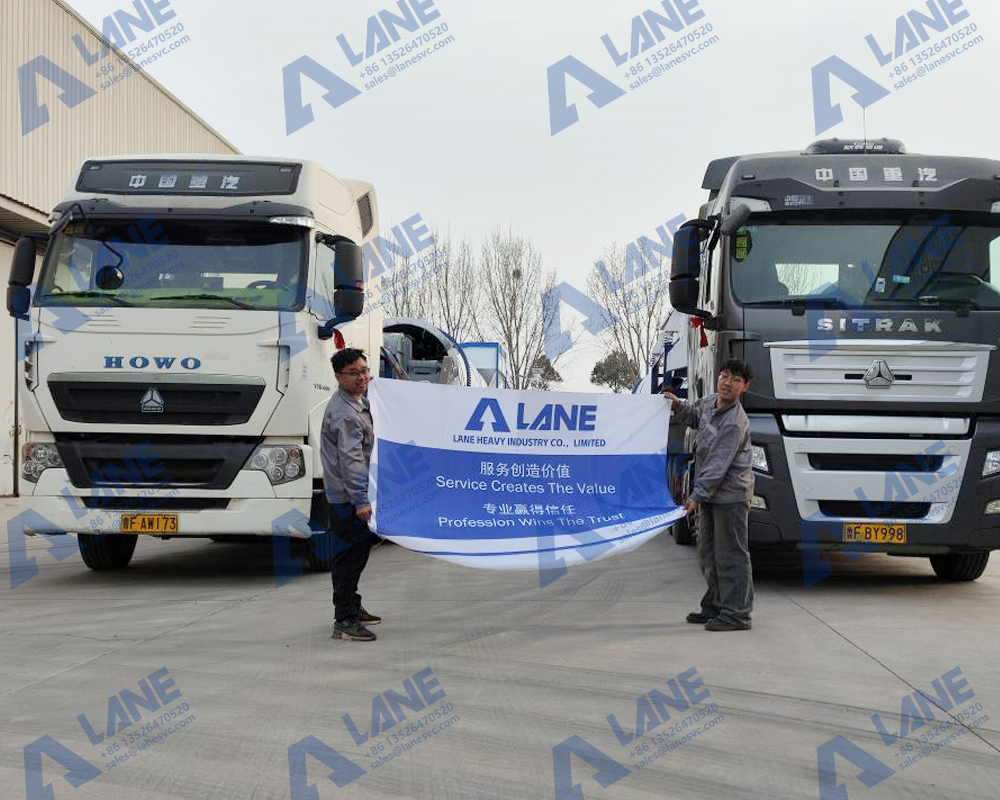
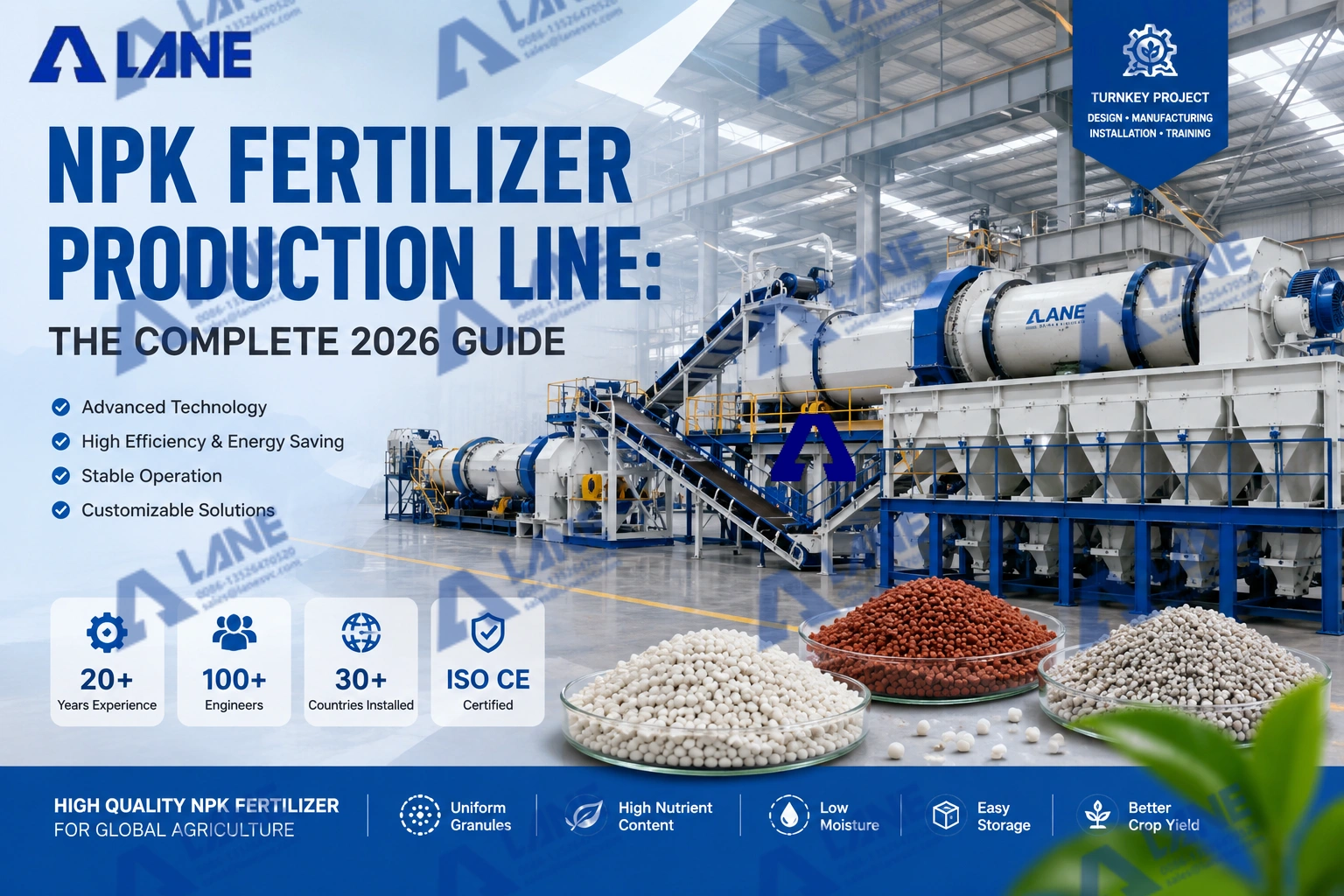
LANE, as a large-scale fertilizer production equipment manufacturer, provides complete engineering solutions across all of these stages, with configuration options scaled to both small and industrial-capacity facilities.
Fermentation vs. Thermal Drying
There is an ongoing debate about which approach produces the superior end product. Both have their place. Fermentation preserves beneficial microbial populations and produces a biologically active compost. Thermal drying is faster and offers more predictable pathogen reduction. Most modern poultry manure fertilizer system installations combine both: a short fermentation stage for microbial stabilization, followed by thermal drying for moisture control and scalability.
The decision should be driven by your end market. Certified organic buyers often require evidence of specific composting temperatures and durations. Conventional fertilizer buyers may prioritize consistent NPK values and granule uniformity. Know your buyer before finalizing your process design.
Site Layout and System Integration
Even excellent equipment underperforms in a poorly planned facility. Material handling between stages — conveyors, bucket elevators, dust collection — must be engineered as part of the whole system. Exhaust gas from drying stages requires treatment through a scrubbing system before discharge. These are not optional in 2026; environmental enforcement around fertilizer production facilities is tightening across most target markets.
Understanding the full scope of a poultry manure organic fertilizer production equipment installation — from raw intake through finished product — is what allows operators to plan realistic capital budgets and avoid the retrofitting costs that catch so many facilities off-guard.
FAQ
Q: What is the minimum input volume for a viable poultry manure fertilizer system?
A: Most commercial configurations start from 5 to 10 tons of raw manure per day. Below that threshold, the economics of a full granulation line are difficult to justify. Smaller operations often benefit from a simpler composting setup.
Q: How long does processing take from raw manure to finished granules?
A: Thermal drying-based systems complete processing in roughly 4 to 8 hours per batch. Fermentation-based systems extend the timeline to 15–25 days, though active equipment processing time is shorter.
Q: What nutrients does processed poultry manure fertilizer typically contain?
A: Typically 3–5% nitrogen, 2–3.5% phosphorus, and 1.5–2.5% potassium, plus trace elements including calcium and sulfur. Actual values depend on feed composition, processing method, and any amendments added during production.
Q: Is poultry manure organic fertilizer production equipment difficult to maintain?
A: Routine maintenance is manageable with a basic mechanical team. Key maintenance points include drum dryer flights, granulator lining wear, and screen mesh replacement. Proper documentation and local spare parts access make a meaningful operational difference.
Q: How much does a complete system cost?
A: Entry-level configurations processing 5 tons per day start from approximately USD 50,000–80,000. Full industrial-scale systems at 30-plus tons per day can exceed USD 500,000, depending on automation level and site-specific requirements.
The organic fertilizer sector is expanding, and poultry manure remains one of the most abundant and cost-effective raw materials available to producers globally. Getting the poultry manure fertilizer system right — from raw material handling through granulation and packaging — is what separates operations that scale from those that stagnate. Invest in proper system design, match equipment to input material, and treat the full process line as an integrated system rather than a collection of individual machines.
For more details, please feel free to contact us.
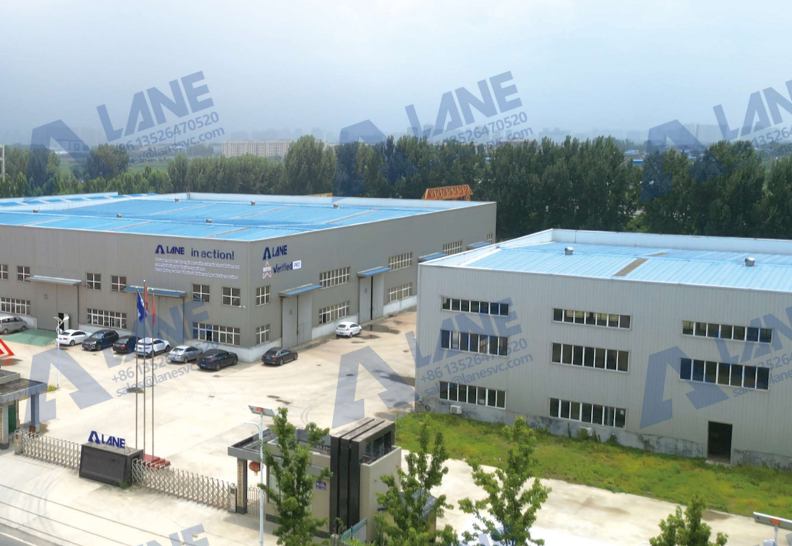
Henan Lane Heavy Industry Machinery Technology Co., Ltd.
Email: sales@lanesvc.com
Contact number: +86 13526470520
Whatsapp: +86 13526470520

Send a message to us