


Phosphate Fertilizer Plant Cost: Complete Investment Breakdown for 2026
Getting serious about building a phosphate fertilizer facility? Good. But let me tell you — most investors walk in asking the wrong questions. They want a single number. A ballpark. Something clean and simple. The reality of phosphate fertilizer plant cost is messier than that, and understanding exactly where your money goes is what separates a well-structured project from a costly miscalculation. Investors who research phosphate plant cost early make far better decisions.
This breakdown covers the real numbers, the variables that move them, and the decisions that actually matter before you commit capital.
What Drives Phosphate Fertilizer Plant Cost?
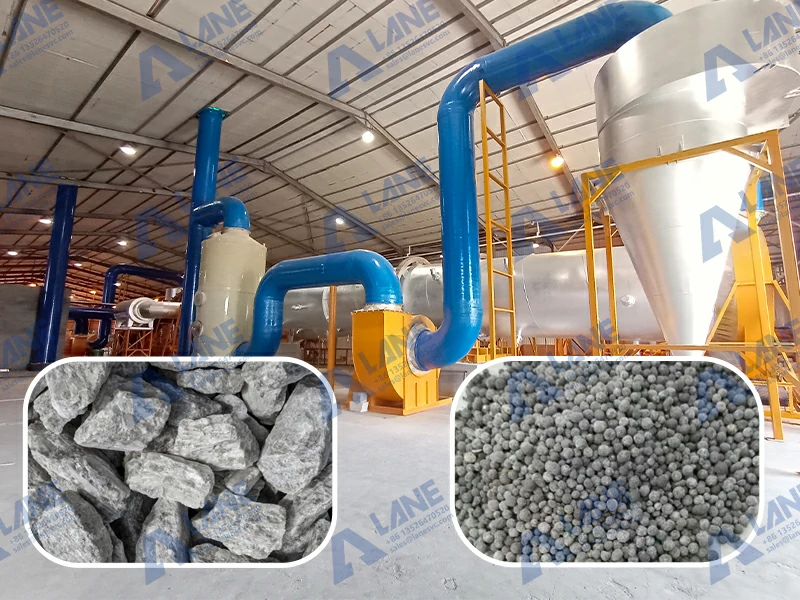
There are no two factories with exactly the same costs. Although production capacity is the most obvious factor, it is not the only one. raw material procurement, local building standards, energy infrastructure, labor market, and equipment configuration all have different impacts on final costs.
A small-scale SSP or TSP facility producing 10,000–30,000 tons per year typically runs between $800,000 and $3.5 million USD in total investment. Mid-range plants — think 50,000 to 80,000 TPY — commonly land between $4 million and $9 million. Large industrial-scale operations targeting 100,000 TPY and above can push well past $15 million, depending on site conditions and local compliance requirements.
To be honest, phosphate fertilizer plant cost shifts considerably based on geography. A plant commissioned in sub-Saharan Africa or Southeast Asia will carry a meaningfully different cost profile than the same capacity plant built in Eastern Europe or the Middle East.
Core Equipment and What Each Component Actually Costs
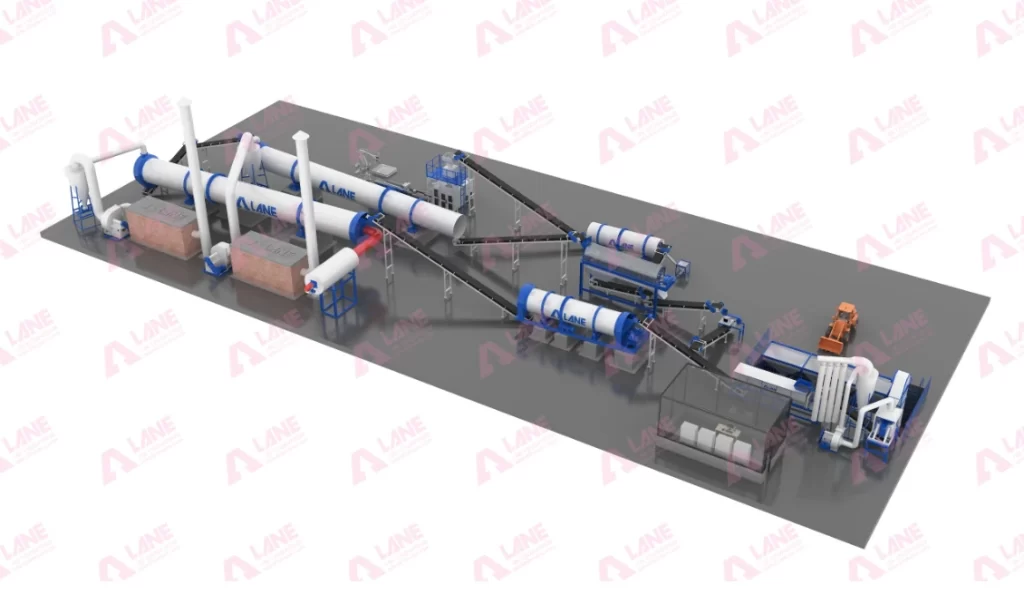
From what I’ve seen in the field, equipment typically accounts for 40–60% of total phosphate plant cost — sometimes more for highly mechanized lines. Here’s what a standard production line requires:
- Phosphate rock crusher— Primary size reduction unit; industrial jaw or impact crushers for phosphate ore processing. Budget range: $15,000–$120,000 depending on throughput capacity.
- Raymond mill— Fine grinding of phosphate rock to achieve the particle fineness required for chemical reaction. $30,000–$200,000+.
- Acidulation vessel— The core processing unit where phosphate rock meets sulfuric acid. Critical to SSP and GSSP production lines.
- Rotary drum granulator— Shapes the processed material into uniform granules for easier handling, storage, and application. A workhorse on any granulation line.
- Rotary drum dryer cooler— Reduces product moisture to specification and cools granules before packaging to prevent caking during storage.
- Vibrating screen— Classifies finished granules by particle size; oversized material is returned for re-granulation.
- Belt conveyor system— Connects processing stages; often underbudgeted in early project planning.
- Dust collection and exhaust treatment system— Non-negotiable from an environmental compliance standpoint; costs vary significantly by regional regulation.
- Automatic packaging machine— Final stage; affects throughput efficiency and labor requirements.
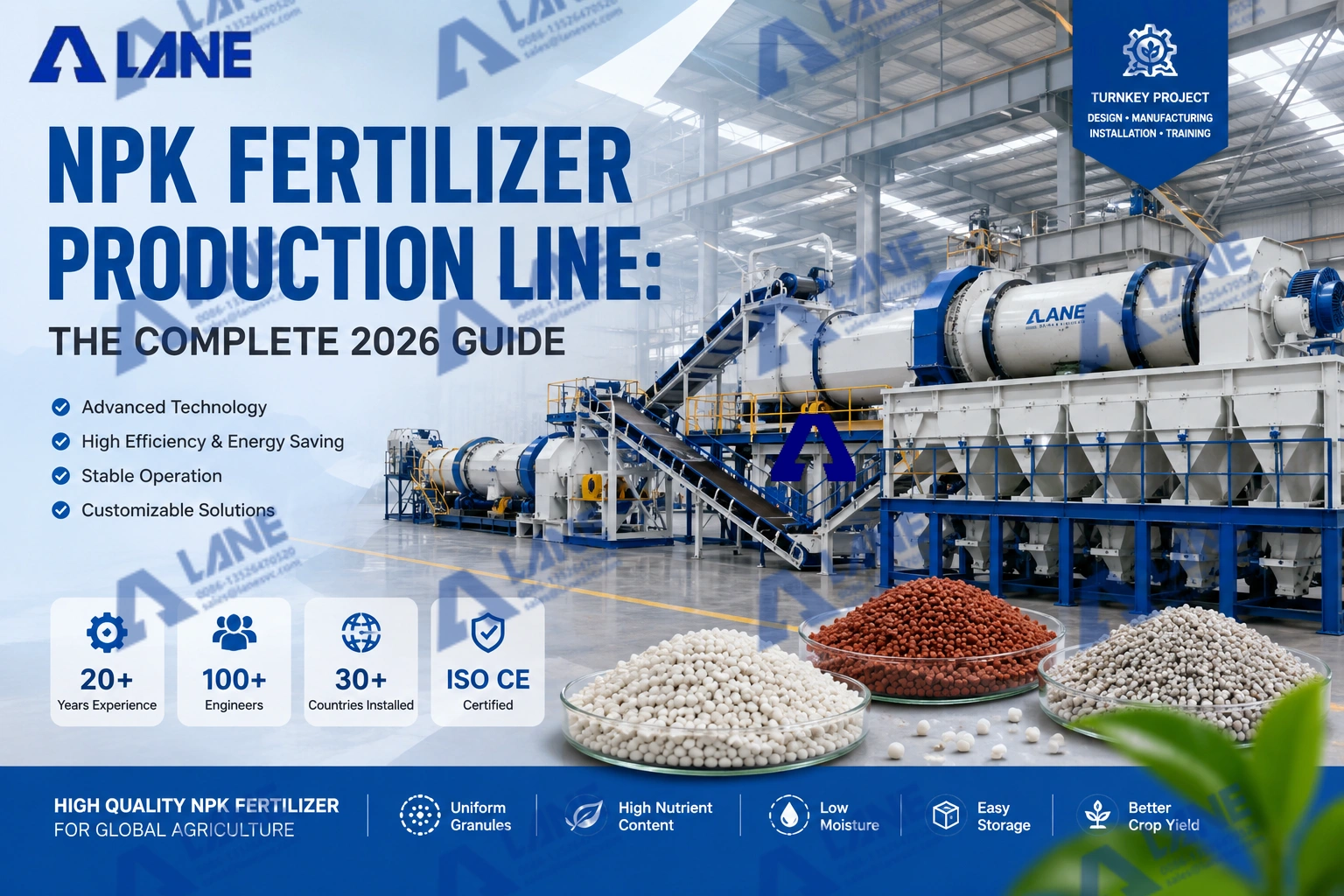
Large fertilizer equipment manufacturers, such as LANE, with a track record in a wide range of fields such as SSP, NPK, and specialty phosphate fertilizers, typically offer a complete turnkey configuration that packages many of these units, simplifying procurement and significantly reducing integration issues.
Civil Construction and Site Development Costs
Equipment costs account for only a small portion of the total budget. Civil engineering works such as foundation works, structural buildings, warehouses, acid-resistant flooring, and drainage systems usually cost 20-35 percent in addition to equipment costs.
In my experience, clients from emerging markets consistently underestimate this portion of total phosphate fertilizer plant cost. A well-designed phosphate plant needs sulfuric acid storage infrastructure that meets safety codes. It needs adequate ventilation. Drainage systems must handle acidic runoff. These aren’t optional line items — they’re structural necessities that get expensive fast if they’re not planned from day one.
Installation, Commissioning, and Hidden Costs
Here’s where projects get into trouble. Budget overruns on phosphate fertilizer plant cost rarely come from the equipment itself. They come from extended commissioning timelines, imported technician fees, customs delays on specialized components, and underestimated utility connection costs.
In the case of medium-sized plants, it may take 3 to 6 months for trial operation alone from initial installation to stable operation of rated output. During this period, the company will incur operating costs without generating any revenue. It is crucial to incorporate this point into the financial model from the outset.
Utility costs matter too. Sulfuric acid supply chains, electricity demand for grinding and drying operations, and water treatment requirements all feed into your ongoing operational cost structure — and they are a recurring part of total phosphate plant cost that many first-time investors overlook.
Phosphate Plant Cost by Region: A Practical Comparison
| Region | 30,000 TPY Estimated Range |
| Sub-Saharan Africa | $1.8M – $3.2M |
| Southeast Asia | $2.0M – $3.5M |
| Middle East | $2.5M – $4.2M |
| South Asia | $1.6M – $2.9M |
| Eastern Europe | $3.0M – $5.5M |
These figures represent reasonable planning benchmarks, not binding quotes. Actual phosphate plant cost varies based on site-specific factors, local contractor rates, and equipment sourcing strategy.
Summary and CTA
Phosphate fertilizer plant cost isn’t a single figure — it’s a system of interconnected decisions. Equipment selection, site conditions, capacity planning, and regional variables all compound. The investors who get this right are the ones who spend serious time on pre-feasibility analysis before any capital moves.
if you are currently in the stage of formulating the scope of your project, first set a production capacity target, map the supply chain of raw materials, and then build a cost model from there. We should not cling to the approximate values presented by someone at an exhibition.
Frequently Asked Questions
Q1: What is the minimum budget needed to start a phosphate fertilizer plant?
A small-scale operation with output around 10,000 TPY can be launched for as little as $800,000–$1.5 million USD in markets with favorable construction and labor costs. This typically covers core processing equipment and basic civil infrastructure.
Q2: How does production capacity affect phosphate fertilizer plant cost?
Capacity is the single biggest cost driver. Doubling capacity doesn’t double cost — equipment and infrastructure benefit from economies of scale — but the relationship is non-linear. A 100,000 TPY plant does not cost ten times a 10,000 TPY facility; it typically costs three to five times more.
Q3: Is SSP or TSP production more expensive to set up?
Triple superphosphate (TSP) production generally carries a higher phosphate plant cost due to more intensive acid treatment processes and stricter equipment specifications. SSP lines are simpler, more affordable to commission, and are often recommended for first-time producers.
Q4: How long does it take to recoup investment in a phosphate plant?
Payback period depends on local fertilizer pricing, plant utilization rate, and raw material costs — all of which directly affect how quickly a phosphate plant cost is recovered. Most mid-scale operations in high-demand markets — particularly Africa and Southeast Asia — report full investment recovery within four to seven years under normal operating conditions.
Q5: What ongoing costs should I plan for beyond initial setup?
Primary recurring costs include sulfuric acid procurement, electricity, maintenance labor, spare parts, and packaging materials. Depending on your market, logistics and distribution can also represent a significant share of operational expenditure.
Q6: Can I expand a phosphate plant after initial construction?
Yes, and modular design makes this practical. Many producers start at 20,000–30,000 TPY and expand in stages. Planning for expansion from day one — in terms of site layout and infrastructure sizing — meaningfully reduces future phosphate fertilizer plant cost at the upgrade stage.
For more details, please feel free to contact us.
Henan Lane Heavy Industry Machinery Technology Co., Ltd.
Email: sales@lanesvc.com
Contact number: +86 13526470520
Whatsapp: +86 13526470520
Send a message to us