


Mineral Fertilizer Increase Crop Yield: Best Equipment and Application Strategies for Large-Scale Farms
Large-scale farming leaves no room for guesswork. Margins are tight, seasons are fixed, and every input decision carries real financial consequence. That’s why the question of how mineral fertilizer increase crop yield has moved well beyond basic agronomy — it now sits at the intersection of precision agriculture, production engineering, and operational scale. Farms and agribusiness operators that understand this don’t just see healthier crops. They see consistent, repeatable crop yield boost season after season.
This article covers the equipment, strategies, and field-level logic that actually produce results.
Why Mineral Fertilizer Increase Crop Yield Better Than Most Alternatives
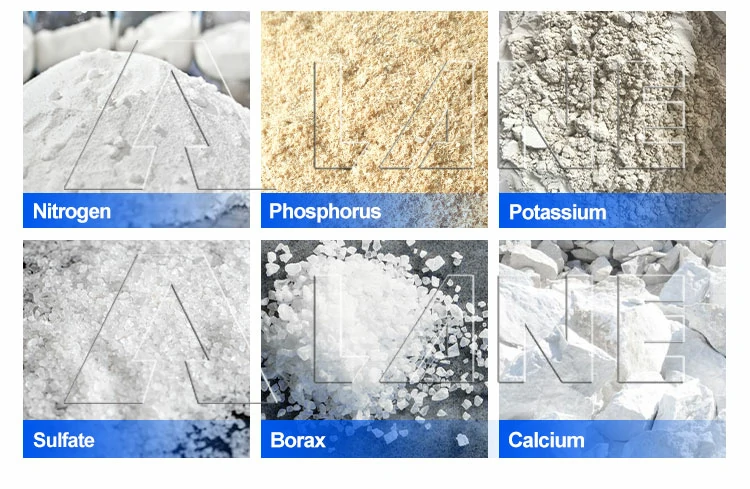
Organic inputs have their place – there’s no denying that. But when you’re managing thousands of hectares with a fixed growth window, the speed and precision of mineral fertilizers simply can’t be matched. They deliver nitrogen, phosphorus, potassium, sulfur, and magnesium in forms that plants can absorb almost immediately. There’s no need to wait for soil microorganisms. There are no unpredictable release curves.
From what I’ve seen working alongside large agricultural operations across Africa, Southeast Asia, and the Middle East, the farms that achieve strong crop yield boost year over year aren’t just applying more fertilizer. They’re applying the right formulation, the right granule size, and the right timing. And that precision starts well before the field — it starts in the production facility.
Core Equipment for Mineral Fertilizer Production at Scale
Here’s where most discussions about mineral fertilizer increase crop yield strategy fall short: they focus entirely on field application and ignore the upstream production side. But the equipment used to manufacture the product directly determines its quality, which directly determines its agronomic performance.
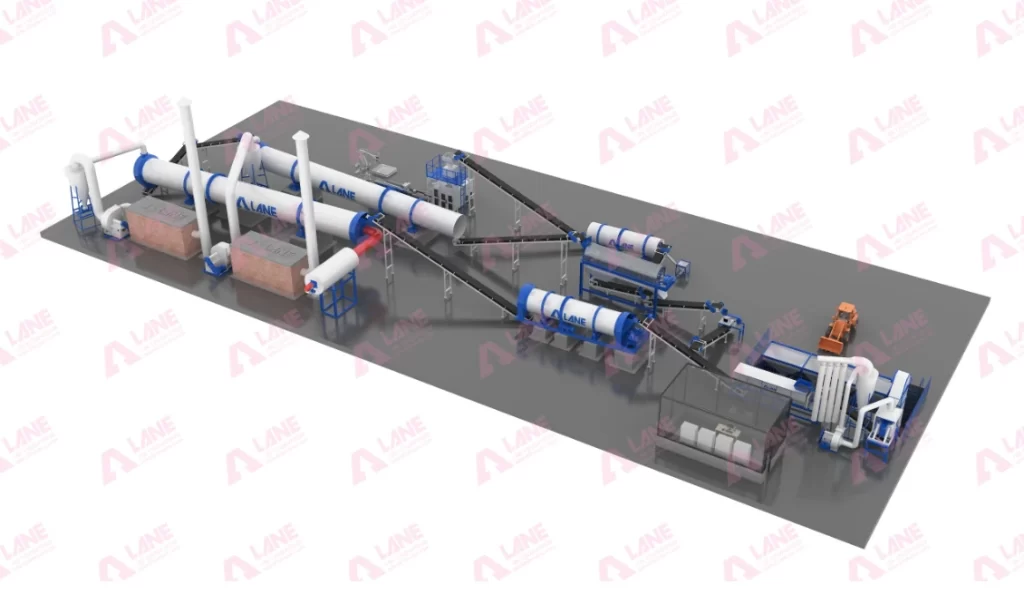
The core machines in a mineral fertilizer production line include:
- Rotary drum granulator— The workhorse for compound fertilizer granulation. Handles high throughput, produces uniform granules with strong physical hardness, and tolerates a wide range of input material compositions. Central to NPK fertilizer lines.
- Disc granulator— Better suited for operations requiring tighter granule size control or smaller production runs. Popular where product customization is a priority.
- Double shaft mixer— Blends raw materials uniformly before granulation. Homogeneity at this stage is non-negotiable; inconsistent mixing produces fertilizer with uneven nutrient distribution.
- Rotary drum dryer cooler— Dries and cools granules to prevent caking and ensure stability during storage and transit.
- Vibrating screen— Separates granules by size so only on-spec product reaches packaging. Oversized and undersized particles are recycled back into the line.
- Belt conveyor system— Connects every production stage. Layout efficiency here affects total throughput more than most facility operators appreciate.
- Bag filter— Captures airborne particulates during drying and cooling. Dust loss is nutrient loss — and that adds up fast at scale.
- Automatic packaging machine— Handles final bagging with speed and dosing accuracy. Inconsistent bag weights cause downstream compliance and distribution problems.
Manufacturers like LANE have built comprehensive production lines around these components, tailoring configurations to specific compound fertilizer, straight fertilizer, and mixed fertilizer formulations based on target crops and markets.
Application Strategies That Deliver Consistent Crop Yield Boost
Knowing that mineral fertilizer increase crop yield is one thing. Capturing that potential consistently at scale requires a disciplined application strategy.
Match formulation to soil and growth stage. A generic NPK blend applied uniformly across variable soil zones wastes input cost. Soil testing at commercial scale isn’t optional — it’s how you justify spend and optimize return. Different crops at different growth stages need different nutrient ratios. What drives crop yield boost in wheat at tillering isn’t the same as what works for maize at grain fill.
It is essential to pay close attention to the particle size. Based on my experience, this is the factor most frequently underestimated. Uniform particleization, achieved through properly calibrated rotary drum granulators or plate-type granulators, ensures even distribution during mechanical dispersion. Irregular particle sizes can lead to segregation within the spreader, resulting in uneven application of the pesticide in the field and uneven yields.
Apply with timing and placement precision. Broadcasting at the wrong growth stage, or placing fertilizer too close to seed rows, can cause nutrient lockout or root burn. Split applications — a portion pre-plant, topped up during vegetative growth — often outperform a single large dose, particularly for nitrogen.
Control storage conditions. Hygroscopic mineral fertilizers absorb ambient moisture and cake if stored improperly. Products dried and cooled correctly at the production stage remain significantly more stable in field storage, protecting spreadability and dosing accuracy.
What the Evidence Shows
Research consistently confirms that mineral fertilizer increase crop yield at commercial scale when applied with proper formulation and precision. Well-designed NPK programs routinely deliver crop yield boost of 30% to 60% over unfertilized controls, depending on baseline soil fertility. In nutrient-depleted soils across parts of Sub-Saharan Africa and South Asia, those numbers climb even higher. The limiting factor is rarely the fertilizer itself — it’s the precision of the system around it.
To be honest, the interesting question for most large-scale operators isn’t whether mineral fertilizer increase crop yield. It’s whether their production quality and application system are precise enough to capture the full agronomic potential.
Based on my observations, manufacturers who invest in both the quality of their equipment and adhere to strict application standards tend to outperform those who focus solely on one aspect at the expense of the other.
Closing Thoughts and Next Steps
Optimizing how mineral fertilizer increase crop yield across large-scale operations isn’t about applying more inputs — it’s about building precision into every stage of the system. Production quality, formulation accuracy, application timing, and logistics discipline all compound into the final result.
If you’re evaluating mineral fertilizer equipment for a new facility or upgrading an existing line, the decisions you make today will shape your product quality — and your customers’ crop yield boost — for years ahead.
Ready to build a production line engineered for real field performance? Contact our equipment specialists to discuss custom configurations for compound, straight NPK, or blended fertilizer production suited to your target market and crop base.
FAQ
Q1: How does mineral fertilizer increase crop yield compared to organic fertilizer?
Mineral fertilizers deliver nutrients in immediately plant-available forms, producing faster and more predictable crop responses. Organic fertilizers release nutrients more slowly through microbial breakdown. For large-scale operations with tight yield targets and fixed seasonal windows, mineral fertilizer increase crop yield with far greater consistency and speed.
Q2: What equipment is most critical in a mineral fertilizer production line?
For compound fertilizer, the rotary drum granulator is arguably the most important machine. It determines granule size uniformity, production throughput, and overall product quality — all of which directly affect how well the fertilizer performs in the field.
Q3: How do I choose between a rotary drum granulator and a disc granulator?
The rotary drum granulator suits high-volume production with mixed raw materials and is the standard choice for most NPK compound fertilizer lines. The disc granulator is better for operations requiring tighter size control or smaller batch runs. The right fit depends on production volume targets and product specifications.
Q4: Can the same mineral fertilizer formulation work across different crop types?
Rarely with full optimization. Different crops require different nutrient balances at different growth stages. A base NPK formulation can serve multiple crops, but tailoring formulations to specific crops and growth windows consistently produces better crop yield boost than applying a single standard blend.
Q5: What causes fertilizer caking during storage, and how is it prevented?
Caking results from residual moisture in granules binding product together over time. The root cause is usually inadequate drying or cooling during production. A properly calibrated rotary drum dryer and cooler combination brings product moisture down to the level needed for stable, long-term storage.
Q6: How does granule size uniformity affect field application?
Non-uniform granules segregate inside spreading equipment, leading to uneven nutrient distribution across the field. Some zones receive too much, others too little — both outcomes reduce overall efficiency and crop yield boost. Consistent granulation from well-maintained equipment is one of the most direct ways production quality translates into agronomic performance.
For more details, please feel free to contact us.
Henan Lane Heavy Industry Machinery Technology Co., Ltd.
Email: sales@lanesvc.com
Contact number: +86 13526470520
Whatsapp: +86 13526470520


Send a message to us