


Perlite Fertilizer Production Line: Equipment & Output Guide
There’s a quiet shift happening in specialty crop production right now. More growers — from greenhouse operators in the Netherlands to hydroponic farms in Southeast Asia — are asking about perlite-based fertilizer systems. When you’ve spent years watching clients struggle with nutrient leaching and inconsistent release rates, a well-designed perlite fertilizer production line starts to look less like a niche investment and more like a practical answer to a very real problem.
This guide breaks down what that production line actually involves: the equipment, the output considerations, and what separates a high-performing perlite fertilizer production line from one that quietly bleeds money.
What Makes Perlite a Viable Fertilizer Carrier
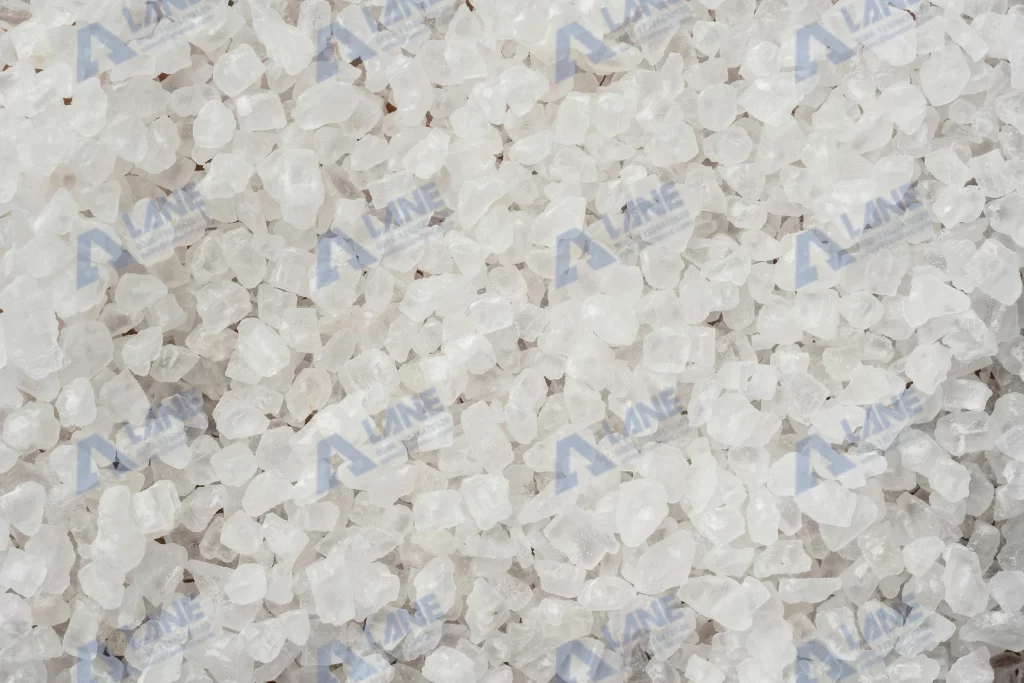
Perlite is an expanded volcanic glass with extremely high porosity. This structure makes it ideal as a fertilizer carrier. It firmly retains nutrients, prevents waterlogging and root rot, and slowly releases nutrients without altering the physical and chemical properties of the soil. Furthermore, its neutral pH and light weight effectively reduce subsequent transportation and fertilization costs.
For manufacturers, this material profile creates a specific set of production challenges. Perlite is fragile. Standard granulation approaches used for urea or NPK blends tend to crush or shatter it. That’s why building a perlite fertilizer production line requires equipment that handles the material gently — shaping and coating rather than compressing.
Core Equipment in a Perlite Fertilizer Production Line
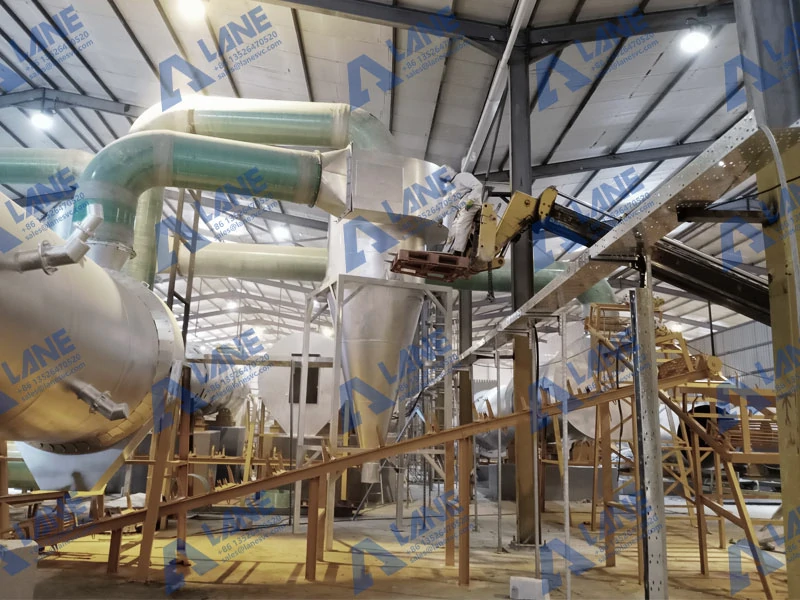
A well-configured perlite fertilizer production line typically includes the following units, each playing a distinct role in material flow:
- Perlite expansion furnace— Raw perlite ore requires high-temperature expansion before use. Temperatures typically range from 850°C to 1000°C, causing moisture to vaporize and the material to expand up to 20 times its original volume.
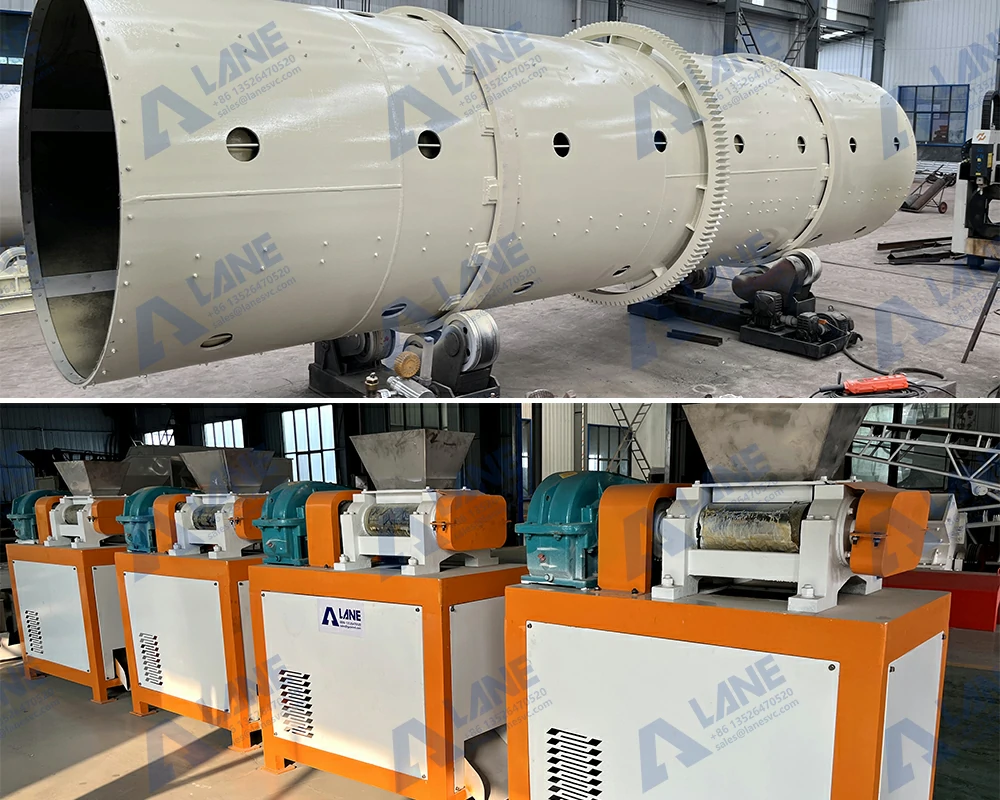
- Perlite granulator— This is the central unit. A perlite granulator must apply binders and shape material into consistent granules without over-compressing. Drum-type coating granulators are common here; they tumble material gently, building granule structure layer by layer rather than forcing it through compression rollers. In my experience visiting production sites across China and the Middle East, the choice of perlite granulator has more impact on final product quality than any other single piece of equipment.
- Rotary drum dryer— After granulation, moisture content needs to drop to acceptable levels — typically below 10% — for storage stability. Rotary drum dryers handle this efficiently and are sized to match granulator throughput.
- Rotary drum cooler— Often skipped in smaller setups, and that’s usually a mistake. Running hot granules into packaging causes clumping. A dedicated cooling drum brings product temperature down before the screening stage.
- Vibrating screen— Granule size uniformity matters to end users. Vibrating screens separate on-spec product from oversized and undersized fractions. Oversized material feeds back to a crushing unit; fines recirculate to the granulator inlet.
- Coating machine— Optional but increasingly common. A thin coating layer — usually wax or polymer — applied in a rotating drum improves shelf life, reduces dust, and can provide controlled-release properties that command premium pricing.
- Automatic packaging machine— Automated bagging lines close out the production sequence. Output can be configured for 5kg, 25kg, or bulk bag formats depending on target market.
Output Capacity: What to Expect
Output capacity on a perlite fertilizer production line varies significantly depending on configuration. Small-scale systems designed for regional producers or R&D facilities typically run at 1–3 tonnes per hour. Mid-scale commercial lines generally operate between 5 and 15 tonnes per hour. Large industrial configurations can push 20 tonnes per hour or more.
The relationship between production capacity and particle quality is often overlooked. When a production line operates beyond its capacity, variations in particle size can occur. Based on practical experience, operating at 80-85% of the rated production capacity ensures better quality in subsequent processes rather than simply pursuing maximum production volume.
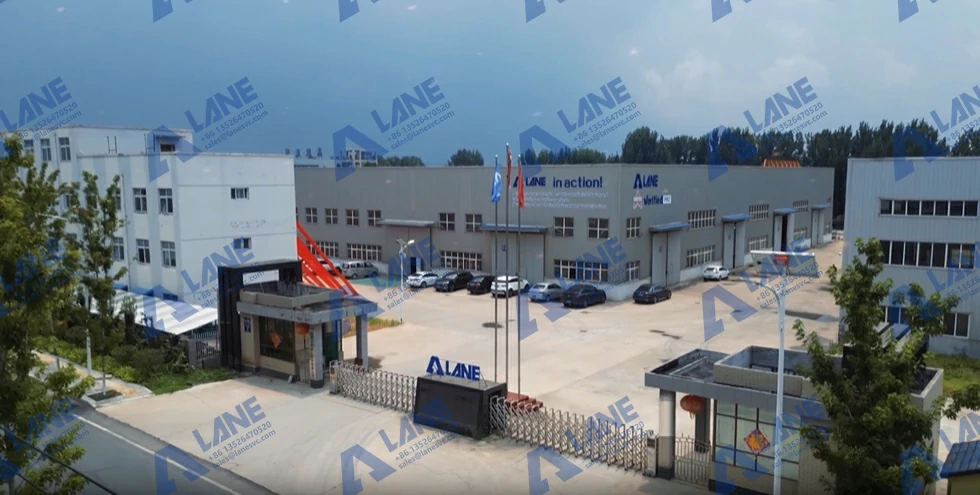
Equipment manufacturers, including LANE, a large-scale fertilizer equipment manufacturer based in Henan Province, are adopting modular expansion solutions in the design of their perlite production lines. Initial production capacity is 5 tons per hour, but it can be expanded to 15 tons per hour without replacing major components. This flexible expandability is a particularly significant advantage when initial market demand is uncertain.
Key Variables That Affect Line Performance
A few factors consistently separate high-output lines from underperforming ones.
Material feed consistency. Perlite feedstock quality varies. Expansion ratios, particle size distribution, and moisture content all affect how well downstream equipment handles the material. Investing in quality input screening saves significant headaches.
Binder selection. The binder used in granulation determines the hardness of the pellets, their dissolution rate, and their shelf life. water-soluble binders are preferred for most agricultural applications, but some producers use starch-based binders to meet organic certification requirements.
Temperature control. Both the drying and cooling stages require precise temperature management. Overdrying causes brittleness; underdrying causes caking in storage. Automated temperature control systems pay for themselves quickly.
Maintenance scheduling.As you know, perlite has abrasive properties. This is unavoidable due to the properties of expanded volcanic glass. Wear liners, seals and screen meshes should be inspected regularly at shorter intervals than standard NPK lines. By incorporating this into the operational model from the outset, we can avoid unexpected downtime.
Planning Considerations for New Investment
Anyone evaluating a perlite fertilizer production line investment should look beyond equipment cost. Land footprint, utility infrastructure, raw material sourcing, and product logistics all feed into the full cost picture.
To be honest, one of the planning mistakes I often see is the inadequate specifications of utility equipment. The 10-ton-per-hour gas supply line and the expansion furnace consume considerable energy. by checking gas supply capacity and power load before ordering equipment, you can save on expensive retrofit costs.
LANE’s engineering team provides support with site layout and utility specifications as part of the pre-sales process. planning support in these upstream processes is an important factor to consider when comparing suppliers as well as the unit cost of equipment.
Conclusion
A well-designed perlite fertilizer production line offers manufacturers a genuine differentiation opportunity in a competitive market. The production logic isn’t complicated — it’s about matching gentle handling equipment to a fragile, high-value material and running the line with consistency. Get the perlite granulator selection right, size the thermal stages properly, and build in quality control at screening. The output — stable, uniform, slow-release fertilizer product — speaks for itself.
If you’re evaluating a perlite fertilizer production line for your facility, the next step is a capacity and site assessment. Reach out to an experienced equipment supplier with fertilizer-specific engineering capability to get a line configuration mapped to your actual output requirements.
Frequently Asked Questions
Q1: What is a perlite fertilizer production line?
A perlite fertilizer production line is a sequence of industrial equipment designed to process expanded perlite into fertilizer granules by combining it with nutrient inputs, granulating the mixture, drying and cooling the product, and packaging it for distribution.
Q2: What role does the perlite granulator play in production?
The perlite granulator is the core processing unit. It shapes nutrient-coated perlite particles into consistent granules using gentle rotational action rather than compression, preserving the structural integrity of the expanded perlite while building a stable granule form.
Q3: What output capacity should I plan for?
That depends on your target market and distribution scale. Small-scale lines start at 1–3 t/h; commercial operations typically run 5–15 t/h. Most manufacturers recommend selecting a line rated 15–20% above your initial target output to provide headroom for growth.
Q4: How is a perlite production line different from a standard NPK line?
The key difference is granulation method. Standard NPK lines often use compaction or pan granulation at higher pressures. Perlite is too fragile for high-pressure methods; drum coating granulators are used instead to build granules gently without crushing the carrier material.
Q5: What maintenance intervals apply to perlite lines?
Because perlite is moderately abrasive, wear components — screen meshes, drum liners, mixer paddles — should be inspected every 500–700 operating hours, compared to 1,000+ hours on less abrasive materials. Preventive maintenance schedules keep unplanned downtime low.
Q6: Can a perlite fertilizer production line produce organic-certified product?
Yes, with the right input selection. Using organic-approved nutrient sources and starch or plant-based binders, the granulation process itself doesn’t introduce synthetic additives. Certification requirements vary by market and should be verified with the relevant body before finalizing your formulation.
For more details, please feel free to contact us.
Henan Lane Heavy Industry Machinery Technology Co., Ltd.
Email: sales@lanesvc.com
Contact number: +86 13526470520
Whatsapp: +86 13526470520

Send a message to us