


Perlite Fertilizer Granulation: Complete Process & Equipment Guide
07/07/2026
When you’re dealing with perlite-based fertilizers, let me tell you — the granulation stage either makes your product or breaks it. I’ve walked through more production facilities than I can count over the past 12 years, and the ones that get granulation right? They’re shipping consistent, premium product. The ones that don’t… you can smell the dust from the parking lot.
Perlite fertilizer granulation isn’t just another processing step. It’s the pivot point where a dusty, hard-to-handle powder turns into something farmers actually want to spread. And honestly, that transformation is where most of the margin lives.
Why Perlite Shows Up in So Many Fertilizer Blends
Perlite is lightweight, porous, and holds moisture like a sponge. But raw perlite powder is a nightmare. It drifts, segregates, clogs hoppers. You can’t ship it efficiently, and farmers hate applying it.
That’s where perlite fertilizer granulation earns its keep. Binding fine perlite into uniform, dense granules solves the handling problem while keeping all the agronomic benefits intact. The granules flow through spreaders smoothly, resist crush damage, and release nutrients evenly in the field. Walk into a poorly managed perlite fertilizer production facility and you’ll see product literally floating away as dust. Proper granulation eliminates that almost entirely.
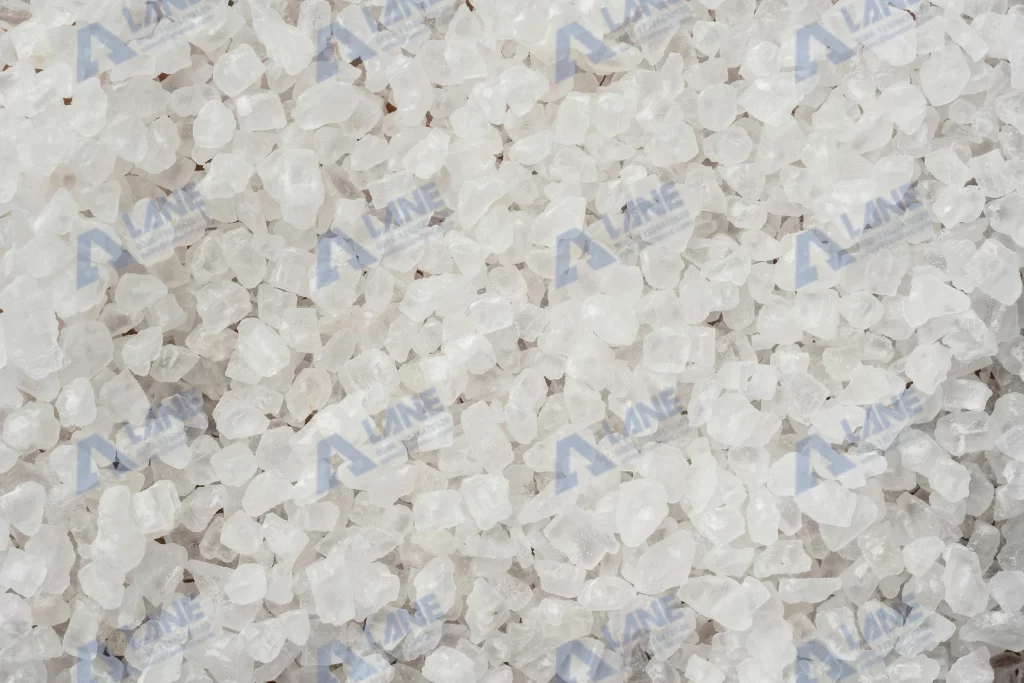
The Granulation Process, Step by Step
I’ll walk through this the way I explain it to plant managers new to the material. Perlite behaves differently than phosphate rock or urea — its low density and abrasive nature mean you can’t copy-paste a standard NPK line.
Raw Material Preparation
Crush and screen to below 200 mesh for most formulations. Anything coarser creates weak spots in the granule structure.
Batching and Mixing
Blend perlite with fertilizer components plus a binder. Bentonite clay works. So do lignosulfonates. Dial in the dosage precisely — too little binder and granules crumble; too much and they won’t break down in the field.
Granulation
This is the heart of perlite fertilizer granulation. The mix feeds into the granulator, where controlled moisture and rotational forces build particles layer by layer. The process runs at 8-12% moisture, but that number shifts with your perlite ratio and binder type. Trust what your material tells you, not the textbook.
Drying and Cooling
A rotary dryer at 150-250°C inlet brings moisture down, then a rotary cooler drops granule temperature below 40°C. Skip proper cooling and you’ll get caking in storage. Every. Single. Time.
Screening and Recycling
Cooled granules pass over vibrating screens. On-spec product moves to storage; oversize gets crushed and returns to the granulator with undersize as recycle. This loop pushes efficiency above 90% for a dialed-in perlite fertilizer production line.
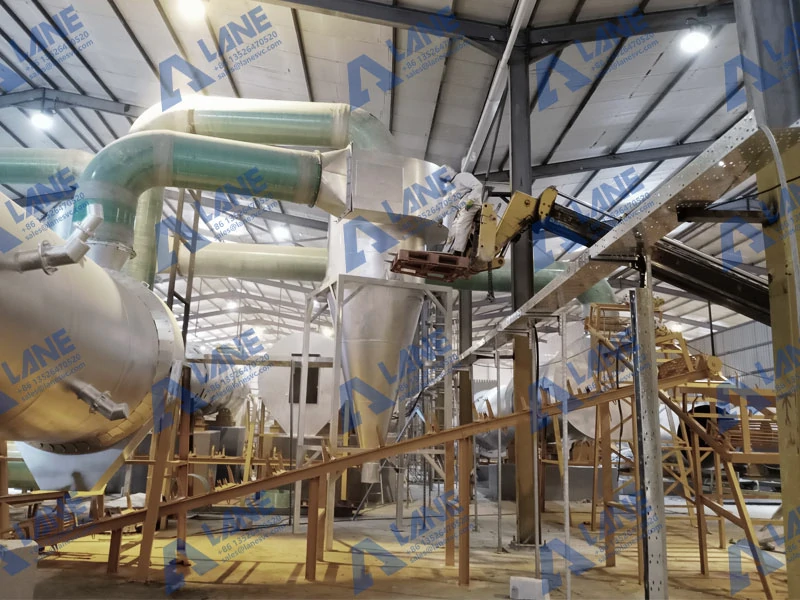
Core Equipment for Perlite Fertilizer Granulation Lines
Here’s the equipment backbone you’ll actually spec:
- Rotary Drum Granulator — The workhorse. Material tumbles in a rotating cylinder, picks up moisture from spray nozzles, and builds granules through accretion. Internal rubber liners reduce wear with perlite formulations. Capacity: 1 to 30+ tons per hour.
- Disc Granulator — Better for smaller-capacity lines. The angled rotating pan gives visual control over granule formation. Fine-tune spray pattern and pan angle on the fly for uniform 2-4mm granules.
- Binder Mixer — A twin-shaft pug mill or pin mixer ensures even binder distribution before granulation. Perlite’s low bulk density makes under-mixing a real risk.
- Rotary Dryer — Co-current design prevents overheating lightweight granules. Internal flights should cascade material gently through the gas stream.
- Rotary Cooler — Ambient air brings granule temperature down before bagging. Warm granules plus moisture equals clumping.
- Vibrating Screen— Separates product, oversize, and undersize in one pass. The 2-4mm range is standard for agricultural-grade material.
- Chain Crusher — Handles oversize from screening to keep the recycle loop running. Must withstand perlite’s abrasive nature.
- Automatic Packaging Machine— Handles 6-12 bags per minute with ±0.2% accuracy, plus bulk load-out capability.
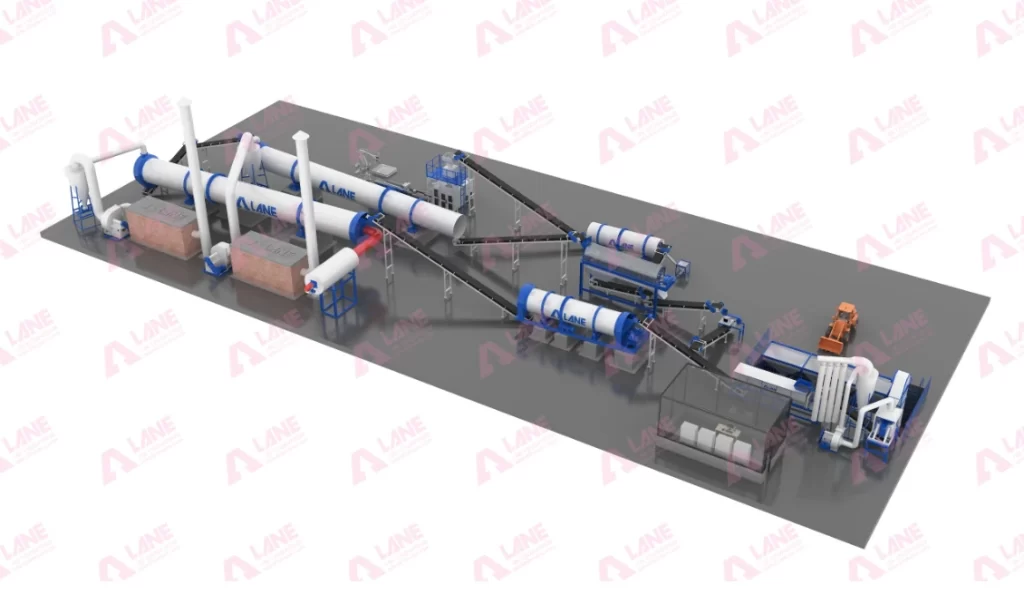
What the Plant Floor Actually Teaches You
Here’s something equipment brochures skip: perlite fertilizer granulation lives and dies by moisture control. Not the setpoint on your panel — what’s actually happening inside the drum, right now. I’ve calibrated more moisture probes than I care to remember, and the honest truth? Your best sensor is the operator who’s run that line for three years.
Recycle ratio causes grief too. For typical perlite-based NPK, you’re at 2:1 to 3:1 recycle to fresh feed. But crush oversize that’s too hard — because someone overdid the binder — and you’re seeding the granulator with rock-hard nuclei that keep growing harder. Vicious cycle. Monitor crush strength and optimize binder relentlessly.
I worked with a Southeast Asian plant hitting 14% fines out of the cooler. Months of tweaking dryer temperature didn’t fix it. The real problem? Drum residence time was 40 seconds too short. Low-density perlite particles need more revolutions for stable granule formation. They extended the drum by 1.2 meters and fines dropped under 5%.
This is where manufacturers like LANE earn their reputation. When speccing a perlite fertilizer production line, partner with engineers who’ve actually watched perlite move through a drum — not just modeled it in CAD.
Putting It All Together
Perlite fertilizer granulation is equal parts science and art. The science: material properties, equipment sizing, process parameters. The art: the thousand small adjustments operators make each shift — spray angle tweaks, binder rate nudges, screen swaps — that separate premium granules from expensive dust.
Planning a new perlite fertilizer production facility or upgrading an existing line? Start with the granulator. Everything revolves around what happens in that drum or pan. Get the core right and the rest falls into place. Get it wrong and you’ll chase problems for years.
Ready to talk through your material and throughput requirements? Whether running a pilot line or speccing a 30-ton-per-hour plant, the right conversation now saves a hundred headaches later.
Frequently Asked Questions
What is perlite fertilizer granulation and why is it important?
Perlite fertilizer granulation converts fine perlite powder into uniform granules for agricultural use. It solves handling, transport, and spreading challenges while preserving perlite’s moisture-retention and nutrient-carrying benefits.
How does perlite fertilizer production differ from standard fertilizer granulation?
Perlite’s ultra-low density and abrasive nature demand longer granulator retention, gentler dryer flighting, and more precise binder optimization. Standard NPK parameters don’t transfer directly.
What is the ideal particle size for perlite fertilizer granules?
For most agricultural applications, 2-4mm diameter is the sweet spot. This range flows through spreaders, resists transport crushing, and breaks down appropriately in soil. Some horticultural grades target 1-2mm.
Which granulator type works best for perlite-based fertilizers?
Both rotary drum and disc granulators perform well. Drums dominate high-capacity lines above 5 tons per hour. Discs excel in smaller or specialty-batch operations where frequent formulation changes and visual monitoring matter.
What are the most common problems in perlite fertilizer granulation?
The big three: dust from insufficient binder, caking from inadequate cooling, and wide size distribution from poor moisture control. Moisture is toughest — the optimal window shifts with humidity and raw material variability.
How much does a complete perlite fertilizer production line cost?
Costs scale with capacity. A 1-2 ton/hour pilot line may run $200,000-500,000 for core equipment. Full-scale 20-30 ton/hour facilities with automation reach $2-5 million. The granulator, dryer, and cooler account for roughly 60% of equipment cost.
For more details, please feel free to contact us.
Henan Lane Heavy Industry Machinery Technology Co., Ltd.
Email: sales@lanesvc.com
Contact number: +86 13526470520
Whatsapp: +86 13526470520

Send a message to us