


How to Make Organic Fertilizer from Animal Manure: A Complete Production Guide
There’s a moment every serious producer reaches — standing in front of a pile of raw animal waste and thinking, this is either a problem or an opportunity. In most cases, it’s both. Organic fertilizer from animal manure has been feeding soils for centuries, but modern production methods have transformed what was once a backyard composting exercise into a scalable, profitable industrial process. This guide walks you through the real mechanics of how to make organic fertilizer from animal manure at commercial scale — from raw feedstock to finished granule.
Why Animal Manure Is One of the Most Valuable Raw Materials for Organic Fertilizer Production
Let me tell you something that surprises a lot of new entrants: the fertilizer isn’t in the manure itself — it’s in what you do to it. Raw cattle, poultry, swine, or sheep manure contains nitrogen, phosphorus, potassium, and a range of trace elements. But without proper processing, those nutrients are unstable, potentially pathogenic, and largely unavailable to plant roots.
That’s the whole point of a structured animal manure organic fertilizer production process. You’re not just drying out waste. You’re engineering a product — one that competes on quality, consistency, and agronomic value.
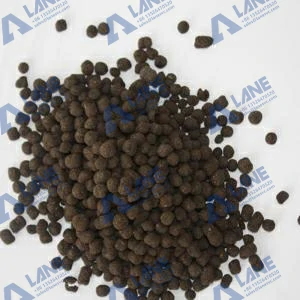
Poultry manure, for instance, tends to have the highest nitrogen content — sometimes north of 3.5% on a dry-weight basis. Cattle manure is bulkier, more fibrous, and better suited for improving soil structure long-term. Swine manure sits somewhere in between. From what I’ve seen in the field, producers who take the time to understand their specific raw material before designing their animal manure organic fertilizer production process end up with far more consistent output quality.
Core Equipment in the Animal Manure Organic Fertilizer Production Process
This is where things get practical. A well-designed production line isn’t just a collection of machines — it’s a sequence. Each piece of equipment serves a specific function, and the order matters.
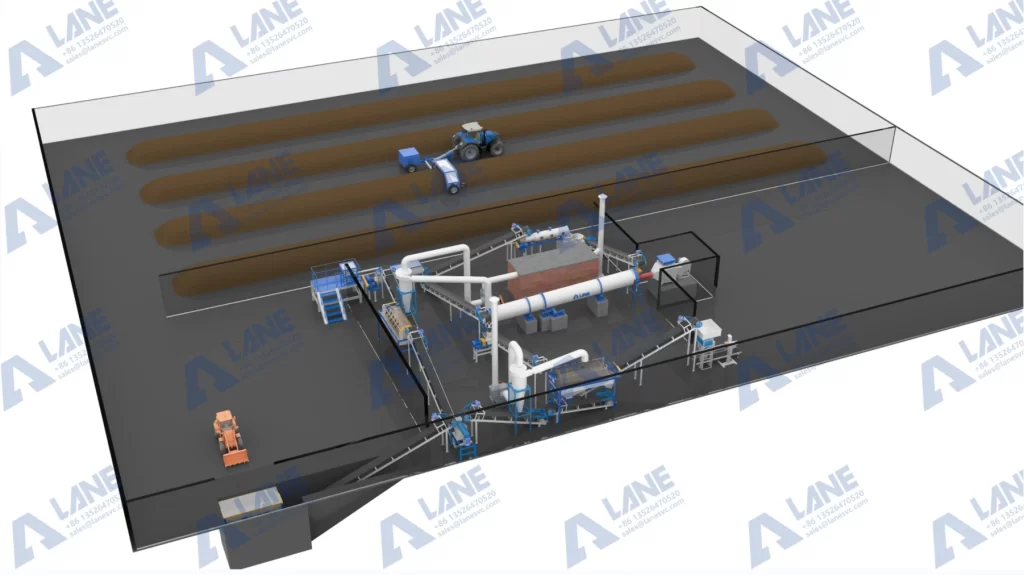
Here’s what a complete line for producing organic fertilizer from animal manure typically includes:
- Compost Turning Machine — Drives aerobic fermentation, which destroys pathogens and weed seeds while stabilizing organic matter. Windrow turners and groove-type fermenters are both common depending on scale.
- Crushing Machine— Breaks down large clumps after fermentation. Absolutely necessary before granulation — you can’t granulate uneven material effectively.
- Rotary Drum Granulator — The workhorse of most organic fertilizer lines. Tumbles material into rounded granules using a combination of moisture and mechanical action. Widely favored for its adaptability across different formulations.
- Disc Granulator — A good alternative for smaller-scale or more precise operations. Produces very uniform granule sizes with relatively low energy consumption.
- Rotary Drum Dryer and Cooler — Dries granules to below 14% moisture for stable storage, then cools them to avoid caking and re-absorbing moisture before packaging.
- Drum Screener — Separates on-spec granules from oversized or undersized particles. Oversized material returns to the crusher; fines return to the granulator.
- Coating Machine — Optional but increasingly standard. Applies a thin organic or wax-based coating to improve granule appearance, reduce dust, and extend nutrient release.
- Automatic Packaging — The final stage. Accurate weighing and bagging, typically in 25 kg or 50 kg bags.
Each machine in this chain has an impact on the one that follows it. Feed the granulator with inconsistently crushed material and your granule uniformity drops. Underdry your product and it cakes in storage. It all connects.
The Fermentation Stage: Where Most Producers Cut Corners
In my experience, fermentation is where the most expensive mistakes happen in any animal manure organic fertilizer production process — not because the equipment is difficult to operate, but because producers underestimate how long it actually takes. Proper aerobic composting of animal manure typically requires 15 to 25 days, depending on the C/N ratio of the raw material, ambient temperature, and moisture levels. Rushing this stage means your end product retains active pathogens and produces ammonia odors — neither of which is acceptable in a commercial organic fertilizer from animal manure operation.
Moisture management during fermentation is critical. The target window is 50–65% moisture content. Too dry and microbial activity stalls. Too wet and you get anaerobic zones, uneven decomposition, and serious odor issues.
Practical Notes on Granulation Choices
Not every operation needs the same granulator. Actually, one of the more common questions I get from producers setting up their first organic fertilizer from animal manure line is whether to go with a rotary drum granulator or a disc granulator.
The honest answer: rotary drum systems handle larger volumes more efficiently and are more forgiving with variable moisture content in the input material. Disc systems give you tighter control over granule diameter and are easier to adjust mid-run. For operations targeting niche markets with strict size requirements, disc granulation often makes more sense.
Manufacturers like LANE have produced granulation systems specifically engineered for the animal manure organic fertilizer production process — which behaves very differently from compound chemical fertilizer blends — and that distinction matters when you’re spec’ing out a line.
Summary and Next Steps
Producing organic fertilizer from animal manure at a commercial level is genuinely achievable. It’s also genuinely complex. The raw material is variable. The process has multiple failure points. And the market is increasingly quality-conscious.
The producers who succeed long-term are the ones who treat it like a manufacturing operation, not a composting project. Invest in the right equipment sequence. Don’t compromise on fermentation time. Test your granule quality consistently.
If you’re designing a new production line or upgrading an existing one, talk to an equipment supplier who has real experience with organic fertilizer from animal manure processing — not just compound fertilizer lines. The technical differences are significant, and the right configuration saves you months of troubleshooting.
FAQ
Q1: What types of animal manure are best for organic fertilizer production?
Poultry, cattle, swine, and sheep manure are all viable feedstocks for producing organic fertilizer from animal manure. Poultry manure is high in nitrogen and fast-acting. Cattle and pig manure are more balanced and better for soil conditioning. Most commercial operations use whatever is locally abundant and cost-effective — the production process adapts to fit different raw material profiles.
Q2: How long does the full animal manure organic fertilizer production process take from raw manure to finished product?
Including fermentation, the full cycle typically runs 20 to 30 days. Fermentation alone accounts for 15–25 days. Drying, granulation, and packaging add another 1–3 days depending on line capacity.
Q3: What moisture content should the final product have?
Finished granules should contain below 14% moisture for stable storage. Above that threshold, caking and microbial reactivation become real problems during transportation and shelf storage.
Q4: Is it necessary to add chemical additives when producing organic fertilizer from animal manure?
Not necessarily. Pure organic fertilizer from animal manure can be certified fully organic. Some producers add microbial inoculants — beneficial bacteria or fungi — to enhance nutrient availability. These are generally still considered compliant with organic certification standards.
Q5: How is granule size controlled in the animal manure organic fertilizer production process?
The drum screener separates product by size after granulation. Oversized granules return to the crusher; undersized particles recycle back into the granulator. The target range for most markets is 2–4 mm diameter.
Q6: What scale of operation is economically viable for this type of facility?
In my view, lines processing 5,000 to 10,000 tons of finished product annually represent a reasonable entry point for commercial viability. Below that, the fixed equipment and operational costs are difficult to recover. However, regional pricing for both raw manure and finished organic fertilizer varies considerably — a proper feasibility study for your specific market is essential before committing to equipment investment.
For more details, please feel free to contact us.
Henan Lane Heavy Industry Machinery Technology Co., Ltd.
Email: sales@lanesvc.com
Contact number: +86 13526470520
Whatsapp: +86 13526470520


Send a message to us