


Mineral Fertilizer Manufacturing Process: Steps & Equipment
There’s a lot of noise out there about fertilizer production — plenty of generic overviews that read like they were pulled straight from a textbook. What most producers actually need, especially those planning or scaling a mineral fertilizer plant, is a clear, honest breakdown of what the process really looks like from start to finish. So let me walk you through it.
What Is the Mineral Fertilizer Manufacturing Process?
The mineral fertilizer manufacturing process refers to the series of physical and chemical operations that convert raw mineral inputs — phosphate rock, potassium salts, sulfur, nitrogen compounds — into market-ready granular or powdered fertilizer products. Unlike organic fertilizer production, mineral fertilizer relies primarily on inorganic raw materials and precise chemical reactions to deliver concentrated plant-available nutrients.
From what I’ve seen working alongside production engineers in this industry, the biggest mistakes happen when operators underestimate the interdependence of each stage. A poorly calibrated dryer, for instance, can undo everything that happened in the granulation step. Every unit matters.
Key Steps in the Mineral Fertilizer Manufacturing Process
Step 1: Raw Material Preparation
Everything starts here. Raw minerals are typically received in bulk and must be crushed, ground, and classified to a consistent particle size before processing. This step directly affects reactivity in downstream chemical stages, and — honestly — it’s one that doesn’t get enough attention in most production guides.
Core equipment at this stage:
- Raymond mill— Fine grinding of phosphate rock and other brittle mineral inputs
- Belt conveyor system— Continuous, controlled material transport between stations
Step 2: Chemical Reaction and Acidulation
For phosphate-based products, this is where the real chemistry happens. Phosphate rock reacts with sulfuric or phosphoric acid in a controlled acidulation reactor. The reaction time, temperature, and acid ratio are tightly managed. Any deviation here affects nutrient availability in the final product.
Key equipment:
- Acidulation reactor— Core reaction vessel for phosphate acidulation; design varies based on acid type and capacity
- Double shaft mixer— Also used here to ensure homogeneous mixing of reacted slurry or paste
Step 3: Granulation
The granulation step is where the mineral fertilizer manufacturing process becomes visually recognizable — wet or semi-dry material is formed into uniform granules. This is where capacity decisions matter most. Drum granulators handle large-volume output efficiently; disc granulators offer tighter control over granule size distribution.
Equipment used at this stage:
- Rotary drum granulator— High-capacity wet granulation; standard choice for large-scale production operations
- Disc granulator— Suited for smaller batches with precise granule sizing requirements
- Flat die pellet mill— Used in some specialty mineral fertilizer formulations requiring dense pellets
Step 4: Drying and Cooling
Freshly granulated material carries significant moisture. Drying brings moisture content down to acceptable levels (typically under 2% for bagging), and cooling prevents caking and heat-related degradation during storage. You know, skipping or rushing either step is one of the fastest ways to create product quality complaints downstream.
Equipment:
- Rotary drum dryer— Counter-flow or co-current drying at controlled temperature; handles high throughput
- Rotary drum cooler— Ambient air or forced cooling to bring granule temperature below 45°C before screening
Step 5: Screening and Classification
Dried granules pass through screening to separate on-spec product from oversized or undersized fractions. Oversized material goes back for crushing; undersized returns to the granulator. This closed-loop approach is standard in any well-run mineral fertilizer plant.
Equipment:
- Rotary drum screener— Gentle separation of granules by size; minimizes breakage
- Vibrating screen— High-frequency separation for tighter size distribution control
Step 6: Coating (Optional)
Some mineral fertilizer products require anti-caking coating or controlled-release treatment. This step is increasingly common for export markets where shelf life and free-flowing characteristics are critical.
Equipment:
- Coating machine— Drum-type applicator for liquid or powder coating agents
Step 7: Packaging
The final step. Bagging systems in a modern mineral fertilizer plant range from semi-automatic to fully integrated lines, depending on output capacity and target market requirements.
Equipment:
- Automatic packaging machine— Weighing, filling, sealing; commonly configured for 25kg and 50kg bags
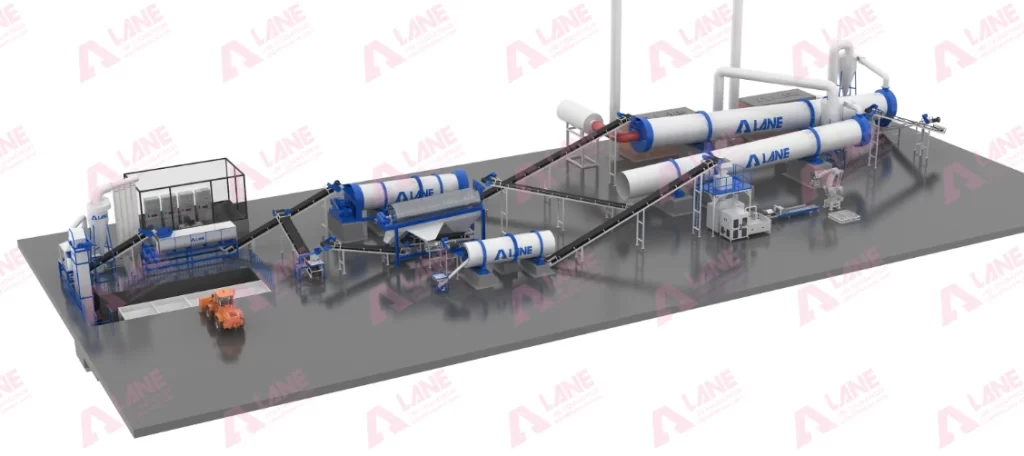
Real-World Considerations for Mineral Fertilizer Plant Design
In my experience, producers entering this market — particularly those building greenfield mineral fertilizer plant facilities — tend to underestimate two things: dust management and heat load in the drying circuit. Both directly impact operating costs and regulatory compliance.
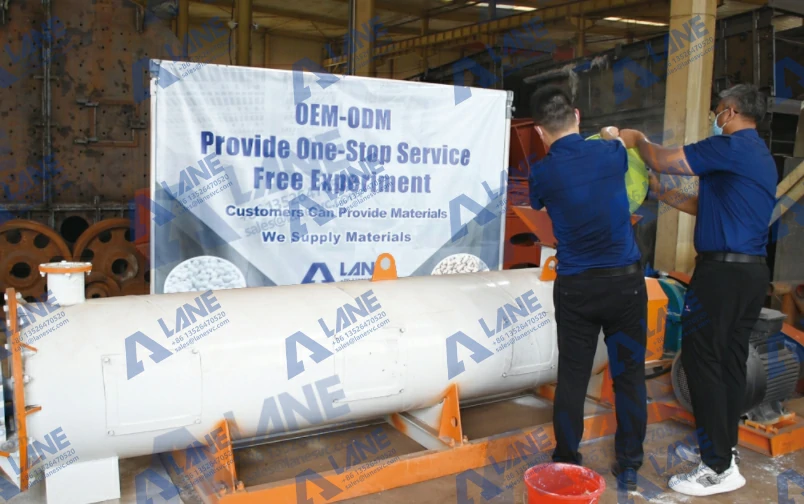
Equipment suppliers like LANE, which specializes in large-scale fertilizer production equipment, configure complete lines with these operational realities built in. The point isn’t just getting the machines to run — it’s getting them to run efficiently for ten or fifteen years without major overhauls.
Another factor that’s easy to overlook: the sequence of equipment installation. In a properly engineered mineral fertilizer manufacturing process, each machine’s capacity must align with the next. Bottlenecks are almost always the result of mismatched throughput specs rather than equipment failure.
Conclusion: Build Your Process on Solid Engineering
The mineral fertilizer manufacturing process, done right, is a highly systematic operation. Each step — from raw material preparation through to packaging — demands precision equipment, appropriate capacity matching, and experienced process design. Whether you’re building a new mineral fertilizer plant or upgrading an existing line, getting the process sequence and equipment selection right from the start will determine your production economics for years to come.
Frequently Asked Questions
Q1: What raw materials are used in the mineral fertilizer manufacturing process?
The primary raw materials include phosphate rock, potassium chloride or sulfate, sulfuric acid, phosphoric acid, ammonium nitrate, and various trace mineral compounds. The specific inputs depend on the NPK formula being produced.
Q2: What is the typical capacity range for a mineral fertilizer plant?
Small-scale plants typically produce 5,000–30,000 tonnes per year. Mid-range facilities operate at 50,000–100,000 tonnes per year, while large industrial plants can exceed 200,000 tonnes annually. Equipment sizing must align with the target capacity at every stage of the process.
Q3: How long does the mineral fertilizer manufacturing process take from raw input to packaged product?
In a continuous production line, total residence time from raw material input to packaged product is typically 2–6 hours, depending on granulation method, drying capacity, and cooling system design.
Q4: What is the role of the rotary drum granulator in mineral fertilizer production?
The rotary drum granulator is the core granulation unit in high-volume mineral fertilizer lines. It uses a rotating drum and liquid binder spray to agglomerate fine powder into uniform granules, operating continuously at high throughput with relatively low energy consumption per tonne.
Q5: Can the same production facility produce multiple NPK formulas?
Yes. Most modern plants are designed for formula flexibility. Switching between NPK ratios requires adjusting raw material feed ratios and in some cases modifying the acidulation parameters. The physical equipment typically remains unchanged.
Q6: What environmental controls are required for a mineral fertilizer plant?
Dust suppression (via bag filters and wet scrubbers), acid mist capture in the acidulation stage, and wastewater treatment for process water are standard requirements. Specific regulatory thresholds vary by country, but any well-engineered plant should exceed baseline environmental standards to remain operable long-term.
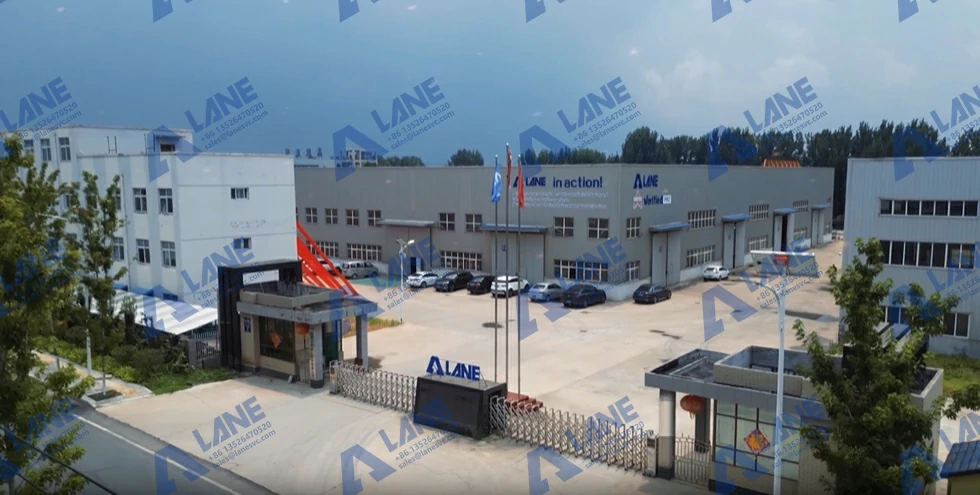
For more details, please feel free to contact us.
Henan Lane Heavy Industry Machinery Technology Co., Ltd.
Email: sales@lanesvc.com
Contact number: +86 13526470520
Whatsapp: +86 13526470520


Send a message to us