


Turnkey Mineral Fertilizer Plant: What Buyers Need to Know Before Building
Mineral fertilizer production is a manufacturing business built on precision. The plant has to weigh six or more raw materials, blend them uniformly, form granules, dry them without damaging nutrients, and package them to a grade that can be tested and certified. A turnkey mineral fertilizer plant should make that sequence manageable by putting engineering, equipment, installation, commissioning, training, and handover under one accountable scope.
The International Fertilizer Association describes mineral fertilizers as concentrated, consistent sources of plant nutrients produced from mined nutrient deposits or from the fixation of atmospheric nitrogen into plant-available forms. That definition matters to buyers because it separates mineral fertilizer from organic materials. The production process is chemical and mechanical, not biological, which changes the equipment list, the quality control system, and the project risk profile.
This guide is written for fertilizer manufacturers, plant investors, engineers, procurement managers, and project contractors. It follows the decision from market and product scope to process, equipment, cost, contractor selection, and operations.
Why mineral fertilizer production remains central to food security
Mineral fertilizers supply a large share of the nutrients that feed a growing population. They are denser, more predictable, and easier to transport than raw organic materials, which makes them the practical foundation of modern crop nutrition. IFA has described mineral fertilizers as more concentrated and consistent, allowing farmers to grow more food on less land.
The market is still expanding. LANE’s published NPK guide cites roughly 190 million tons of global NPK demand in 2025 and a compound annual growth rate near 3.2 percent. The same guide notes that specialty NPK grades are growing faster than commodity blends, with products such as sulfur-coated NPK and micronutrient-enriched grades becoming standard across Brazil, Nigeria, and India.
For an investor, those trends change the plant design. A line that can only produce 15-15-15 has less pricing flexibility than a line with precise batching and multiple recipe slots. The strategic question is whether a turnkey mineral fertilizer plant can serve the local crop program with the right formulas and the right cost per ton.
What a turnkey mineral fertilizer plant includes
The word “turnkey” is used loosely in fertilizer marketing, so the scope definition matters more than the label. A well-defined turnkey mineral fertilizer plant separates the project into named work packages:
- Raw material receiving, storage, and pre-screening.
- Automatic batching and weighing with PLC recipe management.
- Crushing and mixing of raw materials and recycled granules.
- Granulation by drum, disc, extrusion, or prilling.
- Drying, cooling, and screening.
- Coating and automatic packaging.
- Dust collection, gas scrubbing, and wastewater handling.
- Electrical, instrumentation, and process control.
- Installation, commissioning, performance testing, and operator training.
- Spare parts, documentation, and warranty terms.
When the scope is vague, the turnkey mineral fertilizer plant becomes a list of machines. When it is written clearly, buyers can compare proposals against the same process and delivery basis.
NPK fertilizer plant turnkey project: defining the product and process scope
Most mineral fertilizer projects are built around NPK compound fertilizer. NPK granules contain nitrogen, phosphorus, and potassium in ratios that farmers can apply in one pass, and the same plant can usually produce DAP, MAP, and blended grades by changing the formula.
An NPK fertilizer plant turnkey project starts with the formula slate. The buyer should list the grades the plant will sell in year one, year three, and year five. A 15-15-15 plant and a specialty plant with 12-32-16 plus zinc and sulfur have different batching, mixing, and granulation requirements.
Buyers should define an NPK fertilizer plant turnkey project around the raw materials they can actually source. Urea, ammonium sulfate, DAP, MAP, MOP, SOP, fillers, and micronutrient pre-blends behave differently in storage, crushing, and granulation. The design has to account for local material quality, moisture, and particle size.
A standard NPK fertilizer plant turnkey project includes batching, crushing, mixing, granulation, drying, cooling, screening, coating, and packaging. If the market also needs water-soluble fertilizer, the scope changes again because water-soluble lines are built around dissolution, reaction, filtration, and filling rather than granulation.
Compound fertilizer plant EPC contractor: how to evaluate the project integrator
The compound fertilizer plant EPC contractor holds the schedule together. Engineering, procurement, construction, commissioning, and start-up can sit with one contractor, or the equipment manufacturer can act as integrator while local firms handle civil works and installation. The structure matters less than the accountability.
A qualified compound fertilizer plant EPC contractor should answer specific questions before contract signature:
- Which party owns the process design and performance guarantees?
- What raw material samples were used for the design basis?
- What is the delivery schedule for long-lead equipment?
- Who manages permits, customs, and local approvals?
- What commissioning and performance tests are included?
- What happens if the plant does not meet capacity or product quality?
- Who trains the operators and supports the first production season?
Ask the compound fertilizer plant EPC contractor to provide a material balance, a P&ID, and a plant layout before requesting a final price. A supplier that cannot explain the process is selling equipment, not a project.
The right compound fertilizer plant EPC contractor will also ask about the local market, raw material storage, climate, and quality control capacity. Those answers change the dryer design, the batching accuracy target, and the number of hoppers in the line.
Production process and process flow
A turnkey mineral fertilizer plant turns raw materials into finished granules through a sequence that is standard across the industry:
- Raw material receiving and storage. Urea, phosphate sources, potash sources, fillers, and micronutrients are stored separately to prevent cross-contamination.
- Pre-screening and crushing. Oversize raw materials and recycled granules are reduced before batching.
- Automatic batching. Each raw material is weighed into the formula with PLC-controlled accuracy.
- Mixing. Crushed and weighed materials are blended into a uniform powder with binder and moisture.
- Granulation. The powder is formed into granules by wet agglomeration, compaction, or prilling.
- Drying and cooling. Granule moisture is reduced and temperature is stabilized.
- Screening. On-spec granules are separated from oversize and fines.
- Coating and packaging. Anti-caking coating is applied and the product is bagged.
In an NPK fertilizer plant turnkey project, the recycle loop around the granulator and screen is a critical design point. Oversize material returns to the crusher and fines return to the granulator, so the crusher and mixer must be sized for total throughput, not just fresh feed.
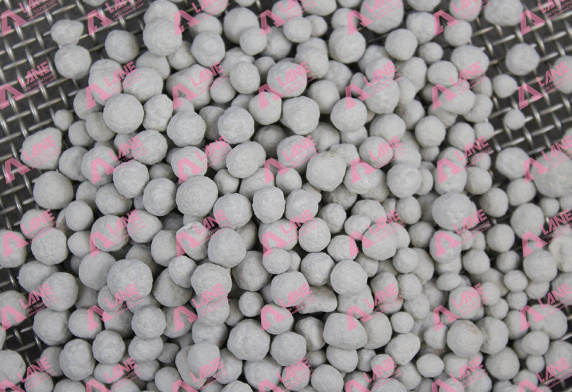
Equipment composition of a mineral fertilizer plant
The equipment list in a turnkey mineral fertilizer plant is built around the process. The main systems are:
| System | Typical equipment | Main job |
|---|---|---|
| Receiving and storage | Bunkers, conveyors, rotary screener | Protect material quality and remove oversize |
| Batching | Multi-hopper weighing system, load cells, PLC | Deliver accurate NPK ratios |
| Crushing | Chain or cage crusher | Reduce raw materials and recycle granules |
| Mixing | Dual-shaft or ribbon mixer | Create a uniform powder feed |
| Granulation | Rotary drum, disc pan, double roller, or prilling tower | Form uniform granules |
| Drying and cooling | Rotary dryer, rotary cooler, hot air furnace | Stabilize moisture and temperature |
| Screening | Vibrating screen | Separate on-spec granules |
| Coating | Rotary coater with spray system | Reduce dust and caking |
| Packaging | Automatic scale, bagging machine | Produce saleable bags |
| Environmental | Dust collector, scrubber, wastewater treatment | Protect workers and the environment |
A compound fertilizer plant EPC contractor should map every piece of equipment to a capacity, an installed power, and a warranty holder. Missing conveyors, elevators, and instrumentation are common reasons a quoted line does not match the final plant.
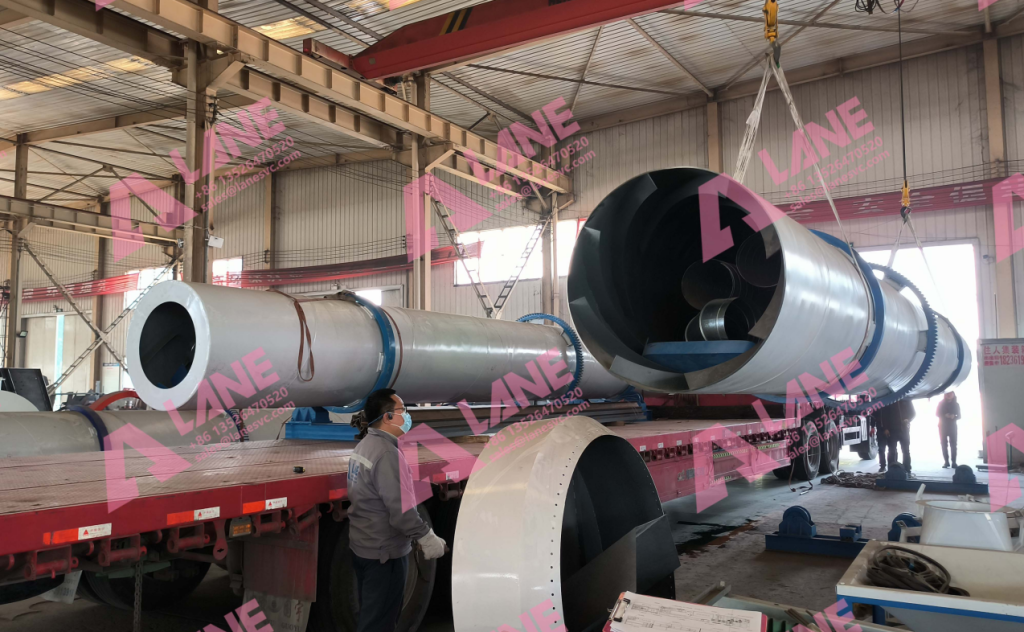
Working principles and technical advantages
The working principle of a mineral fertilizer plant is controlled transformation of raw materials into uniform granules.
Batching accuracy is the first control point. If the weigh hoppers are not accurate under dynamic flow, every bag carries a different NPK grade. Modern systems hold accuracy around plus or minus 0.5 percent and store multiple recipes for quick changeover.
Granulation is the second control point. Rotary drum granulation uses binder and tumbling to build spherical granules and handles the widest range of formulas. Disc pan granulation gives tighter size control at lower capacity. Double roller extrusion compresses dry powder into angular granules without drying. Prilling produces spherical granules from molten feed but carries much higher capital and energy cost. The choice changes the dryer, the recycle ratio, and the energy bill.
Drying and cooling are the third control point. Wet granules leaving a drum granulator can carry 12 to 18 percent moisture, and heat-sensitive nutrients can degrade if the dryer runs too hot. A co-current rotary dryer protects the product by exposing the hottest gas to the wettest material, then cooling brings the granules to a safe storage temperature.
The technical advantage of a turnkey mineral fertilizer plant is integration. When batching, crushing, granulation, drying, and screening are designed together, the line holds formula accuracy and recycle ratios within a narrow range. When each machine is bought separately, the same variables become daily emergencies.
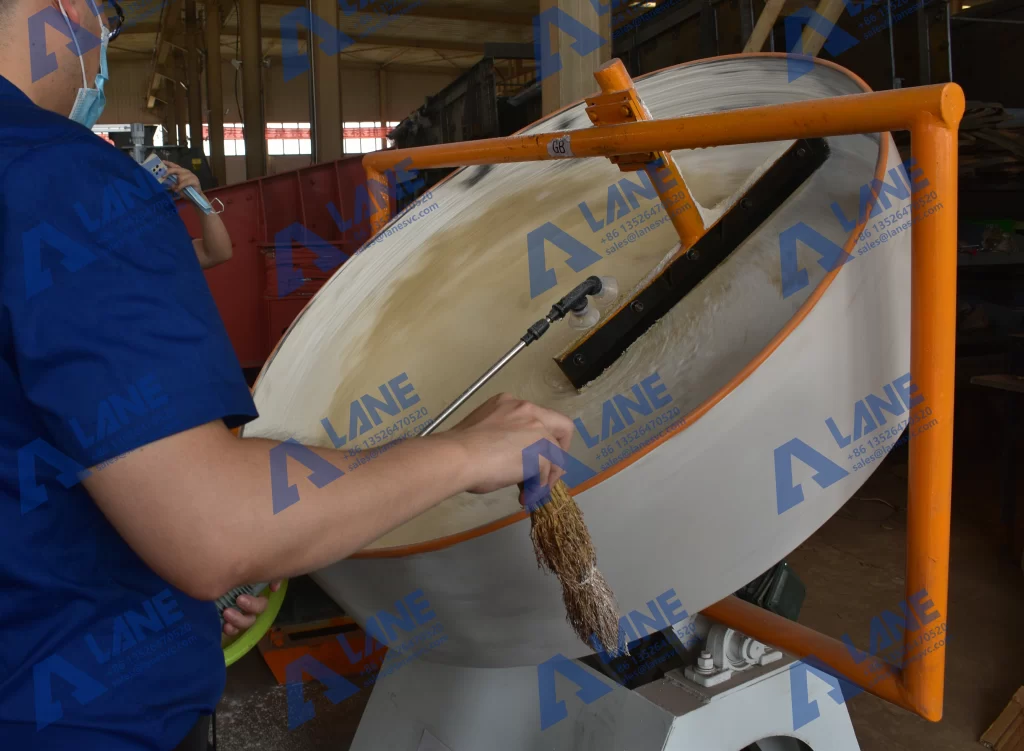
Application scope and product families
A mineral fertilizer plant can serve several product families, and the application scope should be fixed before the line is specified:
- NPK compound fertilizer for field crops, cereals, oilseeds, and horticulture.
- DAP and MAP for phosphate-based programs.
- Bulk blended fertilizer for regional distributors.
- Water-soluble fertilizer for fertigation and greenhouse production.
- Coated and controlled-release products for specialty markets.
- Straight fertilizers such as urea, ammonium sulfate, SSP, and SOP when the line is configured for them.
The plant can also add micronutrients such as zinc, boron, iron, and sulfur to create specialty grades. That flexibility depends on batching capacity, mixer homogeneity, and the ability to pre-blend micronutrients without segregation.
Investment factors and cost planning
Equipment typically accounts for 55 to 65 percent of total project cost. Civil construction, installation, commissioning, and utilities make up the rest. A buyer who compares equipment-only prices against a competitor’s total project price is comparing different products.
The capacity band changes the design. Small lines in the 1 to 2 tons per hour range suit startups and regional blending plants. Mid-tier lines at 5 to 10 tons per hour serve commercial producers. Industrial lines above 20 tons per hour are built for OEM and export-oriented operations. What works for a 1 ton per hour plant will bottleneck a 10 ton per hour plant within months.
An NPK fertilizer plant turnkey project budget also depends on the batching system. Expanding from 6 to 8 hoppers adds cost before commissioning and much more after commissioning. The buyer should plan for the formulas the plant will run in year three, not year one.
Payback should be modeled on utilization, formula margin, and delivered fertilizer prices. LANE’s published guidance shows a 5 tons per hour NPK line recovering capital within 28 to 36 months in Southeast Asia at around 70 percent utilization with local raw materials. The same line takes longer in higher-cost regions because civil works, compliance, and labor push the upfront number higher.
Other cost layers include land and buildings, permits, raw material inventory, working capital, dust and odor control, and the first year of operations. A realistic model should include all of them.
Project execution, schedule, and risk management
Project execution is where a turnkey mineral fertilizer plant succeeds or fails. The schedule depends on capacity, equipment lead times, civil works, and local approvals. Small NPK lines can be commissioned in a few months, while large industrial complexes take much longer.
The main risks are concentrated in a few places:
- Raw material supply and quality variation.
- Batching system accuracy and recipe changeover.
- Crusher and mixer sizing around the recycle loop.
- Dryer and cooler design for local climate and feed moisture.
- Permits for dust, gas, and wastewater.
- Commissioning problems caused by operators who were trained on paper, not on the line.
The compound fertilizer plant EPC contractor should provide a schedule with milestones for engineering, manufacturing, shipment, civil works, installation, and performance tests. The buyer should verify progress against physical deliverables, not just invoices.
Performance tests should be written into the contract before equipment is ordered. Agreed reference conditions for raw material grade, ambient temperature, and product moisture prevent disputes during start-up.
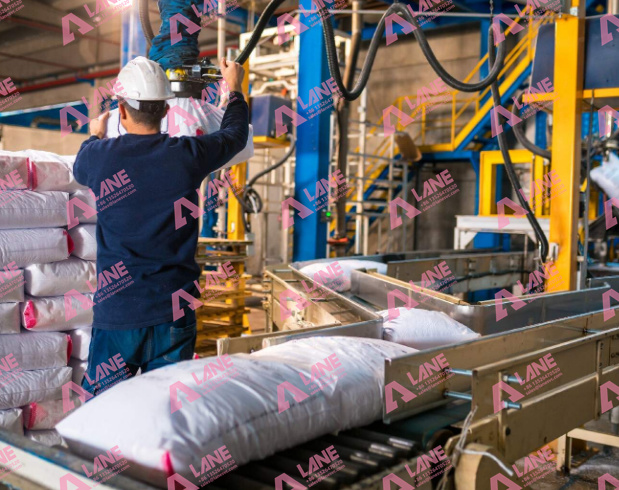
Operations, maintenance, and product quality
Handover is where a turnkey contract is finally tested. The owner’s team should receive the process design basis, P&IDs, equipment data sheets, spare parts lists, operating procedures, and training records.
Maintenance planning starts during procurement. The highest-wear points in a mineral fertilizer plant are the crusher hammers, mixer paddles, granulator lining, dryer flights, screens, and conveyor belts. Hygroscopic raw materials such as urea and ammonium sulfate make storage moisture control a daily issue.
Batching calibration should be checked on a schedule, because a dosing error changes the NPK grade of the entire batch. Dryer inlet temperature should be monitored against the nutrient degradation limits of the formula. Screening efficiency determines recycle load, and coating rate affects caking and dust.
The quality control lab should test moisture, NPK content, granule size, hardness, and dissolution behavior. A turnkey mineral fertilizer plant is not finished when the machines turn; it is finished when the product passes the specification consistently.
The handover package from the compound fertilizer plant EPC contractor should include a maintenance checklist and a spare parts list. Track energy per ton, batching accuracy, granulation pass rate, moisture, and downtime. Remote diagnostics help when the plant is far from the supplier’s engineering team.
Supplier selection and procurement checklist
Supplier selection should start with process fit, not machine price, when comparing a turnkey mineral fertilizer plant. Ask each candidate for:
- A process flow diagram, material balance, and plant layout.
- A granulation test using the buyer’s raw materials.
- A complete equipment list with capacity and installed power.
- A scope split between equipment, engineering, civil works, installation, freight, and commissioning.
- References at comparable scale with contactable owners.
- ISO 9001 and CE documentation, plus material certificates.
- A spare parts policy and delivery time to the site.
Ask whether the supplier has built an NPK fertilizer plant turnkey project at the buyer’s capacity and formula complexity. Red flags include vague process guarantees, no in-house engineering, and pricing that ignores local site conditions.
A qualified compound fertilizer plant EPC contractor will treat the project as a site-specific problem. They should ask about raw material quality, climate, power, water, logistics, and the operator team before quoting. If the supplier only asks about capacity, the quote will not survive the first engineering review.
Project cases and market signals
Public project cases show the range of mineral fertilizer turnkey delivery. Nuberg EPC completed a 1,650 tons per day NPK fertilizer plant project in India using pre-neutralizer technology. Ludan Engineering delivered a turnkey granulation line for the Azotat and NPK production sections at AZOMURES in Romania. Ballestra provides end-to-end NPK and specialty fertilizer plant solutions, and L&T Energy offers EPC delivery for blended and compound fertilizer complexes.
LANE has published NPK production line references at 5 tons per hour in the United States and 10 tons per hour in Turkey, and the company has supplied equipment for a 100,000 tons per year national fertilizer project in Africa. LANE also publishes turnkey fertilizer plant material covering SSP, TSP, SOP, NPK, and compound fertilizer lines.
For a buyer, the lesson is to compare the process logic of the case, not the headline capacity. A case that explains how the supplier handled raw material moisture, batching accuracy, granulation, and commissioning is more useful than a case with a large number and no engineering detail.
Frequently Asked Questions
What is a turnkey mineral fertilizer plant?
A turnkey mineral fertilizer plant is a complete project scope covering process design, equipment supply, installation, commissioning, performance testing, training, and handover under one accountable contract. The owner still manages raw material, permits, financing, and product sales.
What does an NPK fertilizer plant turnkey project include?
An NPK fertilizer plant turnkey project includes raw material storage, batching, crushing, mixing, granulation, drying, cooling, screening, coating, packaging, dust collection, and PLC control. The project scope should be defined around the formula slate and capacity the buyer plans to sell.
What does a compound fertilizer plant EPC contractor do?
The compound fertilizer plant EPC contractor manages engineering, procurement, construction, commissioning, and start-up, and coordinates equipment suppliers, technology licensors, and local construction teams. The contractor owns the schedule and the delivery of a working plant.
Which granulation method should I choose?
Rotary drum granulation handles the widest range of formulas and is the most common route. Disc pan granulation suits smaller capacity and tighter size control. Double roller extrusion avoids drying and lowers energy use. Prilling produces spherical granules but carries much higher capital and energy cost.
What raw materials are needed for a mineral fertilizer plant?
The main categories are nitrogen sources such as urea and ammonium sulfate, phosphate sources such as DAP, MAP, and SSP, potassium sources such as MOP and SOP, fillers, and micronutrients. The exact mix depends on the NPK formula.
How long does it take to build a mineral fertilizer plant?
Small NPK lines can be commissioned in a few months once site work is ready. Larger industrial complexes need much longer because of long-lead equipment, civil works, permits, and commissioning. The schedule should be written into the EPC contract with milestones.
How do I choose a turnkey mineral fertilizer plant supplier?
Compare process engineering, raw material testing, batching accuracy, granulation method, line integration, installation support, spare parts, and references. Ask for a process flow diagram, material balance, and plant layout, and confirm the supplier has built an NPK fertilizer plant turnkey project at similar scale.

Send a message to us