


Industrial NPK Manufacturing Equipment: A Buyer’s Guide to Process, Cost, and Supplier Selection
Buying industrial NPK manufacturing equipment commits you to a system that must hold a declared nutrient grade across thousands of tons, stay inside an operating budget, and pass a permit review. The people who sign that off are fertilizer producers adding capacity, plant investors, process engineers comparing routes, and procurement managers weighing quotations that describe the same plant differently.
This guide covers the routes used in commercial NPK production, the NPK fertilizer granulation process step by step, the equipment choices that set product quality, the cost buckets that dominate a budget, and the tests that show whether a supplier can commission a line.
What industrial NPK manufacturing equipment covers
NPK production is not one process. Four routes account for most commercial capacity, and your choice sets the equipment list, the energy profile, and the grade control you can hold.
| Route | Feedstock | Typical fit | Main constraint |
|---|---|---|---|
| Chemical (slurry) granulation | Acids, ammonia, fillers | High-analysis compounds | Corrosion, higher capital |
| Steam and melt granulation | Urea or ammonium sulfate, steam, water | Urea-based NPK, large tonnage | Narrow moisture windows |
| Compaction (dry granulation) | Dry fine solids | Sulfate or chloride-rich formulas | Dry feed required, less shape control |
| Bulk blending | Prilled or granular straights | Fast market entry | Segregation, no compound granule |
The route decides whether the plant needs a dryer, how large the recycle loop grows, which emission controls the permit requires, and how much flexibility an NPK fertilizer production line keeps when prices move.
The NPK fertilizer granulation process, step by step
The sequence below follows the drum route that most mid-to-large plants run. Compaction and chemical routes rearrange it, but the logic of the loop holds.
Urea, ammonium sulfate, MAP or DAP, MOP or SOP, filler, coating agent, and micronutrient premixes arrive in different forms, and each needs its own storage and feeder. Ask for guaranteed dosing accuracy and the calibration procedure, because dosing decides the analysis the rest of the NPK fertilizer granulation process has to hold, and slow drift is the most common reason a commissioned plant runs out of specification. Crushers then reduce feedstock to a granulator-ready size, and over-grinding raises dust and recycle volume.
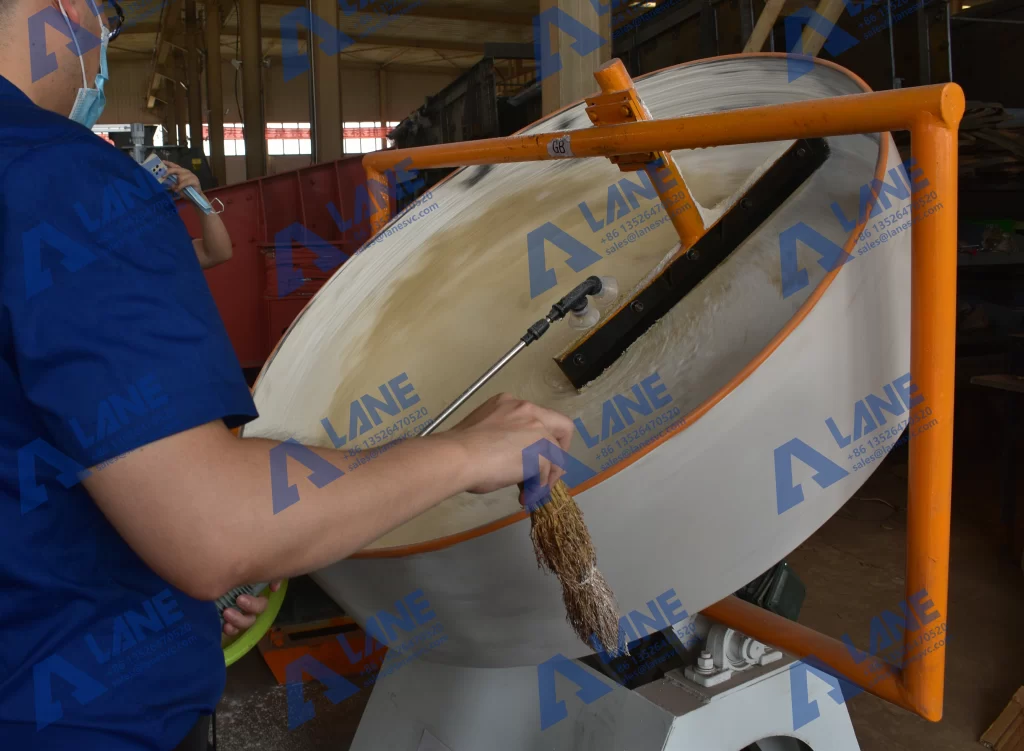
In any NPK fertilizer granulation process, the rotary drum granulator carries the load. Feed is wetted with water and steam while it tumbles, and granules build by layering. Drum speed, incline, flights, spray position, and bed depth decide whether you get round, dense granules or a wide, weak size spread, and every extra point of moisture is paid for twice: in granulation and again as dryer fuel.
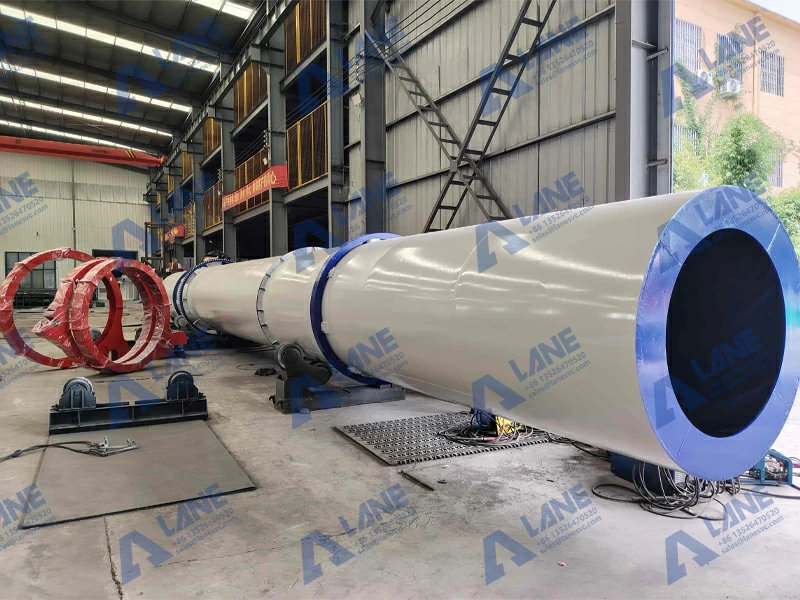
The dryer sets the final moisture that decides whether the product survives storage. Fuel choice drives operating cost and emissions more than any other line decision, and it decides how easily the plant meets permit limits. Urea grades limit inlet temperature because urea decomposes and loses nitrogen, and ammonium nitrate grades carry oxidizer hazards, so temperature control is a safety requirement as well as a quality one.
Cooling and coating
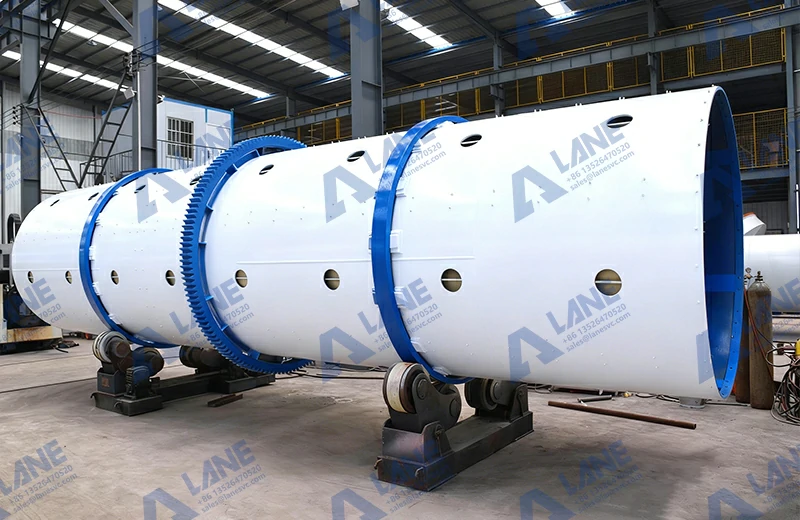
Hot granules cannot be coated or bagged. A rotary cooler stabilizes product temperature to prevent caking in the warehouse, and its exhaust adds dust to the same collection system that serves the dryer. The coating drum applies oil or wax with talc, clay, or a formulated agent, and spray pattern plus retention time decide how the product pours months later.
Screening and recycle
Double-deck screens split the stream into oversize, on-size, and fines. Oversize is crushed and returned to the granulator, and fines return the same way, so the recycle stream can run several times the finished product flow. The design recycle ratio on an NPK fertilizer production line therefore explains much of the price gap between quotations of the same nominal capacity.
Dedusting and packaging
Cyclones, bag filters, and wet scrubbers handle dust and, on chemical routes, gas carrying acid or ammonia. Your permit limit should size that system rather than a generic size copied from an older project. The packing area runs from 25 or 50 kg bags to jumbo bags and bulk loading, and weight accuracy is worth testing at the factory.
Core equipment and the specifications that decide quality
Every quotation lists the same machine groups for an NPK fertilizer production line. Suppliers differ in what each specification says.
| Equipment | Role in the line | Specification to verify |
|---|---|---|
| Weigh feeders | Recipe accuracy | Accuracy, calibration, recipe management |
| Crushers | Reduce feedstock and oversize | Feed size range, gap adjustment, wear liners |
| Rotary drum granulator | Build granules | Diameter-to-length ratio, flights, spray placement, drive power |
| Rotary dryer and cooler | Remove water, stabilize temperature | Heat source, retention time, interlocks, dust takeoff |
| Coating drum | Apply anti-caking coating | Spray system, retention time, cleaning access |
| Screens | Classify product size | Deck count and mesh, capacity at recycle load |
| Dust collection | Meet the emission limit | Filter area, cyclone efficiency, venting |
| Bagging system | Pack finished product | Weight accuracy, bag types, automation |
Choosing a process route and capacity
Start with the formula and the market. A 15-15-15 urea-based compound behaves nothing like a high-nitrogen grade or a sulfate-based formula, and the difference shows up in granulation behavior and drying load. The route decision behind industrial NPK manufacturing equipment usually comes down to feedstock availability and energy cost as much as product quality.
Chemical granulation builds granules from a reaction between acid and ammonia, giving tight composition control and high analysis at the cost of corrosion-resistant materials. Steam and melt granulation uses solid feedstock with steam and water, so it is simpler to operate and more forgiving when feedstock prices shift. Compaction presses dry fines into sheets and crushes them into granules, cutting fuel use but requiring dry feed. Whether you are specifying a new NPK fertilizer production line or upgrading an existing one, the route drives every later decision.
Capacity needs the same scrutiny: nameplate output is quoted at the granulator, so ask for guaranteed output over a defined test period.
What drives project cost
Capital cost here is not a number you can benchmark from a distance. It is the sum of scope decisions, and most overruns come from items nobody priced because nobody asked who supplies them.
| Cost bucket | Confirm in writing |
|---|---|
| Equipment scope | Boiler or hot gas generator, transformer and MCC, compressed air, storage |
| Civil and structural work | Foundations, platforms, buildings included or excluded |
| Installation | Supervision only, or supervision plus labor with local crews |
| Automation | PLC and SCADA scope, recipe management, remote access, spare I/O |
| Emission control | Dust system sized against the permit limit |
| Freight and commissioning | Incoterm, sea packing, days on site, performance test definition |
| Spare parts | First-year spares and wear parts delivered at handover |
An NPK fertilizer production line quoted turnkey and the same line quoted as equipment alone can differ by a multiple, so send the matrix to every bidder and require each line to be marked as included, excluded, or priced separately. Then ask for per-ton utility figures for power, fuel, water, and compressed air. Energy usually dominates controllable operating cost, ahead of coating materials, wear parts, and labor.
Standards, permits, and design rules to confirm early
Product and machine rules both shape the design, and both are set by the destination market rather than by the supplier.
In the European Union, Regulation (EU) 2019/1009 governs the placing of fertilizing products on the market, including conformity assessment for CE marking. In the United States, state fertilizer laws generally follow the model framework of the Association of American Plant Food Control Officials (AAPFCO).
On the machine side, the EU Machinery Directive 2006/42/EC applies until Regulation (EU) 2023/1230 replaces it for equipment placed on the market from January 20, 2027. Where combustible dust atmospheres can form, ATEX Directive 2014/34/EU applies in the EU, while US projects generally reference NFPA 652 and NFPA 654. Air permits set the dust and gas limits the dedusting system must meet.
Ask for the applicable standards list in the technical proposal, and confirm that certification documents will be issued before shipment. No design rule will select your industrial NPK manufacturing equipment, but compliance retrofitted after arrival costs far more than compliance designed in.
Maintenance practices that protect uptime
Uptime is decided by the recycle loop, because crushers, screens, and dryer controls sit inside it and a small upset there multiplies. Shift checks cover feed rates and recipe adherence, granulator moisture and bed temperature, dryer temperatures, and recycle flow. Weekly checks cover screen mesh, belt tracking, and filter pressure. Monthly checks measure wear on crusher hammers, granulator scrapers, dryer flights, and screen frames.
Keep critical spares on site before commissioning: crusher hammers or chains, screen mesh, granulator scrapers, and filter bags. Then write a recipe changeover procedure, because cross-contamination between formulas and coating agents is a quality problem no specification can solve.
How to evaluate suppliers and run an acceptance test
Equipment capacity and project capability are separate tests, and they belong in this order.
- Trial your own material. Pilot granulation with your feedstock and moisture range is the highest-value test before purchase, and pilot equipment should match production equipment in geometry.
- Check references on the same route and a similar capacity. Ask what formula family the plant runs, how long it took to reach guaranteed capacity, and what failed first.
- Witness a factory acceptance test: drum run-out, drive assemblies, gearbox, and control simulation, with packing settled at the same visit.
- Define the performance test before you sign. Set the raw material specification, run duration, and measured outputs for capacity, grade, moisture, and granule strength, then decide who pays for a failed retest.
- Collect the documents you will need in year three: maintenance manuals, spare parts lists, and electrical diagrams.
Where the NPK market is heading
Higher-analysis and specialty grades keep pushing granulation and drying closer to their limits. Energy prices and carbon reporting have turned dryer efficiency and heat recovery into purchase criteria, and recovered nutrients such as struvite are entering regulated markets under EU rules with more variable feedstock.
FAQ
What equipment is needed to produce NPK fertilizer?
A complete NPK fertilizer production line includes weigh feeders, crushers, a granulator, a rotary dryer and cooler, a coating drum, screens, dust collection, and a bagging system. Compaction routes use a roll press.
How much does an NPK fertilizer production line cost?
Cost depends on route, capacity, feedstock preparation, automation, and emission requirements. Compare quotations against a scope matrix covering civil works, utilities, freight, and installation.
What happens during the NPK fertilizer granulation process?
Feedstock is dosed to recipe and crushed to size, then granulated in a rotating drum where water and steam build granules by layering. Oversize is crushed and fines are recycled after cooling.
Can one line produce more than one NPK formula?
Yes, with the right design. Recipe management, adequate feeder turndown, and a changeover procedure let one line run several grades, limited mainly by cross-contamination.
What capacity should I choose for a new NPK plant?
Size the line to the tonnage you can sell within a defined radius, then confirm that drying and cooling handle your wettest formula. In multi-grade plants, the dryer often limits capacity on industrial NPK manufacturing equipment.
How much maintenance does an NPK fertilizer production line need?
Expect continuous attention to wear parts. Crusher hammers, granulator scrapers, screen mesh, dryer flights, and belts are the recurring items, so shift checks and shutdown inspections prevent most unplanned stops.

Send a message to us