


Gypsum Granulation Process: Equipment Selection, Production Flow and Plant Solutions in MENA
Gypsum looks like an easy material to granulate. It is soft, cheap, and available in bulk across North Africa and the Gulf. Then the first production run ends with a bin full of hardened lumps, a dryer full of dust, and a bag that sets in the warehouse.
The gypsum granulation process is a hydration problem before it is a machine problem. Gypsum is calcium sulfate dihydrate, and dihydrate is sensitive to water and heat. Get either wrong and the granule stops behaving like a granule.
Why gypsum is not a generic granulation job
Most fertilizer granulation assumes the material is inert. Gypsum is not. It dissolves slightly, it re-crystallizes, and it sets.
Three consequences follow. Wet granulation needs a narrow water window, because too much water starts the set inside the granulator. Drying needs a temperature ceiling, because heat drives off crystal water and turns dihydrate into hemihydrate, the base of plaster. And storage needs moisture protection, because a bag that picks up humidity can harden into a block.
That is why a gypsum line copied from an NPK line usually fails at the dryer, not at the granulator.
Three routes for a gypsum granulation machine
There are three practical ways to make gypsum granules, and each has a different cost and product profile.
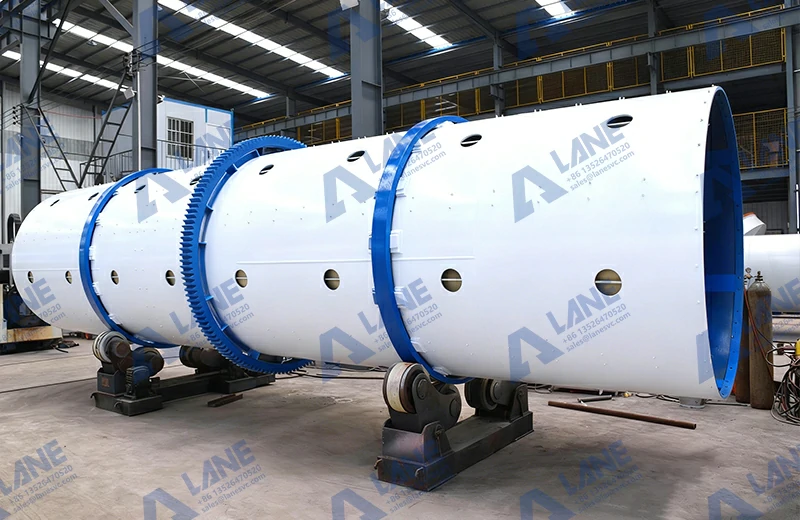
Wet granulation uses a disc granulator or a rotary drum granulator, with water and a binder. This is the most common gypsum granulation machine configuration. It gives round granules and a wide capacity range, but it needs drying and cooling.
Dry compaction uses a double roller granulator or a roll press, the gypsum granulation machine of choice where water and fuel are expensive. It compacts powder into sheets or flakes, then crushes and screens them into granules. It needs no dryer, which matters in desert climates, but the feed must be dry and consistent.
Pin or high-intensity granulation suits smaller volumes and denser granules, and is often used where the product needs a specific crush strength.
| Route | Machine | Water | Drying | Best fit |
|---|---|---|---|---|
| Wet | Disc or drum granulator | 12 to 15% | Required | Round granules, large volume |
| Dry | Double roller press | None | Not required | Dry feedstock, desert sites |
| Intensive | Pin granulator | Low | Usually required | Dense granules, smaller lines |
Binder and the moisture window
Gypsum does not bond well with water alone. A binder is usually needed. The gypsum granulation machine and the binder have to be matched; a binder that works in a disc may fail in a drum.
Lignosulfonate is the classic choice for phosphogypsum and chemical gypsum, and it appears in published granulation patents for these materials. Starch, molasses, and some clays are also used, depending on the market and the required granule strength.
The binder dose is a cost and quality trade-off. Too little and the granule crumbles in the screen; too much and the granule becomes sticky in the dryer and hard in the bag.
The moisture window for wet granulation is narrow. LANE’s published gypsum lines run granulation moisture around 12 to 15 percent and dry the product to 2 percent or below. Outside that window, the disc or drum starts building oversize balls, and the recycle load climbs.
Drying without dehydrating
The dryer is where gypsum projects lose money, and it is the unit most often specified by habit.
Gypsum dehydrates as it heats. Around 100 to 150 degrees Celsius, dihydrate converts to hemihydrate; higher temperatures push it further. A granule that loses crystal water is no longer gypsum. It rehydrates in storage, sets, and turns the bag into a brick.
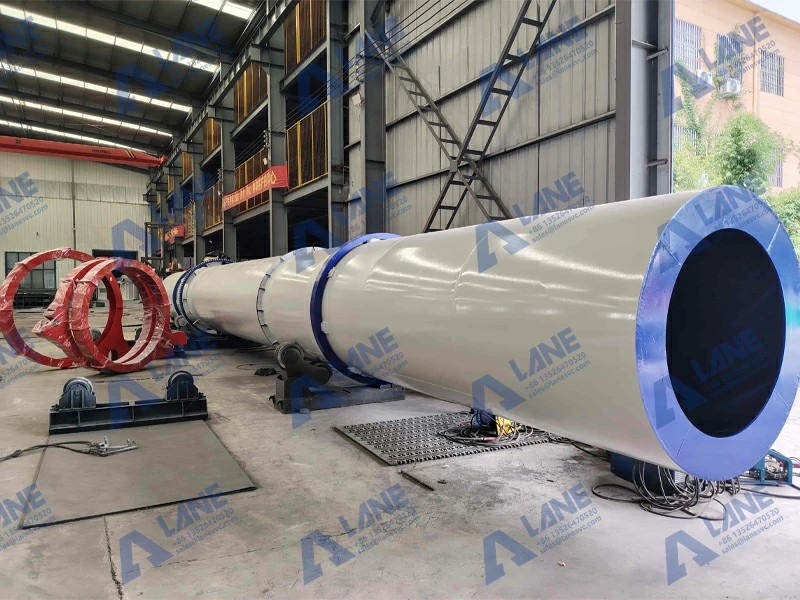
The practical rule is to keep the product temperature low, often below about 60 degrees Celsius, and to dry gently rather than fast. That means a larger dryer, a lower inlet temperature, and more residence time than an NPK line of the same tonnage.
A rotary dryer with internal flights and a controlled hot air furnace is the common choice. The cooler that follows is not optional: bagging warm granules traps moisture and accelerates caking.
Screening, coating, and MENA packaging
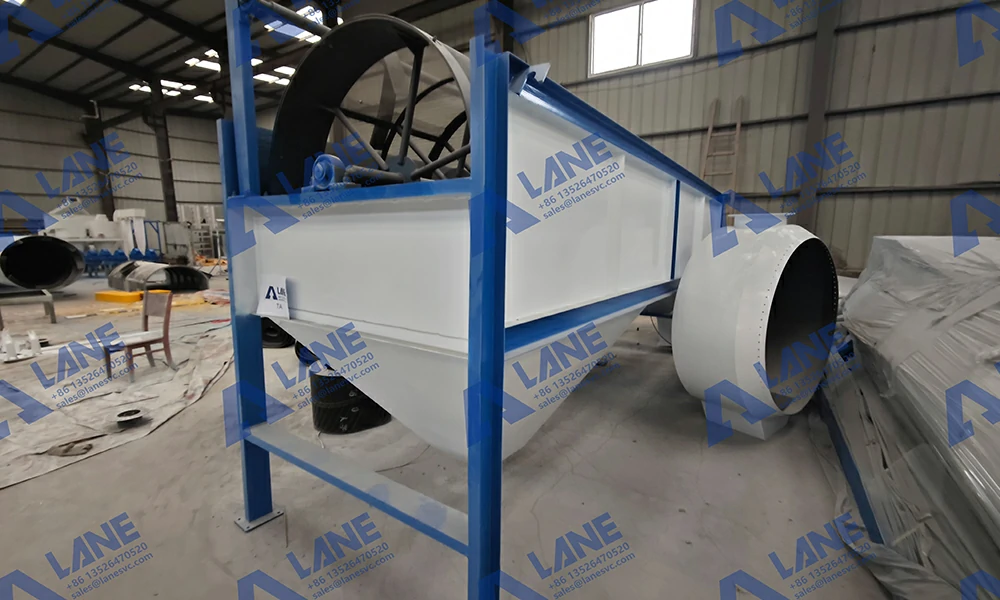
Screening closes the loop. Oversize goes to a crusher and back; fines return to the granulator; on-spec product goes to coating.
Coating matters more in MENA than in temperate markets. An anti-caking or moisture-barrier coating at a low dose reduces bag set and dust. For export from Gulf ports, moisture-proof liners and jumbo bags are often specified alongside 25 and 50 kilogram sacks.
Dust collection belongs at the crusher, the mill, the granulator, the dryer discharge, the screen, and the bagging head. Gypsum dust is fine and persistent, and a bag filter at each transfer point is cheaper than the cleanup.
Phosphogypsum granulation and the other feedstocks
The granulation process is only as stable as the feedstock.
Natural gypsum is mined and crushed, and its purity and moisture vary by quarry. FGD gypsum from power plants and industrial scrubbers is fine, consistent, and often high purity, which makes it easier to granulate but harder to dewater.
Phosphogypsum granulation starts with a by-product of phosphoric acid production, and the material is abundant in Morocco, Tunisia, Egypt, and Jordan. It is acidic, carries fluoride and phosphate impurities, and contains naturally occurring radionuclides, mainly radium-226. Its use is regulated: in the United States, 40 CFR Part 61 Subpart R restricts phosphogypsum use, with a narrow agricultural exemption for low-radium material. Other countries have their own limits.
That means phosphogypsum granulation usually starts with neutralization, washing, or blending, and with a radioactivity test before the process is fixed. A line that ignores this step can pass a trial and fail a permit.
Designing a gypsum plant for MENA
MENA adds three design constraints that temperate markets do not have. The gypsum granulation process does not change with the map, but the constraints do.
The first is heat. Ambient temperatures above 40 degrees Celsius affect binder behavior, granule cooling, and worker safety. Dry compaction becomes more attractive where water and fuel are expensive.
The second is humidity. Coastal sites in the Gulf can run high humidity year-round, so coating, liner selection, and warehouse ventilation matter as much as the granulator.
The third is logistics. Raw gypsum may arrive by truck from a quarry, by rail from a phosphate complex, or by ship as FGD gypsum. Storage capacity and unloading equipment should be sized on the weakest link, not the average.
FAQ
What is the gypsum granulation process?
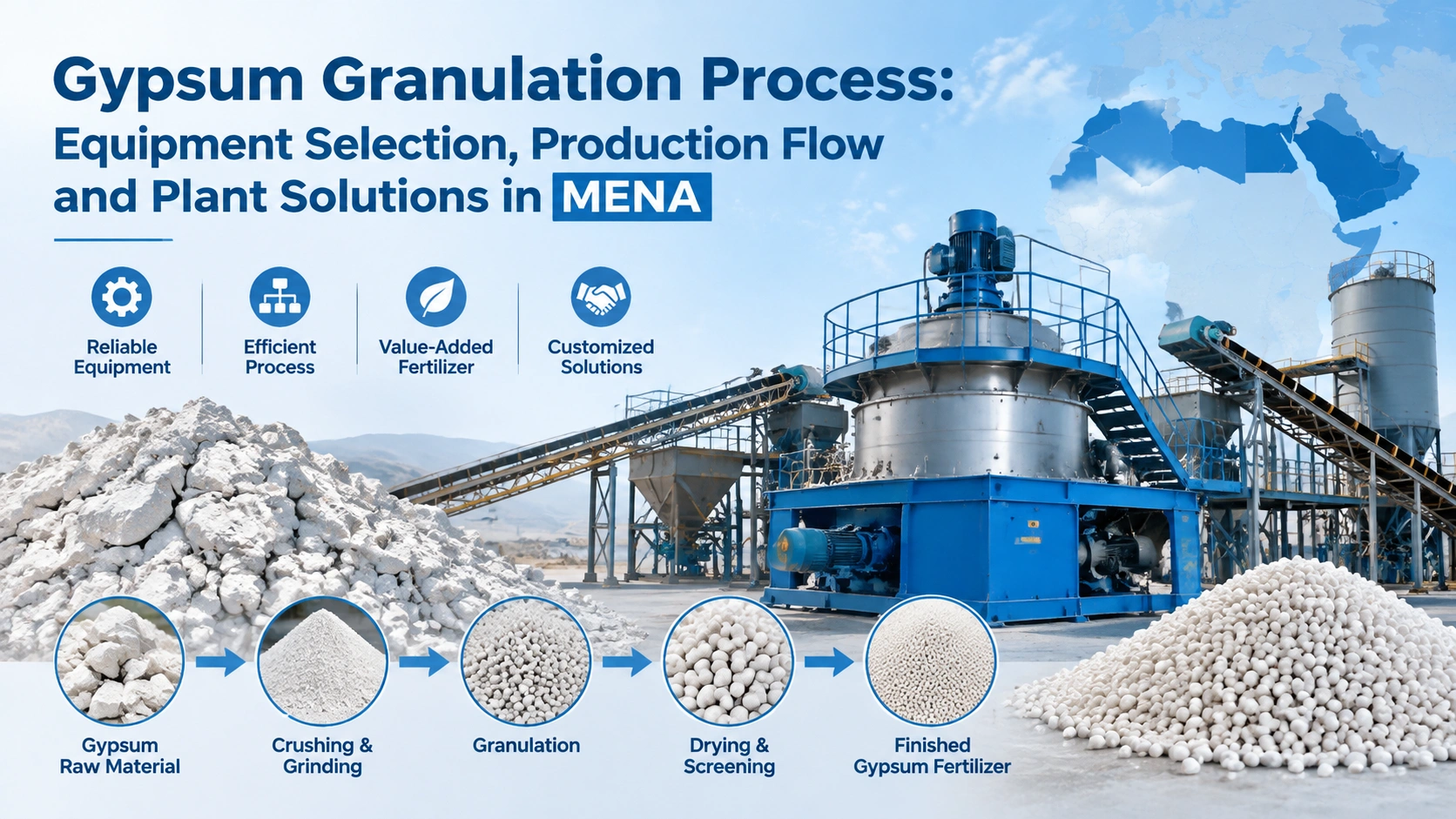
Gypsum powder is granulated with water and a binder, or compacted dry, then dried, cooled, screened, and coated to produce 2 to 4 millimetre granules.
Why does gypsum granulation need a binder?
Gypsum does not bond well with water alone. Lignosulfonate, starch, or molasses improves green strength and reduces fines.
Can gypsum be granulated without drying?
Yes, with dry compaction using a double roller press. The feed must be dry and consistent, and the product is usually denser and less round.
At what temperature should gypsum be dried?
Keep the product temperature low, often below about 60 degrees Celsius. Higher temperatures dehydrate gypsum and cause setting in storage.
Is phosphogypsum granulation different from natural gypsum?
Yes. Phosphogypsum is acidic, carries impurities and radionuclides, and usually needs neutralization and testing. Natural gypsum is mined, relatively inert, and more consistent.
What is the difference between natural gypsum and phosphogypsum?
Natural gypsum is mined and relatively inert. Phosphogypsum is acidic, carries impurities and radionuclides, and needs neutralization and testing before use.
Can phosphogypsum be used in fertilizer?
In some markets, with treatment and within regulatory limits. Check the radium-226 limit and the local rules before designing the line.
Send a message to us