


GSSP fertilizer production process: a buyer’s guide to plant design, cost, and equipment
Three suppliers quote the same 10 t/h line and describe three different plants. One leaves out acid storage and gas scrubbing, another assumes cured SSP powder arrives by truck, and a third prices a dryer sized for a temperate climate that will struggle in a humid one. Understanding the GSSP fertilizer production process from rock to bagged granule is how you compare those bids on equal terms.
What GSSP is and where it earns its place
GSSP is granulated single superphosphate, made by reacting finely ground phosphate rock with sulfuric acid. The reaction forms monocalcium phosphate, and calcium sulfate makes up most of the remaining mass. Commercial grades run 16% to 20% P2O5, most often 16% to 18%, with roughly 11% to 12% sulfur and 19% to 22% calcium.
Granulation changes handling, not soil chemistry. Powder SSP is dusty, cakes in storage, and separates from urea, DAP, or MOP in a blend, while GSSP is screened to a 2 to 4 mm band that spreads evenly. GSSP also carries far less P2O5 per ton than DAP or MAP, so freight per unit of nutrient is higher. It pays off where rock and acid are close and where farmers blend their own NPK.
Where demand is heading
Bulk blending keeps growing where distributors mix NPK from granular raw materials, and granulated SSP fits that model better than powder. Sulfur is now a planned nutrient in oilseed and pulse rotations, and tighter cadmium scrutiny makes rock selection a commercial decision, not only a technical one.
The GSSP fertilizer production process, step by step
The single superphosphate manufacturing process splits into two stages that suppliers often sell as one package: acidulation, which makes SSP powder, and granulation, which turns that powder into a saleable granule. Knowing where the boundary sits is the fastest way to spot a scope gap in a bid.
Phosphate rock preparation and dosing
Rock goes into covered storage, then through a crusher and a ball mill that grinds it until about 90% passes a 200-mesh screen. Coarse rock leaves unreacted phosphate and forces a higher acid rate, which costs money and increases free acid. Carbonates consume acid without producing available phosphorus, and iron and aluminum compounds make the reaction mass sticky and slow to cure, so have the rock you intend to buy fully analyzed first.
Acidulation
Ground rock meets dilute sulfuric acid, typically at 60% to 70% concentration, in a continuous mixer or pug mill:
2Ca₅(PO₄)₃F + 7H₂SO₄ + 3H₂O -> 3Ca(H₂PO₄)₂·H₂O + 7CaSO₄ + 2HF
The reaction is exothermic. Slurry sets in a den over roughly 30 to 60 minutes, then is cut and moved to curing. Acid rate is given as kilograms of 100% H₂SO₄ per kilogram of rock, usually around 0.6 to 0.7 and adjusted for grade and impurities. Too little acid leaves unreacted rock below grade. Too much leaves free acid that corrodes equipment and makes powder sticky during granulation.
Acidulation also releases hydrogen fluoride and silicon tetrafluoride, which a wet scrubber recovers as fluosilicic acid. Without one, fluoride attacks steel and becomes an emissions finding.
Curing
Fresh den product is not finished SSP. The reaction continues in the pile for weeks, converting remaining phosphate and letting free acid fall to a workable level. Curing runs about two to six weeks: undercured powder binds easily but is aggressive on equipment, while overcured powder needs more water and recycled fines.
Most plants granulate in a rotary drum or a pan granulator using water, sometimes steam, and recycled fines. Compaction suits dry, high-grade powder or buyers who want to avoid a dryer. A drum handles high tonnage and tolerates variation. A pan makes rounder granules with a tighter size distribution, but it rewards steady feeding. Recycled fines seed new granules and control bed moisture.
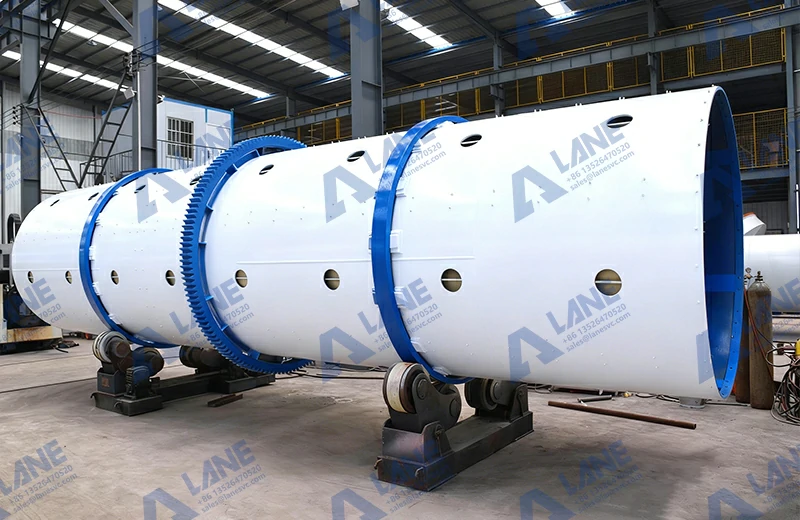
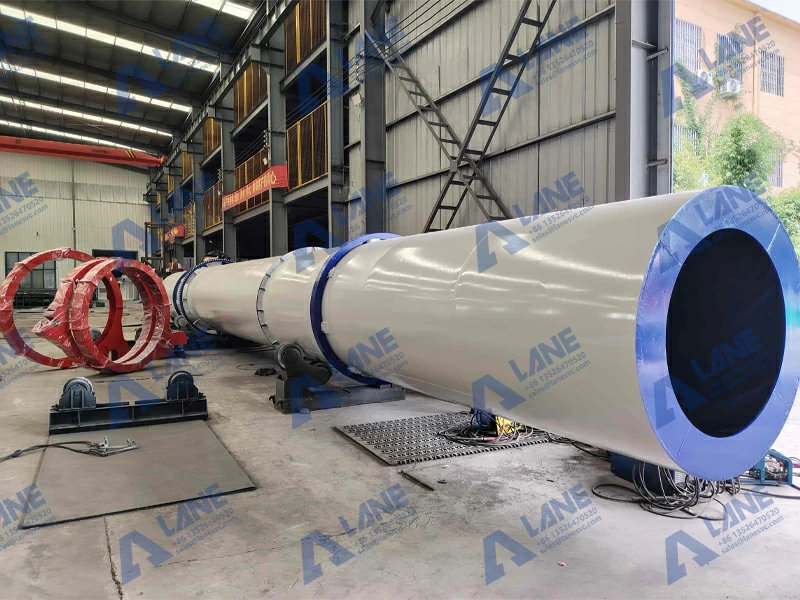
Granulator discharge holds several percentage points more moisture than a bagged specification allows, so granules go to a direct-fired rotary dryer. Monocalcium phosphate monohydrate begins losing its water of crystallization around 100°C, and the water-soluble phosphorus share drops once that happens. Inlet gas temperature can run high. The material temperature at the discharge end cannot. A rotary cooler follows, because warm granules condense moisture inside the bag and cake in the stack.
Screening, recycling, coating, and bagging
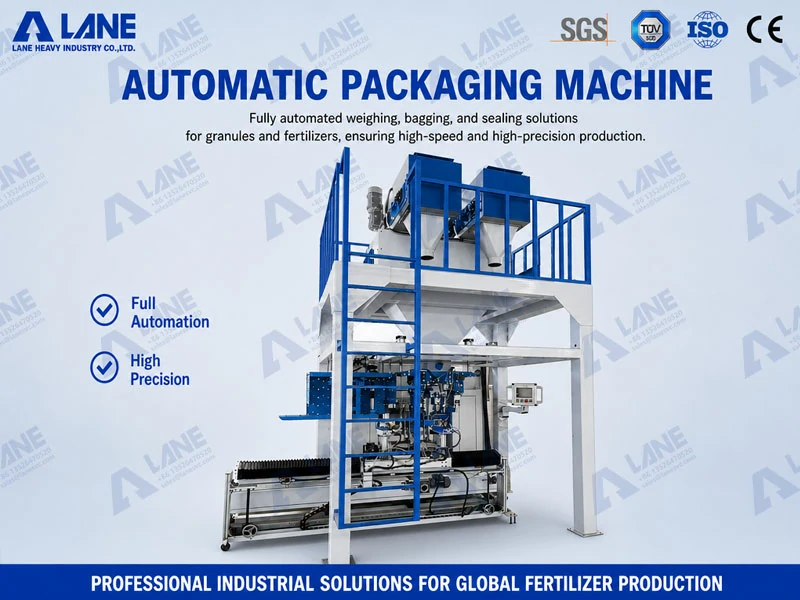
A double-deck screen splits the cooled product three ways. The 2 to 4 mm band moves forward, oversize goes to a chain mill and returns to the granulator, and fines return as recycle at one to three times the product rate. A light oil coating with talc or kaolin reduces dust and caking, and product moves over a weighing bagger into 50 kg or jumbo bags.
Inside an SSP granulation plant
The equipment train is short and the machines are simple. Most of the engineering value sits in sizing them together rather than one at a time.
| Section | Main equipment | Function |
|---|---|---|
| Granulation | Belt or weigh feeder, drum or pan granulator | Hold a steady feed rate and build granules |
| Drying and cooling | Rotary dryer, rotary cooler | Reach moisture and temperature spec |
| Classification and recycle | Double-deck screen, chain mill | Split product, return off-size material |
| Conditioning and packaging | Coating drum, weighing bagger | Control dust, fill 50 kg or jumbo bags |
| Emissions | Cyclones, bag filter, wet scrubber | Capture dust and fluoride-bearing gas |
Acid lines, pumps, tanks, and mixer internals call for rubber-lined steel, FRP, or corrosion-resistant alloys, while crushers, screens, and dryer internals need wear liners because phosphate rock is abrasive.
Choosing a process route
The single superphosphate manufacturing process gives you two ways to build the granule. Wet granulation produces a rounder, more uniform granule and tolerates lower-grade powder, but it adds a dryer, a cooler, gas handling, and fuel cost. Compaction skips the thermal section and suits dry, high-grade SSP at the cost of a flakier granule and more maintenance.
| Product | Typical P2O5 | Notes |
|---|---|---|
| SSP powder | 16% to 20% | Dusty, cakes, blends poorly |
| GSSP | 16% to 20% | Granular, spreadable, blends well |
| TSP | 44% to 48% | High analysis, no sulfur |
| DAP | 18-46-0 | Standard for blends |
| MAP | 11-52-0 | Suited to dry soils |
What drives investment and operating cost
Capacity has to be defined before a budget means anything. Suppliers quote per hour, day, or year, and those numbers describe different plants once downtime is included.
Scope swings the budget more than capacity does. Acid storage, scrubbers, dust collection, civil works, utility tie-ins, and automation are regularly excluded from headline prices, and normalizing scope across quotations separates a budget from a guess.
Sulfuric acid is usually the largest variable cost, followed by phosphate rock. Both are market-priced commodities, so an SSP project lives on the spread between rock plus acid cost and the realized product price. Fuel for drying comes next, which is why dryer efficiency deserves scrutiny during bid evaluation.
Specifications to write into the contract
Quality clauses should cover total and available P2O5, water-soluble phosphorus, free acid, moisture, granule size distribution, crush strength, dust, caking after storage, and the coating decision.
The method matters as much as the limit. National fertilizer control orders and EU rules define how P2O5, free acid, and moisture are determined, and two laboratories can report different numbers for the same sample, so name the method and fix who pays for third-party analysis if results are disputed.
Regulation (EU) 2019/1009 sets contaminant limits and conformity requirements for the EU market, and cadmium limits have been a live issue for phosphate fertilizers. The GSSP fertilizer production process should follow the rock you can actually secure, since that decision can determine whether the product is saleable years later.
Operating practice and maintenance
The failures that stop SSP granulation plants are predictable: acid corrosion in pumps and mixer internals, dust at transfer points, screen cloths wearing and blinding, crusher hammers and dryer flights shifting the size distribution, scrubber nozzles plugging, bagging scales drifting, and product caking when moisture or free acid is out of range.
Know the wear parts, inspect them on a schedule, and keep critical spares on site. Screen cloths, hammers, belts, bearings, chains, nozzles, and filter bags decide whether a stop lasts eight hours or eight days. Sulfuric acid handling also requires bunded storage, corrosion-resistant piping, emergency showers, neutralization material, and trained operators.
How to select a supplier
The strongest signal in a bid is a mass and heat balance you can check, followed by a performance guarantee with test conditions. Questions worth putting in writing:
- Has the supplier built SSP or GSSP lines, and will they run granulation trials on your rock and cured powder before the order?
- What capacity, available P2O5, moisture, and granule size do they guarantee, and under what conditions?
- Which items are excluded: acid storage, scrubber, civil works, utilities, spare parts?
Granulation trials outrank reference lists: SSP from different rock sources behaves differently in a drum or pan, and a supplier who will not test your material is asking you to carry the process risk.
An example configuration
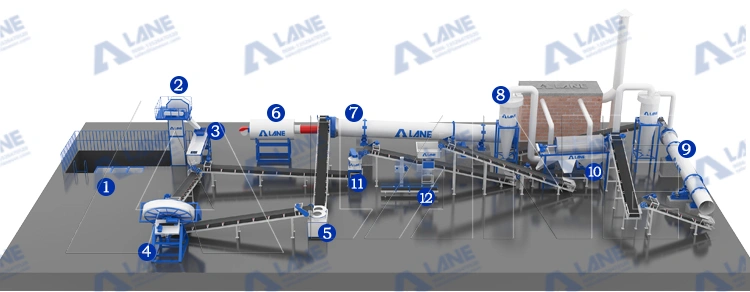
This is a design illustration, not a description of an installed plant. A 10 t/h granulation section running 6,000 hours a year produces roughly 60,000 t/y from cured SSP powder. Powder moves through a weigh feeder into a drum granulator with water and recycled fines, then a dryer, a cooler, and a double-deck screen that removes the 2 to 4 mm product while oversize passes a chain mill. Product runs through a coating drum and a bagging line, with cyclones, a bag filter, and a scrubber on the dryer exhaust. Upstream, acidulation needs grinding, acid dilution, a mixer, a den, and curing space for the full cycle.
FAQ
What is GSSP fertilizer?
Granulated single superphosphate, a phosphorus fertilizer made from phosphate rock and sulfuric acid. It contains 16% to 20% P2O5 plus sulfur and calcium.
What is the difference between SSP and GSSP?
The chemistry is the same. SSP is a powder that turns dusty and caky in handling, while GSSP is granulated and screened to a uniform size. Granulation, drying, and cooling make GSSP cost more.
Why does SSP need curing?
Curing lets the acidulation reaction finish. Fresh den product still holds unreacted rock and high free acid. Over two to six weeks, available phosphorus rises and free acid falls to a level safe for granulation and storage.
How much does a GSSP plant cost?
Cost depends on capacity, scope, and location, and quotations for the same tonnage can differ widely. Price a complete scope with acid storage, scrubbing, civil works, and utilities, then ask for a breakdown by section.
What equipment is needed for an SSP granulation plant?
A powder feeder, a drum or pan granulator, a rotary dryer, a cooler, a double-deck screen, a crusher for oversize, recycle conveyors, a coating drum, a bagging line, and dust and gas cleaning equipment.
Can GSSP be blended with urea, DAP, and MOP?
Yes, and it is one of the main reasons buyers granulate it. Granule size and strength have to match the other components, and the blend should be tested for segregation before it reaches market.
What granule size should GSSP be?
Most blending and spreading markets specify 2 to 4 mm with a high share of material inside that band. Agree on size distribution and crush strength, because a product that crumbles creates dust complaints.
Why does GSSP cake in storage?
Caking usually traces back to moisture, free acid, or product temperature at bagging. Granules bagged warm in a humid climate condense moisture, and undercured powder stays reactive inside the bag.
How long does it take to build a GSSP plant?
Timelines depend on permitting, civil works, and equipment lead times, and acidulation and curing usually set the pace. Ask for a schedule that separates engineering, manufacturing, shipping, and commissioning.
Sources and further reading
- International Fertilizer Association (IFA), fertilizer supply and medium-term outlook publications
- Food and Agriculture Organization (FAO), fertilizer market and nutrient management publications
- Regulation (EU) 2019/1009 on fertilising products, EUR-Lex
- National fertilizer control orders and official specifications in your target market

Send a message to us