


SSP DSP and TSP: 3 Phosphate Fertilizers Compared for Your Crops
Phosphorus-based fertilizers play a crucial role in ensuring healthy plant growth and maximizing agricultural yields. Among the most commonly used options are Single Superphosphate (SSP), Double Superphosphate (DSP), and Triple Superphosphate (TSP). Each of the SSP DSP and TSP has its unique composition and application benefits, tailored to meet the specific needs of different crops and soils. But which one is best suited for your agricultural goals? By examining the properties, nutrient content, and ideal applications of SSP DSP and TSP, you can make an informed choice.
Understanding SSP DSP and TSP
| Fertilizer | Phosphorus Content (P₂O₅) | Additional Nutrients | Water Solubility | Key Application |
|---|---|---|---|---|
| SSP (Single Superphosphate) | 16-20% | Calcium, sulfur | High | General use, sulfur-deficient soils |
| DSP (Double Superphosphate) | 30-32% | Limited additional nutrients | High | Crops with higher phosphorus demand |
| TSP (Triple Superphosphate) | 44-48% | Minimal | Very High | Phosphorus-deficient soils, precision farming |
Single Superphosphate (SSP)
SSP is the simplest form of superphosphate fertilizer, offering phosphorus along with calcium and sulfur. It is made by reacting phosphate rock with sulfuric acid.
Benefits of SSP
- Multi-Nutrient Content:
- SSP not only provides phosphorus but also calcium, which improves soil structure, and sulfur, essential for protein synthesis in plants.
- Cost-Effective:
- Its affordability makes it a popular choice for small-scale and large-scale farming.
- Improves Soil Health:
- Sulfur and calcium components aid in alleviating soil compaction and improving soil texture.
Best Use Cases
SSP is particularly effective for:
- Sulfur-Loving Crops: Oilseeds like canola and legumes such as beans and lentils.
- Soil Types: Sandy and sulfur-deficient soils where extra nutrients are needed.
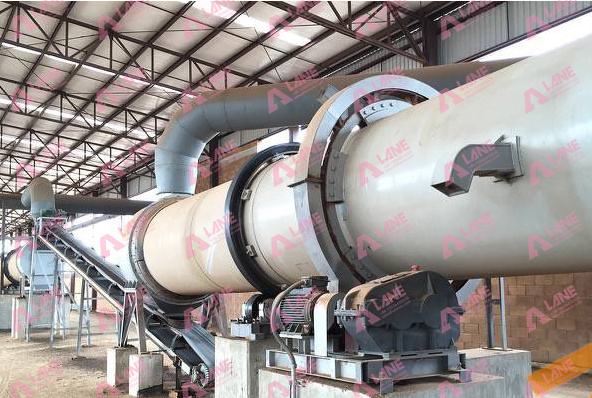
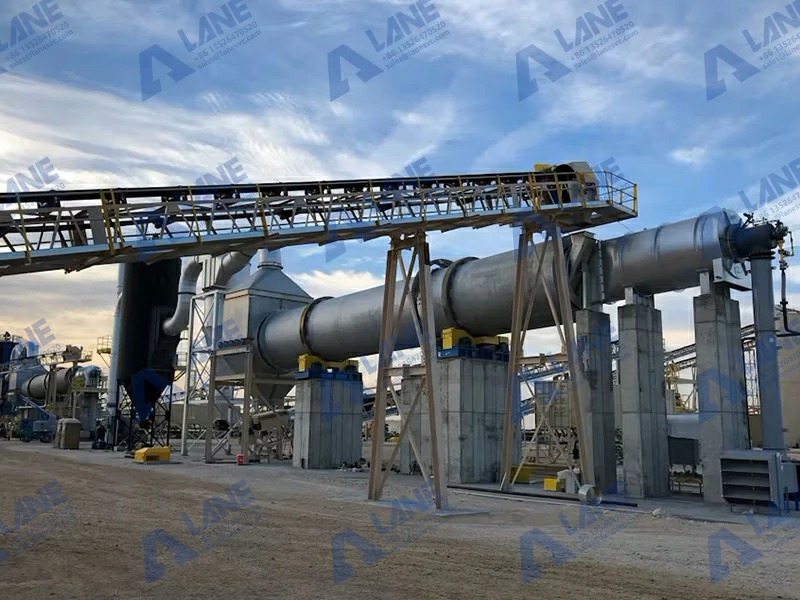
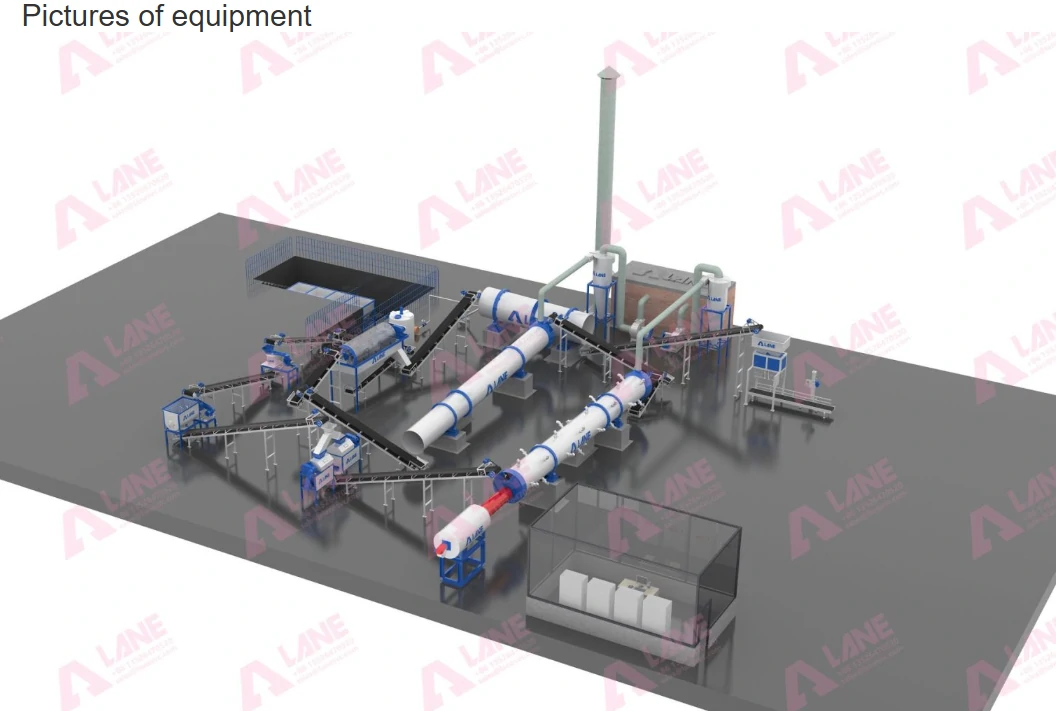
SSP Fertilizer Production Line
Double Superphosphate (DSP)
DSP is a more concentrated version of SSP, offering higher phosphorus content but fewer additional nutrients. It is manufactured by reacting phosphate rock with phosphoric acid.
Benefits of DSP
- Higher Phosphorus Content:
- With 30-32% phosphorus, DSP delivers more nutrients per application, reducing transportation and labor costs.
- Effective for High-Demand Crops:
- Suitable for crops like fruits and vegetables that require significant phosphorus for root and fruit development.
- Better for Controlled Applications:
- Ideal for precision agriculture and targeted feeding programs.
Limitations
Unlike SSP, DSP lacks sulfur, making it less suitable for crops or soils requiring additional sulfur supplementation.
Triple Superphosphate (TSP)
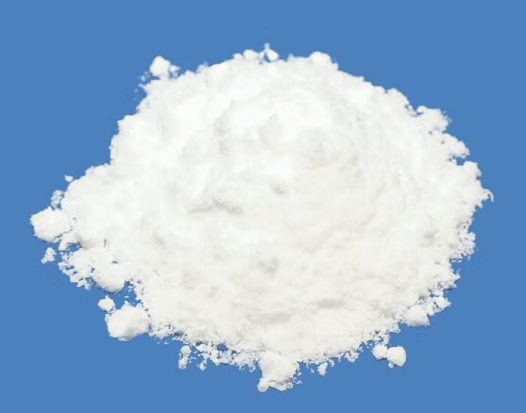
TSP is the most concentrated form of superphosphate, containing up to 48% phosphorus. It is produced by reacting phosphate rock with phosphoric acid under controlled conditions.
Benefits of TSP
- High Efficiency:
- TSP delivers the highest phosphorus content among the three, making it ideal for addressing severe phosphorus deficiencies.
- Water Solubility:
- Its solubility ensures immediate availability of nutrients to plants, crucial during critical growth stages.
- Reduced Application Rates:
- Farmers can achieve desired nutrient levels with smaller quantities, reducing logistical challenges.
Best Use Cases
TSP is perfect for:
- Phosphorus-Deficient Soils: Where other fertilizers fail to meet the required phosphorus levels.
- High-Yield Crops: Corn, wheat, and rice benefit from TSP’s concentrated phosphorus content.
- Precision Farming: Where accurate nutrient application is essential.
Comparing SSP DSP and TSP
| Feature | SSP | DSP | TSP |
|---|---|---|---|
| Phosphorus Content | Low (16-20%) | Medium (30-32%) | High (44-48%) |
| Additional Nutrients | Calcium, sulfur | Minimal | Minimal |
| Cost | Low | Medium | High |
| Application Rate | High | Medium | Low |
| Best For | General crops, sulfur-deficient soils | High-demand crops, balanced soils | Phosphorus-deficient soils, precision farming |
Choosing the Right Fertilizer for Your Crops
The choice between SSP DSP and TSP depends on several factors, including your crop type, soil condition, and budget:
- Choose SSP If:
- Your crops require additional sulfur (e.g., oilseeds, legumes).
- You are working with sandy soils or soils with low calcium levels.
- You prioritize cost-effectiveness over phosphorus concentration.
- Choose DSP If:
- You need a balanced phosphorus boost without additional nutrients.
- Your crops demand moderate phosphorus levels for root or fruit development.
- Choose TSP If:
- Your soil has severe phosphorus deficiencies.
- You require maximum nutrient efficiency in smaller application volumes.
- You practice precision farming.
Conclusion
Understanding the unique properties of SSP DSP and TSP is vital for optimizing crop yields and maintaining soil health. SSP offers a balanced nutrient profile at an affordable cost, making it suitable for general applications. DSP is ideal for crops with higher phosphorus needs but without sulfur requirements. Meanwhile, TSP is the go-to solution for phosphorus-deficient soils and precision agriculture due to its high nutrient concentration and efficiency.
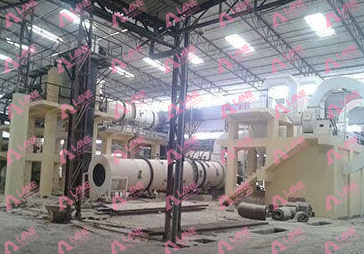
In the phosphate fertilizer industry, Single Superphosphate (SSP) and Triple Superphosphate (TSP) are among the most widely used and well-established phosphate fertilizers worldwide. Produced from phosphate rock through acidulation, curing, granulation, drying, and cooling processes, SSP and TSP play a vital role in improving soil fertility and crop yields. According to authoritative publications from the International Fertilizer Association (IFA) and the United Nations Environment Programme (UNEP), efficient production of SSP and TSP requires precise process control and reliable equipment. As a result, investing in a high-performance SSP and TSP fertilizer production line has become essential for modern fertilizer manufacturers seeking efficiency, stability, and environmental compliance.
When choosing between SSP DSP and TSP, consider your soil conditions, crop requirements, and overall farming goals. Tailoring your fertilizer strategy will not only improve crop performance but also ensure long-term sustainability for your agricultural practices.
Ready to choose the right phosphate fertilizer solution? Contact LANE today to learn more about SSP DSP and TSP production lines and get a customized proposal for your project.
Email: sales@lanesvc.com
Contact number: +86 13526470520
Whatsapp: +86 13526470520

Send a message to us