


Phosphate Rock Fertilizer Process: Engineering Guide to a 20 TPH SSP Production Line in Southeast Asia
The phosphate rock fertilizer process is not just a chemical reaction — it is an integrated engineering system where mineral processing, acidulation chemistry, granulation dynamics, and environmental control must work together with precision. For investors and plant engineers, understanding how a real SSP (Single Superphosphate) production line operates is critical before committing to a project.
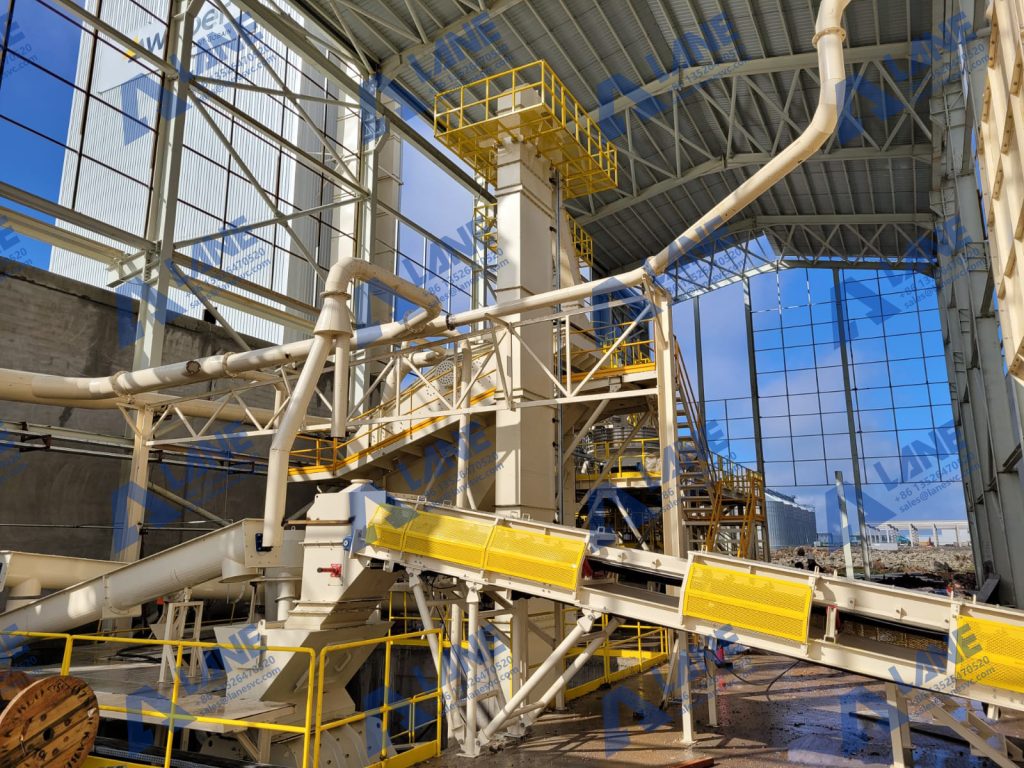
The following technical analysis will use the example of a 20 t/h phosphate fertilizer plant project in Southeast Asia by LANE Machinery Groups to provide insights for regions rich in phosphate ore resources. This analysis covers aspects such as the process flow, equipment selection rationale, operational advantages, and design considerations.
Understanding the SSP Phosphate Rock Fertilizer Process
Single Superphosphate is produced by reacting finely ground phosphate rock with sulfuric acid. The objective is to convert insoluble phosphate into plant-available monocalcium phosphate while forming gypsum as a by-product. The efficiency of this conversion depends heavily on particle size, acid mixing uniformity, curing conditions, and granulation control.
Unlike laboratory-scale descriptions often found in textbooks, industrial SSP production is governed by:
Reaction kinetics under continuous feed conditions
Heat release management
Moisture balance in granulation
Material residence time in curing chambers
Dust and acid vapor containment
A well-designed phosphate rock fertilizer process must address all these simultaneously.
Case Reference: 20 TPH SSP Plant in Southeast Asia
This installation was designed for a client operating near a regional phosphate deposit. The ore grade fluctuated, requiring a system capable of handling variable feedstock without sacrificing conversion efficiency.
Design capacity: 20 tons per hour
End product: Granular SSP fertilizer
Project model: Turnkey EPC delivery
The plant emphasizes corrosion resistance, energy efficiency, and adaptability to low-grade phosphate rock — a key concern in many developing mining regions.
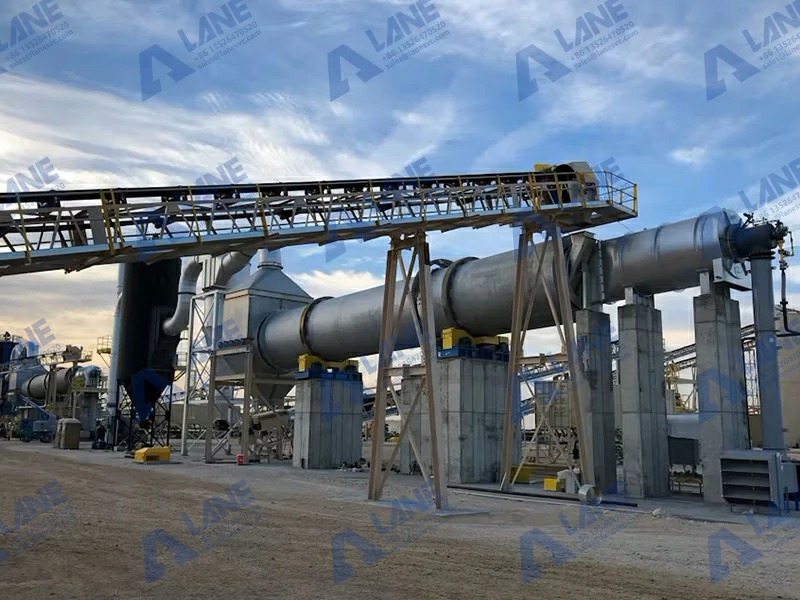
Process Flow Overview
1. Hammer Crushing of Phosphate Rock
Raw phosphate rock enters a heavy-duty hammer crusher to achieve the required particle size for acid reaction. Uniform fineness is essential because incomplete grinding leads to unreacted cores inside granules, reducing fertilizer effectiveness.
Key design intent:
Stable particle distribution
Minimal over-crushing dust generation
Low maintenance wear structure
Proper crushing directly influences acid consumption efficiency.
2. Acidulation and Double-Shaft Stainless Mixing
The ground rock is fed into a SSP-specific phosphoric acid mixer — a double-shaft stainless steel system engineered for corrosive environments. The mixing stage determines chemical conversion quality.
This equipment ensures:
Homogeneous acid-rock contact
Controlled reaction heat dispersion
Anti-corrosion structural integrity
Stable throughput under continuous load
Poor mixing leads to localized acid pockets and inconsistent nutrient content. This system prevents that.
3. Rotary Curing Chamber (Conversion Room)
After acidulation, the slurry-like material enters a rotary curing chamber where the reaction continues and stabilizes. Residence time is carefully engineered to allow full conversion.
Inside the chamber:
Moisture redistribution occurs
Chemical curing progresses
Material structure consolidates
Free acid levels decline
This stage is often underestimated, but it determines final product stability and storage safety.
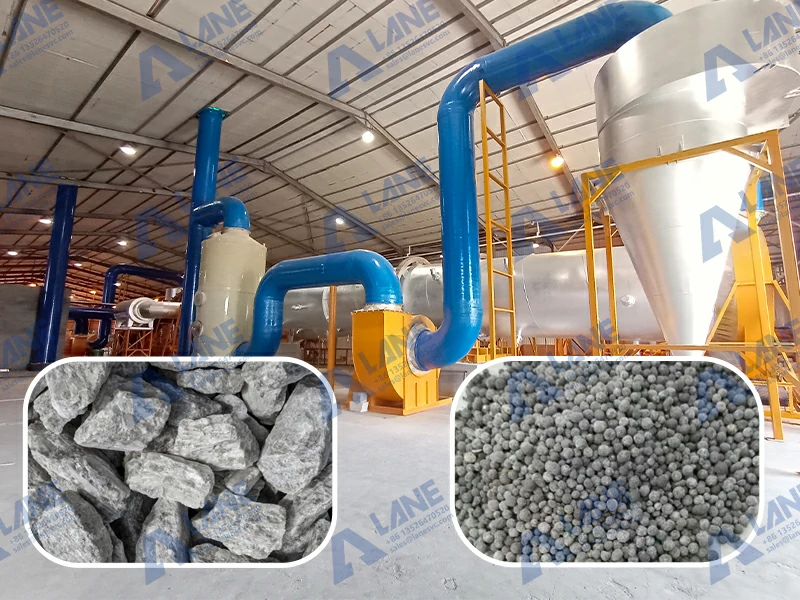
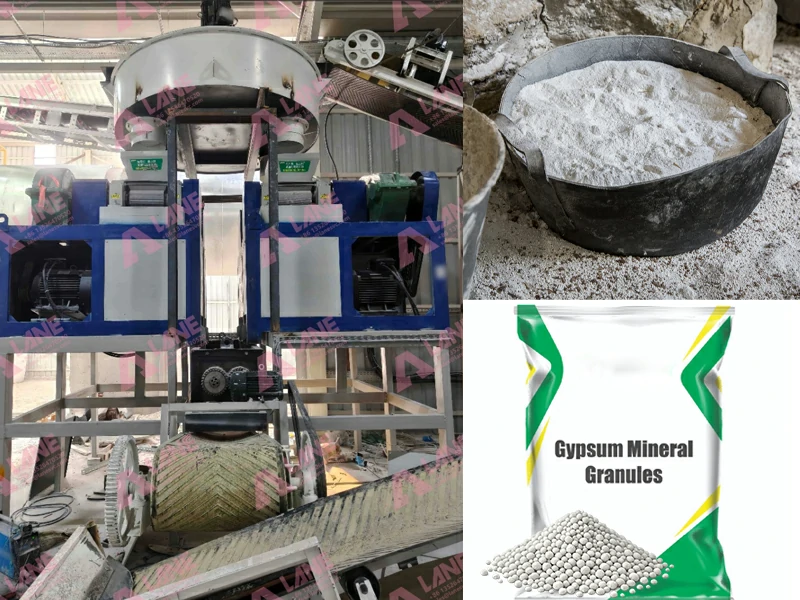
4. Rotary Drum Granulation
The cured material is transferred to a rotary drum granulator where granule formation occurs under controlled moisture and rotational dynamics.
Engineering goals include:
Spherical granule shaping
Mechanical strength development
Recycle loop optimization
Particle size uniformity
Granulation transforms reactive powder into a marketable fertilizer product.
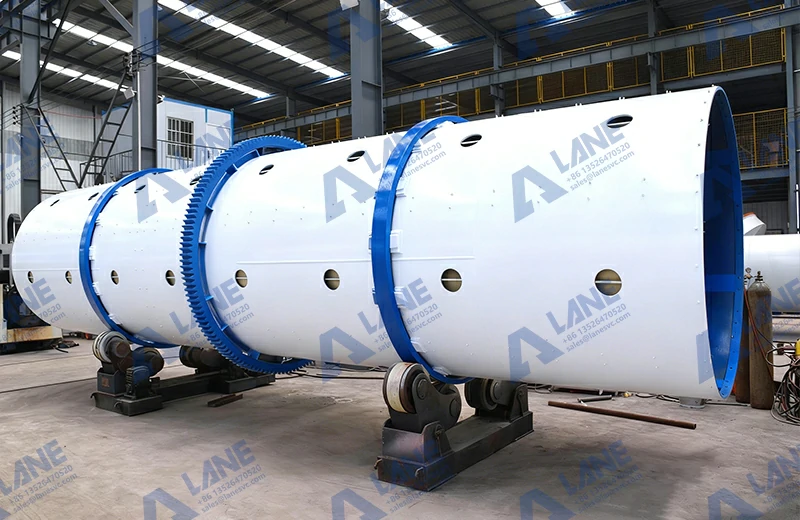
The granules pass through a rotary dryer to remove excess moisture and stabilize storage performance.
Drying parameters are optimized for:
Energy efficiency
Thermal uniformity
Minimal nutrient degradation
Dust containment
Energy consumption reduction was a primary project target in this installation.
6. Screening, Packaging, and Dust Control
Final classification ensures only standard-size granules reach packaging. Oversized and undersized materials are recycled into the process.
A centralized dust collection system:
Protects worker safety
Prevents environmental contamination
Recovers valuable fines
Maintains regulatory compliance
Environmental performance is now a decisive factor in plant approvals worldwide.
Engineering Advantages of This SSP Line
This phosphate rock fertilizer process was engineered with several priorities:
Corrosion-resistant construction
Stainless steel critical zones extend equipment lifespan in acid environments.
Low energy consumption
Optimized airflow and thermal recovery reduce operational cost per ton.
Adaptability to low-grade phosphate
System tolerates fluctuating ore quality without severe efficiency loss.
Turnkey delivery
From design to commissioning and training, the plant was handed over as a complete production solution.
Installation and training support
On-site engineering ensured stable startup and operator competence.
These factors directly impact ROI for investors entering phosphate fertilizer manufacturing.
Why SSP Plants Matter in Phosphate-Rich Regions
Many countries with phosphate reserves export raw ore instead of processing it locally. Building an SSP facility transforms mineral resources into high-value agricultural inputs, reducing import dependence and strengthening domestic fertilizer supply.
A well-designed phosphate rock fertilizer process:
Adds value at the source
Supports food security
Creates industrial employment
Reduces logistics costs
Enables fertilizer self-sufficiency
For regions in Southeast Asia, Africa, and Latin America, SSP plants are strategic infrastructure, not just industrial projects.
Final Thoughts
The phosphate rock fertilizer process is a fusion of chemistry and mechanical engineering. Success depends on understanding how crushing, acidulation, curing, granulation, and drying interact as one continuous system.
The 20 TPH SSP plant described here demonstrates how modern engineering can convert variable-grade phosphate rock into stable, high-quality fertilizer while maintaining efficiency and environmental responsibility.
For investors, engineers, and resource owners, the lesson is clear: a properly engineered SSP production line is not merely equipment — it is an integrated production ecosystem designed for long-term industrial sustainability.
Send a message to us