


DCP Fertilizer Production Line: Efficient Phosphorus Fertilizer Manufacturing
What Is a DCP Fertilizer Production Line?
A DCP fertilizer production line is a specialized industrial system designed to produce dicalcium phosphate (DCP), a high-value phosphorus fertilizer and animal feed additive with excellent agronomic and nutritional properties. Unlike basic phosphate fertilizers, DCP production integrates advanced chemical processing and crystallization to consistently deliver high purity product.
This production line handles everything from raw material preparation to final drying. Its goal is stable quality, consistent granule size, and low operational waste — all of which directly influence fertilizer performance in the field and feed digestibility in livestock applications.
Raw Material Preparation and Crushing
The first stage of any DCP fertilizer production line is raw material preparation. Phosphate rock or bone char is inspected, screened, and crushed to the desired particle size — typically around ±0.5 mm. Uniform particle size ensures efficient downstream reactions and reduces variability in product quality.
Accurate crushing improves reaction efficiency in the next stage and reduces energy consumption in the reactor.
Acid Hydrolysis and Gradient Dosing
After crushing, the material enters the acid hydrolysis stage. In a modern DCP fertilizer production line this is done with sulfuric acid, often dosed in gradients under PLC control. This maintains stable temperature and pH conditions, achieving a phosphorus extraction rate greater than 98%.
Precise control at this stage reduces unreacted residues and improves overall yield, ensuring the production line operates with minimal chemical waste.
Neutralization and Crystallization
Once hydrolysis is complete, the slurry moves into multi-stage neutralization and crystallization tanks. Controlled addition of neutralizing agents precipitates dicalcium phosphate crystals. Modern systems often recover valuable byproducts such as fluosilicic acid for reuse or sale.
Purity at this stage is a major determinant of final fertilizer quality. Efficient crystallization design boosts the proportion of pure crystals and minimizes impurities.
Dehydration, Drying and Moisture Control
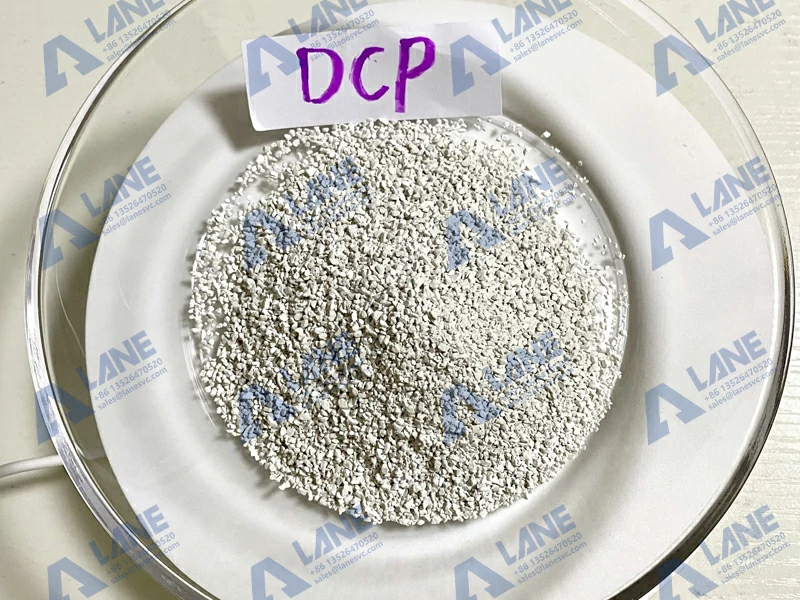
After crystallization, the wet DCP crystals must be dehydrated and dried to achieve final moisture levels of ≤ 2 %, meeting ISO Grade-1 standards. In a typical DCP fertilizer production line this is done through centrifugal separation followed by fluidized bed drying.
Reducing moisture is critical for product stability, storage life, and consistent granule formation in any packaging or blending process.
Granulation, Cooling, and Screening (Optional Integration)
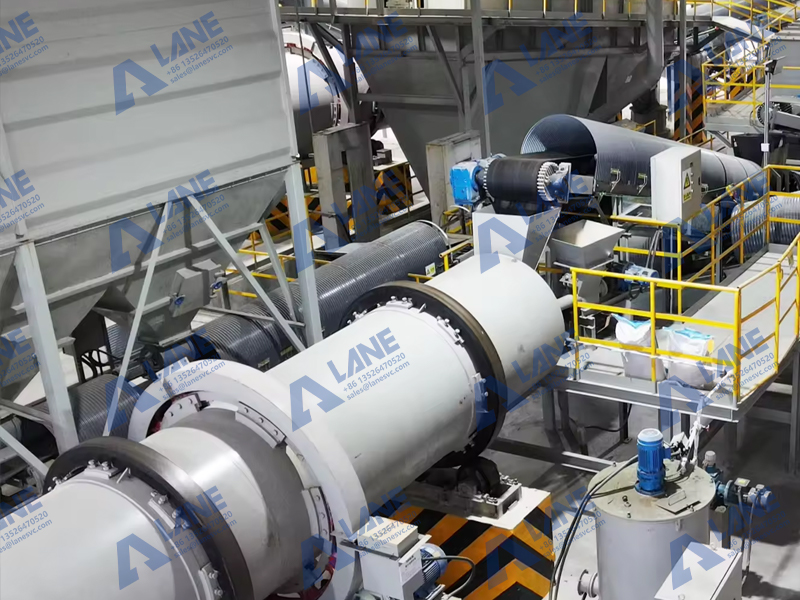
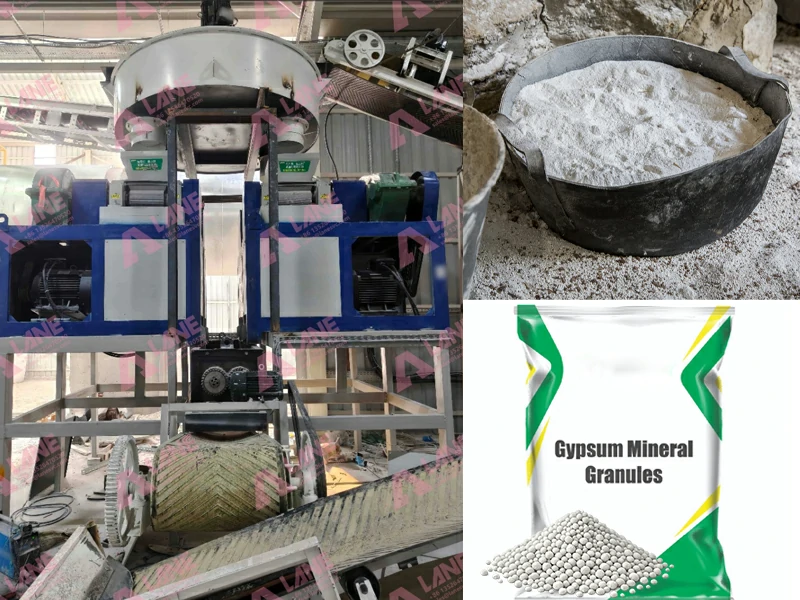
Some production lines integrate granulation systems after drying to produce consistent pelletized DCP fertilizer. Rotary drum granulators or disc granulators can be used depending on capacity and client preference.
Following granulation, cooling systems reduce product temperature to avoid caking. Screening machines then separate compliant product sizes, recycling out-of-spec material back into the granulation loop.
While optional, this integrated approach improves bulk density and distribution uniformity for agricultural or industrial feed use.
Environmental Control and Compliance
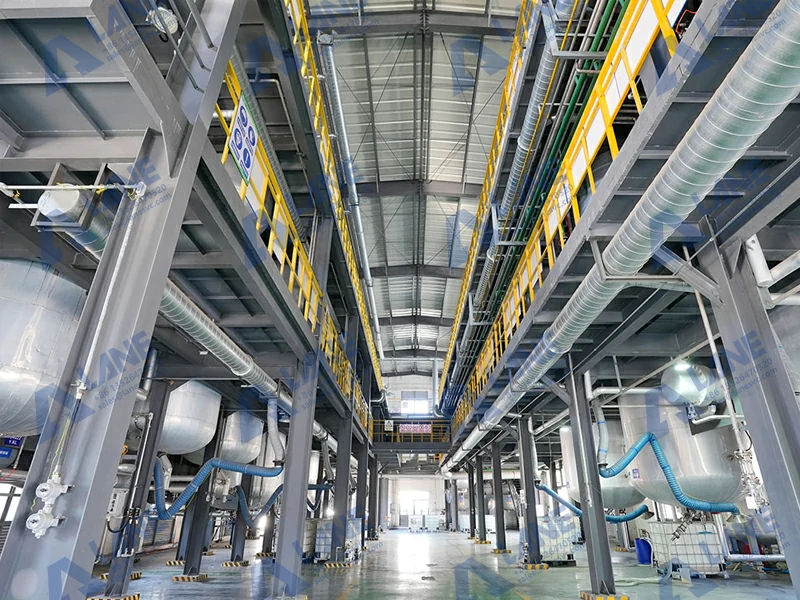
Modern DCP fertilizer production lines must comply with global standards and environmental regulations. Systems often include dust collection, scrubbers, and enclosed material handling to reduce emissions and improve workplace safety.
Compliance with ISO 9001, EU REACH and FAMI-QS ensures the product can enter international markets without regulatory barriers.

Automation and Smart Operation
Advanced DCP fertilizer production lines use PLC-based monitoring and control systems. These systems manage temperature, pH, feed rate, and process timing to reduce human error and improve consistency.
Remote monitoring and IoT support are increasingly common, enabling real-time oversight of plant performance and maintenance needs. This type of smart operation reduces downtime and improves O&M efficiency.
Quality Assurance and Product Standards
Quality assurance is integrated at every stage of a DCP fertilizer production line. From incoming raw materials to final drying, samples are tested for phosphorus content, moisture, particle size, and impurity levels.
Meeting ISO Grade-1 standards means the product is suitable for agricultural use and feed applications without additional blending or correction.
Conclusion
A DCP fertilizer production line combines precision chemical processing with modern automation, achieving efficient, high-quality phosphorus fertilizer production. Key phases — raw material preparation, controlled acid hydrolysis, neutralization and crystallization, and drying — must be closely coordinated to ensure consistent outcomes.
With environmental systems and smart controls, modern DCP lines not only deliver superior product but also operate with lower waste and higher uptime. For manufacturers aiming to enter or expand in phosphorus fertilizer and animal nutrition markets, a well-designed DCP fertilizer production line is foundational to success.
For a broader technical reference on phosphate fertilizer types and production standards, readers may consult the phosphate fertilizer production guidance by FAO, which outlines industrial processing principles and quality requirements for phosphorus-based fertilizers, including calcium phosphate products.
You could contact LANE today to learn more about .
Email: sales@lanesvc.com
Contact number: +86 13526470520
Whatsapp: +86 13526470520
Send a message to us